Tag Archives: Family Medicine

Writing With a Team

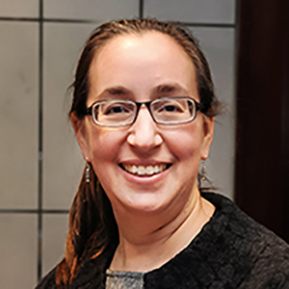
by Sarina Schrager, MD, MS,
Family Medicine Editor-in-Chief

Writing for publication is hard work, especially if you are doing it alone. I find that having a team to write papers with makes the experience easier and more engaging. But, in order to make the process move smoothly, it makes sense to spend a little bit of time at the outset to set some ground rules.

  • Delegation of responsibilities—There are a lot of details to address when writing a paper and I find that is pays off at the end to be clear about who is going to do what at the beginning.  My colleagues and I divide tasks, including being in charge of the reference manager, finding author instructions for potential journals, and delegating one person to be the “corresponding author”. The designated corresponding author will be responsible for sending calendar invites, Zoom meeting information, and reminders throughout the process.
  • Authorship guidelines—You want to avoid any misunderstandings about author order or even who is included in the author list. There are myriad ways to decide who will be the first author and the senior author. It is helpful to talk about this order at the beginning. There may also be decisions about who is going to be an author vs being acknowledged at the end of the paper. I have had situations where one of the co-authors ended up doing much more work than the person who was designated as the first author and the group had a conversation about reordering author lists.
  • Outline of paper—Before starting to write, the group should sit down and develop an outline of what needs to be covered. During this process, different authors may volunteer (or be assigned) different sections. You may elect to use a Google Doc or have people write their sections in Microsoft Word to be forwarded to one designated person to integrate each section into the whole document.
  • References—You may also want to decide how to designate references at this point. Should authors put citations into a comment?  Or at the end?  It is helpful to be clear about this at the beginning. Some people may want to number their references, but this makes integration more challenging, so I usually recommend writing the author’s name and a date in parentheses and just adding the citation somewhere in the document.   It is also helpful to decide at the beginning how you are going to manage references. It can be tricky to integrate several different reference lists from different (or even the same) reference managers. One way to manage this aspect of your paper is to assign someone at the beginning to be in charge of references and have each author forward citations to that person.
  • Deadlines—One thing I love about writing in a group is that everyone is accountable to each other. Unless you are planning to submit to a special issue with a rigid time frame , writing a paper comes with artificial deadlines. But, that said, setting firm deadlines and scheduling regular meetings can keep a project moving forward.
  • Editing—Once each author has written their first draft and the sections have been assembled into one unique document, one author may take the lead in making the paper sound like it has one voice. People write differently and it can be distracting to read a paper that is obviously written by different people. Each author will then want to edit for content and readability using track changes. Ultimately, the corresponding author will accept all track changes and finalize the paper.
  • Postwriting tasks—After you are finished writing the final draft of your paper, someone needs to take the lead and submit the paper to the desired journal. This process, even after reading the author instructions carefully, can take a couple of hours. The corresponding author (often the first author but sometimes the senior author or one of the other contributing authors) will need to upload information about each author, designate suggested reviewers (for some journals), and write a cover letter among other tasks.  Also, it is a great idea to discuss who will take the lead in revising the paper if you get a revision request from the journal and who will be responsible for resubmitting to a different journal if your paper is rejected.
  • Opportunities for mentoring—Writing in a team is an excellent way for more experienced authors to provide support and mentoring to more junior authors. By using clear communication and empowering junior faculty to take ownership of the writing process, mentors can role model a streamlined and effective way to write for publication.

See our recent FM Focus on this topic, “Team Writing Etiquette in Verse”  Team Writing Etiquette in VERSE

Insights into Whole Person Care: A Reflection on My Visit to St. Joseph Hospital with Melissa Arthur, PhD, LCSW, LMFT


By Sydney Brown, Coordinator of Conferences and Special Projects at STFM

Sydney Brown’s work supports STFM fellowship programs, conference planning, special meetings, and more.

In July 2024, I had the invaluable opportunity to visit St. Joseph Hospital in Syracuse, NY, under the guidance of Melissa Arthur, PhD, LCSW, LMFT, Director of Behavioral Science at St. Joseph Hospital in Syracuse Former STFM BFEF Mentorship Director. My background, initially outside the realms of hospitals, medicine, or fellowships, made this experience particularly enlightening. I am deeply grateful to Dr Arthur for her encouragement and facilitation of this insightful visit.

Immersing in Patient Care

My visit began with attending a lecture for medical students, a profound introduction to the complexities of medical education. The session showcased not only the depth of academic instruction but also how behaviorists like Dr Arthur contribute to shaping the educational framework. Observing this integration of theoretical knowledge with practical application highlighted the comprehensive nature of medical training at St. Joseph Hospital.

A key highlight was sitting in on a “Bio Psycho Social” visit, where Dr Arthur was actively involved. This extended patient-doctor interaction illustrated the significance of addressing psychological and social factors in addition to physical health. Witnessing this whole person approach emphasized how understanding a patient’s emotional and social context can enhance overall care and efficacy in medical practice.

Understanding Institutional Support and Well-Being

Equally enlightening was my exposure to the hospital’s institutional support systems. Attending a committee meeting on the “Care of the Colleague” revealed St. Joseph Hospital’s commitment to creating a supportive work environment. This committee’s focus on the well-being of healthcare professionals underscores the importance of fostering a positive and effective healthcare environment, where the mental and emotional health of staff is prioritized.

Additionally, learning about Schwartz Rounds, known locally as Rena Rounds, provided insight into the hospital’s dedication to emotional support. These rounds address the psychological and emotional challenges faced by healthcare professionals, promoting resilience and empathy. The presence of Dr Arthur’s support dog, whom I had the pleasure of accompanying on rounds, further highlighted the impact of such initiatives. The comfort and joy the support dog brought to patients and staff underscored the importance of integrating emotional support into the healthcare environment.

Engaging with the Medical Community

My interactions with medical students and residents provided a broader perspective on their experiences. Discussing their rotations, challenges, and interests offered a personal view of their journey through medical training. This engagement also allowed me to promote the Society of Teachers of Family Medicine (STFM), emphasizing the value of community and support within the field.

A Reflection on Whole Person and Compassionate Care

The visit to St. Joseph Hospital was a transformative experience, offering a deep appreciation for the role of behaviorists like Dr Arthur in Family Medicine. Her work exemplifies the integration of whole-person patient care, institutional support, and emotional well-being, reflecting the core values of Family Medicine.

The insights gained from observing Dr Arthur and the team at St. Joseph Hospital reaffirmed the importance of a multi-dimensional approach in healthcare. I am profoundly grateful for the opportunity to witness their exemplary work and am inspired by the dedication and compassion demonstrated by all involved. Dr Arthur’s contributions to Family Medicine are both commendable and essential, and I am honored to have observed the impactful work she and her colleagues are doing.

Responding to Reviewer Suggestions…

By Sarina Schrager, MD, MS, Family Medicine editor-in-chief

It is exceedingly uncommon for a paper to get accepted when first submitted to a journal. The vast majority of papers are sent back to authors for revision. As editors, we depend on peer reviewers to provide feedback designed to make each paper better. We ask that you view the feedback that you receive from reviewers as a constructive way to improve your paper. As an author, you are asked to respond to every comment made by every reviewer, which can feel like a herculean task. The following suggestions from the editorial team are geared to help you organize and structure your responses whereby improving your chances of having your paper accepted the second time around.

  1. Don’t take it personally—remember that the reviewers are giving feedback on your paper, not on who you are as a person. Remember, by requesting a revision of your paper, the editors and the reviewers think it has potential. Creating space between yourself and the revision requests will help you move forward toward successful publication. Some people will put the revisions aside for a day or two before rereading them.
  2. Always, always respond respectfully to reviewer comments—there is nothing an editor dislikes more than an author being obstinate and dismissive about reviewer comments. The editors rely on peer reviewers volunteering their time. As such, we want to protect peer reviewers from abusive language coming from authors. It is actually common practice to thank the reviewers for their feedback (however unwelcome it may be). This is an important publishing convention because while you don’t know who the reviewers are, they see author names and they likely review for several publications.
  3. It’s okay to disagree—it is okay to disagree respectfully with a reviewer comment.  However, we recommend that you prioritize the comments you disagree with and only include a few (2-3 at maximum) in your responses. Include a detailed explanation of why you disagree and include references if available. The editors will weigh your comments and decide if they still want you to make changes.
  4. Make it easy for the editors—editors and reviewers are busy people who are often volunteering their time to help you improve your paper. So, it is up to you to do everything you can to make that task easier. We recommend that you structure your response letter in table form or use different fonts or underlines so that it is easy for the editor to see that you addressed every single comment. Also, it is good practice to specifically state how you addressed the comment. Instead of just saying “this was changed”, provide details about how you changed the paper or even cut and paste the new sentence into your table of reviewer responses.
  5. What if reviewers give me conflicting feedback?—it is challenging when reviewers have differing opinions about your paper. Most of the time, the associate editor will provide guidance about which reviewer’s comments to follow. If you don’t think that you are getting clear guidance, feel free to e-mail the editorial team for help.  It is perfectly appropriate to ask the associate editor what they think you should do.

Even if your revision does not get accepted, by following reviewer suggestions you have improved the quality of your work and are optimally positioned to submit the paper to a different journal. Happy writing and please consider signing up to be a reviewer to help make Family Medicine the best journal it can be.