Reflections on Participation in Community Outreach Event

By Sarah Willoughby, LCSW, Freeman Health System

On Sunday, Sept 7, 2025, I attended a community outreach event hosted by the Neighborhood Resilience Project in collaboration with McAuley Ministries and the Society of Teachers of Family Medicine (STFM). This was a partnership through the 2025 STFM Conference on Practice & Quality Improvement in Pittsburgh, PA.

I rode to the main site with Marisol Valentin, the director of McAuley Ministries, who told me about the sad history of the Hill District of Pittsburgh and the area’s increased poverty, violence, and other problems. Then we met Father Paul Abernathy, who had the vision to start the Neighborhood Resilience Project—a trauma-informed community development nonprofit.

He provided a tour of the medical/behavioral health facility and led a round table discussion along with one of the McAuley Ministries board members, two volunteer physicians, chief administrator, the nursing director, and the volunteer coordinator. Together, they described their work in revitalizing the Hill community—a neighborhood negatively affected by gentrification.

Father Abernathy and others realized residents of this neighborhood have experienced individual and community trauma, which is affecting their emotional and physical health. I loved their focus “to promote resilient, healing and healthy communities so that people can be healthy enough to sustain opportunities and realize their potential.” I have spent my entire career—35 years—doing this in various rural and urban areas.

During the last 15 years, the Neighborhood Resilience Project has worked with community members, leaders, volunteers, and donors to strengthen the community by focusing on three pillars:

  • Community Support
  • Health and Well-Being
  • Leadership Development

The Neighborhood Resilience Project’s motto is to engage community members to transform them into a resilient, healing, and healthy community. Programs include a free Health Care Center, a Trauma Response Program, a Backpack Feeding Program, and, during the COVID-19 pandemic, a Vaccination Collaborative.

Father Abernathy was working in a predominantly black and underserved community in Pittsburgh and regularly interacting with men, women, and children who had repeatedly experienced multiple forms of trauma. He was a combat veteran of the Iraq War and realized that trauma in the form of hunger, abuse, homelessness, lack of opportunity, racism, lack of health care, and violence greatly informed the worldview and culture of the community.

Understanding that trauma was the greatest barrier facing the development of his community, Father Abernathy began to ask the question, “how do you heal an entire community that has been inundated with trauma for generations?”

Here are some of the Neighborhood Resilience Project’s recent accomplishments:

  1. Through 2021, the organization has helped facilitate more than 2,500 COVID-19 vaccinations, deployed more than 60 times to homicides related to gun violence, provided more than 14,000 items of food and 5,000 clothing items, provided more than $23,000 in emergency relief and document recovery, and had close to 200 volunteer hours through clinicians alone such as to provide free care to the uninsured in the region.
  2. The organization has hosted groups from across the nation who had been previously trained in the Trauma Informed Community Development Framework for a Summit in June 2021.
  3. The organization utilized “Micro-Community Interventions” in the Hill District and saw an improvement in overall well-being as analyzed by the well-being tool, “ImHealthy.”
  4. The organization has renovated its Free Health Center space to double in size and now offers medical and dental care.
  5. In partnership with the Jefferson Regional Foundation, the Neighborhood Resilience Project is rolling out work in the Mon-Valley – first by training one cohort from the McKeesport, Clairton and Duquesne neighborhoods (for a total of three cohorts) in the Trauma Informed Community Development Framework and then coaching those cohorts through the roll-out phase.

Visiting the Neighborhood Resilience Project and meeting key team members was inspiring to me personally and professionally. We’d like our community residents in the Joplin, MO, area to be healthier, and we struggle to find ways to do this. In April, we had a serious storm in our rural area, causing damage to trees, fences, homes, and sheds. Just this week, a woman whose farm is still significantly damaged and whose life has seriously been impacted told her story.

This “Trauma Informed Community Development” (TICD) model in our community might be helpful to Joplin, as many were devastated by the EF5 tornado in 2011 that killed more than 200 people. I plan to meet with someone from the Neighborhood Resilience Project in the next month and learn more about the imHealthy tool and ”micro interventions” we might be able to implement in our community.
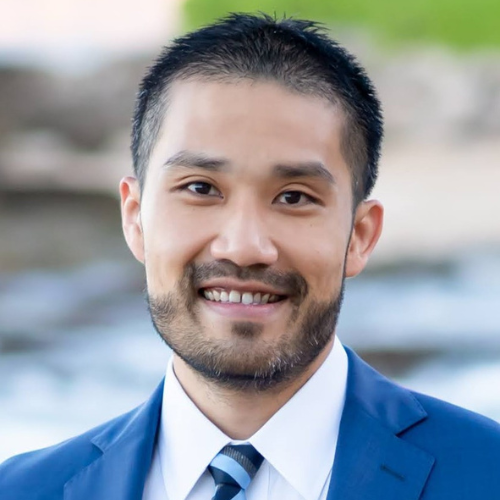
A Life in Family Medicine: Steven Lin, MD: A Journey to the STFM Presidency

The Power of Community in Family Medicine

For incoming STFM President Steven Lin, MD, STFM is more than an organization—it’s a home. “Going to an STFM conference with colleagues and friends from all over the world is like going back home for Thanksgiving!” he says. “That cozy feeling of purpose and belonging is what makes STFM and its community of members so indispensable, especially during times of challenge.” Coming from an institution that lacked a strong primary care culture, he found a sense of belonging in STFM’s network of educators and clinicians. This deep connection is why he is so committed to strengthening and expanding STFM’s role in supporting family medicine educators. “Our vision is to be the indispensable academic home for every family medicine educator” he added.

A Passion for Social Justice and Medicine

Before pursuing medicine, Dr Lin was enamored with music and musical theater. “My childhood dream was to become a symphony conductor or a Broadway musical director. By the time I graduated high school, I had learned how to play multiple instruments and earned a piano performance degree from the London College of Music.” As it turned out, fate had other plans. “It was during college that I became interested in health disparities and social determinants of health,” he says. “I dedicated much of my free time to volunteering at halfway homes in underserved communities to better understand the needs and struggles of vulnerable populations. In medical school, I committed my energies to the study and advocacy of immigrant health and addressing structural determinants,” he continued. “So naturally, I was led to pursue primary care and family medicine.”

Leadership and Lessons for the Future

“When I was younger, I never aspired to be a leader… My greatest fear was not knowing what to say or do.” However, leadership eventually found Dr Lin. “If I could travel back in time to my past self, I would impart this sage advice from Maya Angelou, renowned poet and civil rights activist: ‘People will forget what you said, people will forget what you did, but people will never forget how you made them feel.’” This perspective continues to shape his leadership philosophy, reminding him that empathy and impact matter more than perfection. “I have the same itch that drives many of my colleagues in family medicine: that deeply human urge to do something meaningful, something lasting, something that touches the lives of others, in the relatively short time we have on the planet. That, and a lot of coffee,” he said.

Finding Balance Beyond Work

When not advocating for family medicine education, Dr Lin enjoys binge-watching K-dramas and baking competitions on Netflix. He is also an avid fan of Disney, Marvel, Star Wars, Final Fantasy, and Harry Potter. “Oh, in case you’re wondering, I’m supposed to be a Gryffindor,” he quipped. And music still holds a special place in his life—especially when playing piano with his 7-year-old daughter. He stressed, “She is way more musically talented than I ever was!”  In fact, Dr Lin takes great pride in his titles of dad and husband. “I can’t think of anything else in life that is more crushingly difficult yet so endlessly fulfilling.”

A Message for Future Family Medicine Leaders

For medical students and residents embarking on their careers, Dr Lin offers a piece of advice: “Whatever it was that drew you to family medicine—whether it was a story, a cause, a loved one, a patient, a mentor—find a way to capture that memory. Write a letter to your future self, create a time capsule, or share your journey with those who can help remind you why you chose this noble path.”

The Challenges and Opportunities Ahead

As he prepares to step into his role as STFM President, Dr Lin is aware of the hurdles facing family medicine today. “There has never been a more challenging time to be a family medicine clinician, scholar, or educator. Global socio-political-economic unrest, the greed-driven corporatization of healthcare, the disruptive pace of artificial intelligence advancement, and a deepening crisis of human and planetary health all add to a practice and teaching environment that is increasingly complex. Now, more than ever, we need Family Medicine to be the countervailing force for a healthier world,” he emphasized.

When asked for his advice for young medical students and residents, he encourages future family medicine practitioners and educators to remember what drew them to the field in the first place. “Write a letter to your future self. Put photos in a time capsule. Share your personal journey with family and friends so they can help you remember why you walk this noble path,” he recommends. “The crippling forces of the modern medical-industrial complex can weigh you down sometimes. Whatever it was that drew you to family medicine—a story, a cause, a loved one, a patient, a mentor—find a way to capture that memory so that you can always go back to it when times get tough.”

Looking Forward

With a deep commitment to the future of family medicine, Dr Lin is ready to lead STFM into a new chapter. His vision is clear: to foster community, advocate for primary care, and support practitioners and educators in their vital work. “STFM members are on the frontlines, being the change that we so desperately need,” he says. “I’m proud to stand alongside each and every one of our members in this fight, and I look forward to finding new ways to support and empower our amazing community of family medicine heroes.”

Prior to being sworn in as president of the STFM Board of Directors, Dr Lin served as member-at-large on the STFM Board of Directors, the chair of the Artificial Intelligence in Medical Education Task Force, and the chair of the Telemedicine Curriculum Task Force.

Writing With a Team

by Sarina Schrager, MD, MS,
Family Medicine Editor-in-Chief

Writing for publication is hard work, especially if you are doing it alone. I find that having a team to write papers with makes the experience easier and more engaging. But, in order to make the process move smoothly, it makes sense to spend a little bit of time at the outset to set some ground rules.

  • Delegation of responsibilities—There are a lot of details to address when writing a paper and I find that is pays off at the end to be clear about who is going to do what at the beginning.  My colleagues and I divide tasks, including being in charge of the reference manager, finding author instructions for potential journals, and delegating one person to be the “corresponding author”. The designated corresponding author will be responsible for sending calendar invites, Zoom meeting information, and reminders throughout the process.
  • Authorship guidelines—You want to avoid any misunderstandings about author order or even who is included in the author list. There are myriad ways to decide who will be the first author and the senior author. It is helpful to talk about this order at the beginning. There may also be decisions about who is going to be an author vs being acknowledged at the end of the paper. I have had situations where one of the co-authors ended up doing much more work than the person who was designated as the first author and the group had a conversation about reordering author lists.
  • Outline of paper—Before starting to write, the group should sit down and develop an outline of what needs to be covered. During this process, different authors may volunteer (or be assigned) different sections. You may elect to use a Google Doc or have people write their sections in Microsoft Word to be forwarded to one designated person to integrate each section into the whole document.
  • References—You may also want to decide how to designate references at this point. Should authors put citations into a comment?  Or at the end?  It is helpful to be clear about this at the beginning. Some people may want to number their references, but this makes integration more challenging, so I usually recommend writing the author’s name and a date in parentheses and just adding the citation somewhere in the document.   It is also helpful to decide at the beginning how you are going to manage references. It can be tricky to integrate several different reference lists from different (or even the same) reference managers. One way to manage this aspect of your paper is to assign someone at the beginning to be in charge of references and have each author forward citations to that person.
  • Deadlines—One thing I love about writing in a group is that everyone is accountable to each other. Unless you are planning to submit to a special issue with a rigid time frame , writing a paper comes with artificial deadlines. But, that said, setting firm deadlines and scheduling regular meetings can keep a project moving forward.
  • Editing—Once each author has written their first draft and the sections have been assembled into one unique document, one author may take the lead in making the paper sound like it has one voice. People write differently and it can be distracting to read a paper that is obviously written by different people. Each author will then want to edit for content and readability using track changes. Ultimately, the corresponding author will accept all track changes and finalize the paper.
  • Postwriting tasks—After you are finished writing the final draft of your paper, someone needs to take the lead and submit the paper to the desired journal. This process, even after reading the author instructions carefully, can take a couple of hours. The corresponding author (often the first author but sometimes the senior author or one of the other contributing authors) will need to upload information about each author, designate suggested reviewers (for some journals), and write a cover letter among other tasks.  Also, it is a great idea to discuss who will take the lead in revising the paper if you get a revision request from the journal and who will be responsible for resubmitting to a different journal if your paper is rejected.
  • Opportunities for mentoring—Writing in a team is an excellent way for more experienced authors to provide support and mentoring to more junior authors. By using clear communication and empowering junior faculty to take ownership of the writing process, mentors can role model a streamlined and effective way to write for publication.

See our recent FM Focus on this topic, “Team Writing Etiquette in Verse”  Team Writing Etiquette in VERSE

Crafting Narratives for Publication

By Sara Shields, MD
associate editor
,
Family Medicine

You’ve had a defining clinical, teaching, or learning experience in your role as a family physician educator, clinician or student.  Someone suggests that you write about it. Here are some pearls for crafting your reflective piece in hopes of publication in a journal like Family Medicine that accepts such narrative work.

  • What story are you trying to tell? Just as with any written piece, consider first your content. What are your key themes (keeping in mind that any word limit may mean focusing on just one theme)?  Consider the readership of the journal—how would a medical student on a family medicine rotation respond to your story? How would a seasoned family medicine faculty member?
  • Avoid judgment–In general, an effective narrative piece is a personal story that shares a particular learning point, but does so without editorializing or requiring references.  How can your writing avoid judgment even as you elucidate and emphasize what you hope the reader will learn with you in your story?
  • Focus on the writing–In narratives, the “methods” of your writing enrich your themes and help them resonate for your readers.  The term “methods” refers to the craft of the writing—how are you using language to move your meaning along?  While avoiding redundancies or complicated phrasing is important, your writing may “sing” more to your readers with careful use of specific literary devices such as metaphor, alliteration, rhythm, or repetition of key words.  No matter whether you are choosing prose or poetry, remember the adage “show, don’t tell” –how can you describe people or events in ways that invoke the reader’s sensory or emotional response rather than simply stating what happened?
  • Every word matters–Especially for formats with strict word counts such as 6 word stories or 55 word essays, every word needs to move your story along. 
  • Circle back to the meaning—When looking at every word,do not lose sight of the totality of the essay.  Does this piece make sense overall?  Does it still say what you want it to say?
  • Do your homework–If your themes seem like they are common in narrative work (e.g. a physician’s experience of their own illness), you may want to look for similar pieces and think about how your story offers new angles or reflections compared to other similar work.  What can you contribute that may be new or surprising for readers?
  • Ask a friend or colleague to read your story–Consider asking someone to read your work before submitting it, to help assess both the content/themes and your storytelling style.  Do these readers resonate with your language?  Your themes?
  • You may need permission__If you describe a patient or learner scenario with enough detail, you may need to get their permission to submit your story for possible publication.
  • Don’t lose yourself–Be authentic; challenge yourself to dig deeply into both personal and professional lessons from your story.   How can you help the reader to consider multiple perspectives?

Reference: Walling A, Shapiro J, Ast T. What Makes a Good Reflective Paper? Fam Med 2012;45(1):7-12.