Tag Archives: education

As Rosie the Riveter Says: We Can Do It—Collaborative and Facilitative Leadership

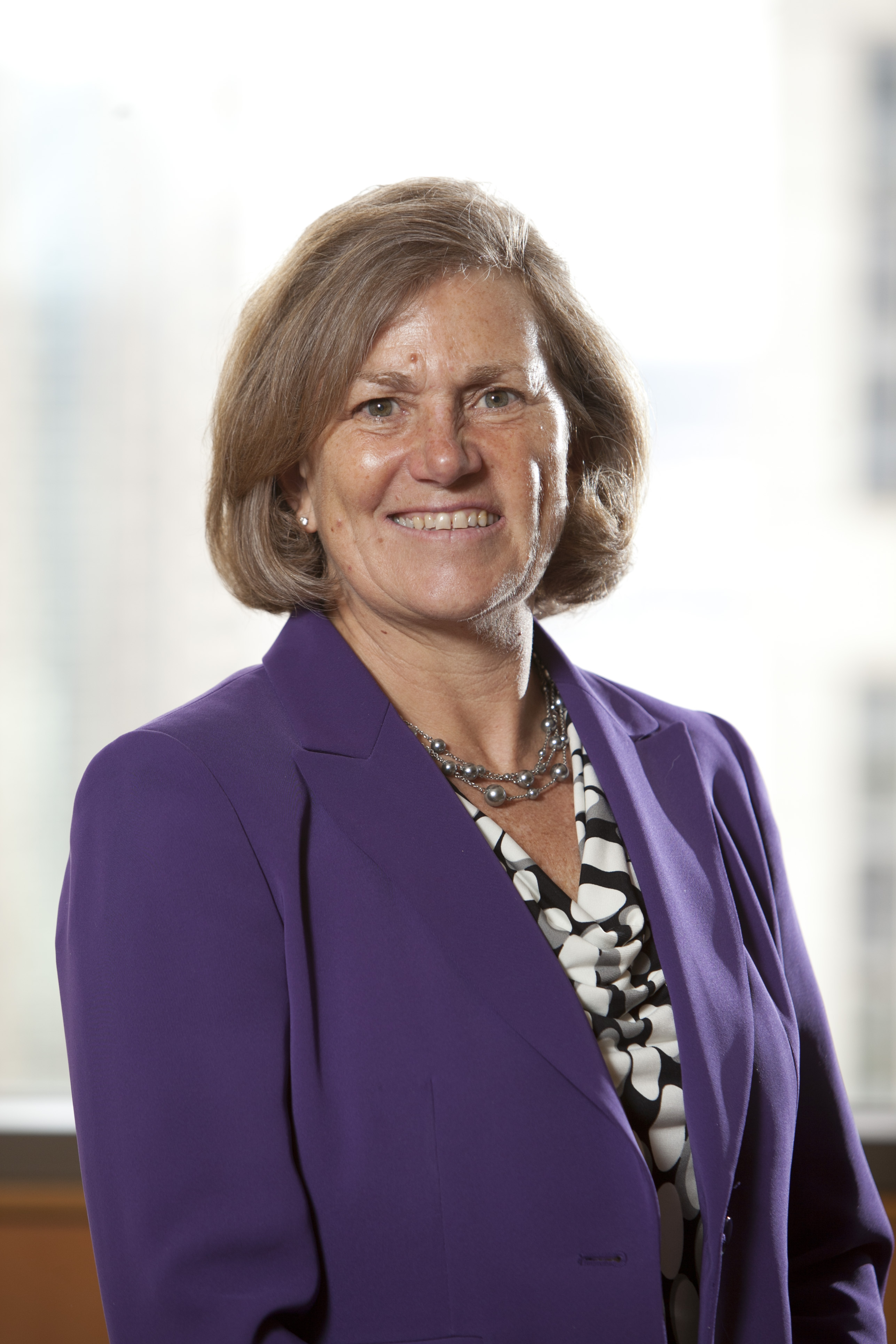
Jeri Hepworth, PhD,STFM Past President

What a fortunate path I have been on. But it is a path that more of us can take, and that is the core message of this blog post. As a behavioral scientist in family medicine for more than 30 years, I grew up in parallel with the discipline of family medicine and have been part of the community of behavioral science faculty who help family physicians know what it means to care for real people, for families, and to do so collaboratively with other health care professionals. Over time, I felt included and valued in my department, in my medical school, and in our national organizations, especially the Society of Teachers of Family Medicine (STFM). So what a thrill it was to be elected STFM president. But it was not without trepidations.

As STFM President-Elect, I attended my first meeting of CAFM and Working Party. Forgive the funny names, but they represent the Council of Academic Family Medicine organizations (STFM; ADFM, the organization of departments and chairs; AFMRD, the residency directors; and NAPCRG, the primary care researchers). The Working Party includes the CAFM organizations, plus the American Academy of Family Physicians (AAFP), the American Board of Family Medicine, and the AAFP Foundation. Together, the organizations work to ensure coordinated positions and grapple with vision and leadership of family medicine. These meetings represent ideal examples of Covey’s work of being both important and not urgent, of taking the time to consider what family medicine is accomplishing, and very powerfully, what should be the next steps.

Not surprisingly, attending my first meetings of these groups was intimidating. But, on the first morning, I received this email from my husband, Robert Ryder: “You are not a non-physician. You were elected to represent the educators in family medicine. So you represent the future of family medicine. Go do good work.” I must say, I walked a bit taller after that email, and over the last couple of years of leadership within national family medicine, I take these statements very much to heart. And I want others to recognize these truths.

Behavioral science clinicians and educators have the skills needed for leadership in our departments, in our health care systems, in our agencies and policy-making arenas, and in our national organizations and advocacy efforts. We know how to listen and include others. We can elicit divergent views and withstand conflict. We know how valuable it is to include the views of those who feel less powerful in systems. We can tolerate the anxiety that emerges in systems under stress or facing change. We know how to help groups create goals and vision, though we sometimes need help determining whether differences actually emerged. So we know we need collaborators, and generally we know how to play well with others. If we have been successful in working in settings in which our professions were the minority, we have learned these skills. And they are exactly the skills needed for effective leadership.

I truly enjoyed giving talks as president of STFM. Unlike presentations about my work, I learned that I didn’t need to hold back, because I wasn’t talking about me. I was representing something greater than me. To be grandiose, and also accurate, I was able to talk about a future and vision of compassionate, effective health care. It wasn’t a form of bragging about my work or ideas; it became a responsibility to do the best I can to help achieve our common goals. I was given a wonderful platform and support to do so.

And the beat goes on. I will still take the opportunities to advocate for family medicine, for primary care, for integrated health care systems that are focused first on patients and families and that require the collaboration and skills of many. But I also have a commitment to encouraging others to stand up and participate in advocacy and leadership for our common visions. The Collaborative Family Healthcare Association and STFM create wonderful platforms for us to do so. Let’s not waste these opportunities.
This is the first in a series of collaborative blog posts between the Collaborative Family Healthcare Association and the Society of Teachers of Family Medicine.
SSI/SSD: What Is Our Role as Family Medicine Educators?

Colleen Fogarty,
MD, MSc

How do we as family medicine educators work with residents or students who come to precept saying, “I don’t think this patient is disabled but…” or “What am I supposed to do with this long form?”

As a family physician who has spent my career practicing and teaching in community health centers, I have come to recognize the importance of Supplemental Security Income (SSI) and Social Security Disability Insurance (SSD) to many of my patients who are out of options. In our annual community medicine rotation, I co-teach a session with a local lawyer to help our residents understand some of the elements of disability determination so they can effectively manage requests for information and advocate for patients as suitable.

SSI, or Title XVI, is a needs-based federal benefits program for poor adults who are over 65 or disabled, and children under 18 who are disabled and whose families are poor. In contrast, Social Security Disability Insurance—or Title II—is an insurance program for disabled adults (wage earners) who have contributed into the Social Security system (FICA). This distinction is as important as it is confusing.

Why should we as family medicine educators know the details about these programs? In a word, poverty. Many of our patients with complex medical needs may be unable to engage in “substantial gainful activity” (SGA), the social security administration’s term for “work for a living.” Many poor individuals and families qualify for county-based programs such as Temporary Assistance for Needy Families (TANF) or Safety Net assistance. These programs are administered at the county level; benefits vary among states, or—in some states—don’t exist at all. Typically, clients must re-apply every 6 months and must participate in some type of work, training, or rehabilitation. Since “Welfare Reform” in 1996, time limits have been imposed.

Given the increasing burden of public assistance, many counties are trying to shift clients off the local “welfare rolls” to SSI, a federal program. Having a reliable source of income adds a measure of stability to people’s lives and keeps them from continually running to the public assistance office, which in many counties can be chaotic and difficult to navigate. Now, when I say “reliable source of income” I am by no means implying that SSI is a gravy train. Just the opposite; SSI determines a set amount per recipient that is based on living arrangements and any other income. In New York in 2012, this comes to approximately $780 per month for the maximum benefit, for a total annual “income” of less than $12,000 per year. Many of my patients on SSI cannot afford to purchase routine hygiene products but are able to afford a low rent and reliably make their payments.

Importantly, SSI comes with health insurance. In two thirds of states, including New York and New Jersey, SSI recipients are automatically eligible for Medicaid. SSD recipients are automatically eligible for Medicare 24 months after receiving their first payment. Even with the imperfections and gaps in coverage of Medicaid and Medicare, having health insurance can mean the difference between getting needed health care and not.

Who is eligible for SSI or SSD?

The SSA Standard for Disability reads: “Inability to perform substantial gainful activity by reason of a medically determinable physical or mental impairment, or combination of impairments, which has lasted or is expected to last at least 12 consecutive months, or end in death, taking into account the individual’s age, education, and work history.” The SSA website http://www.ssa.gov/ contains a wealth of information and can facilitate online applications.

Disabled individuals who have enough work history and FICA contributions may be eligible for SSD. Chronically poor individuals without work history who have a disability expected to last 12 months may be eligible for SSI disability benefits.

Who determines disability, and how can I maintain an effective doctor-patient relationship?

I never promise a patient that she/he will qualify for SSI or SSD. I discuss the patient’s situation with them; in many cases they will have applied and been denied several times. Recommending a skilled disability lawyer is useful. I tell my patients that I will do a full clinical evaluation and provide the information requested to SSA or their lawyer. The Commissioner of Social Security determines disability, not the clinician. This is an important boundary for us to establish with our patients; it provides me a way to stay connected with my patient, honest with my findings, and advocate or not as appropriate to the clinical scenario. I don’t use the word “disable” as a verb, as in “I’ll disable you on this form.” In fact, I don’t tell them that at all, I simply do a full evaluation and document my findings, taking into account contributing factors such as mental illness, learning disability, and educational attainment.

SSA will consider the opinion of the treating source, that is, the primary clinician, as “controlling” if our documentation is well supported and not contradicted. This means that our words as primary care clinicians should carry more weight than consultative examiners or SSA clinicians. Our role is to write and record the patient’s history, diagnosis, limitations, and functional capacity to our best judgment.

At a practical level here are the things I do in practice to assist with these applications:

  1. Book an extended appointment with the patient, specifically to discuss the condition for which they claim disability.
  2. Ensure the patient has signed an appropriate release of information.
  3. Discuss with the patient the SSA definition of disability, my role in the process, and let them know I will provide them and their lawyer with a copy of the visit note documenting my findings.
  4. Use the electronic record to fully document the visit, listing the diagnoses evaluated and billing according to the level of service, usually 99214 for an established patient.
  5. Elicit and document a full occupational history, if not already done. Many of my patients have spotty work histories, based on prior or current mental health problems or other problems. Others have always done physical jobs and have no other skills to bring to the work force.
  6. Elicit and document an educational history. Was the patient diagnosed with a “learning disability” as a student? Have they attempted a GED course and exam? Is there other evidence of a learning problem? What about the possibility of a low IQ?
  7. Include in the assessment/plan a statement of functional limitation and residual functional capacity (eg, how much can the patient walk, stand, sit, lift, carry, bend, handle? How reliable is the patient with:
    1. Understanding, remembering, and carrying out simple instructions?
    2. Making simple work-related decisions?
    3. Responding appropriately to supervision, co-workers, and usual work situations?
    4. Dealing with changes in a routine work setting?
  8. Provide a copy to the patient, or send it directly to the lawyer or SSA address designated by the patient.

The National Health Care for the Homeless council has published two useful publications, one on general tips on documenting disability and an updated version geared for persons with substance use disorders and co-occuring impairments.

In summary, SSI for eligible individuals can make the difference between a reasonably stable chronic poverty and homelessness, and between access and non-access to health care. As advocates for improved health care, family medicine faculty should have some familiarity with their county social service benefits as well as federal programs, such as SSI and SSD. Family medicine residents need to learn to document and advocate for these programs as appropriate and recognize that certain vulnerable members of our communities may be disabled and thus eligible for available public assistance.

Acknowledgement:
The author thanks Catherine M. Callery, Esq, for her educational contributions to our residency program and for reviewing this essay.

A Case for Interprofessional Exchange in Family Medicine

Courtney Kasun, RN, MNSc

One year ago, I began teaching in an interprofessional student clinic.  The student clinic itself had been around for decades, staffed by students in our family medicine clerkship.  However, after a recent campus-wide push for more interprofessional education across health care disciplines, we began adding nursing and pharmacy students to our clinic and having all the students see patients as an interprofessional team.

I was slotted in as the nursing faculty at the last minute when it became evident the previously planned upon faculty member had too many obligations to manage.  Having not been in on the planning meetings,  I had no idea what to expect from the whole experience.  I was nervous and hoped I would be able to contribute something meaningful to our team and to the education of our students.  Little did I know how profoundly this experience would change my life.

One of the first insights we try to give our students in this clerkship is the chance to learn about the other’s professional training,  education,  scope of practice, and ethics.  In the first ever clerkship of interprofessional clinic, we too, as faculty, were learning things we never knew about our professional colleagues, despite having been licensed practitioners for years.  I gained a better understanding of the nuances of medical education, which has been helpful.  More importantly,  I learned from family physicians what makes family medicine different.

In formal nursing education we don’t learn much about physicians, their training, or the differences between specialties. Really, we don’t learn much formally about physicians at all. What we learn about you as a profession is what you teach us. The attitudes of nurses and the ways in which they collaborate with physicians are largely shaped by the early career encounters they have with doctors.

Nursing graduates leave school with a basic understanding of different medicine specialties; we know cardiologists deal with hearts, orthopods with bones, and so on and so forth. However, we don’t graduate with a knowledge of the subtleties or ethos of different specialties. Among the least clear distinctions for nursing is the difference between internal and family medicine. Most of us would be able to tell you that family medicine takes care of kids in addition to adults. Beyond that the distinction is vague.

Imagine my excitement and surprise when I found out how much family docs care about prevention and social determinants of health. Beyond just caring for your patients, you are concerned with public health and that, often, family physicians make their medical practice an extension of social justice principles. These are things that nurses dig. These are aspects that are foundational to to nursing’s world view.

Learning about and aligning with family medicine has renewed the purpose and passion in my professional nursing career. I was previously opposed to pursuing my advanced practice degree in family practice, perceiving that a family nurse practitioner (FNP) degree was only for nurses who want to work in “Minute Clinics” at chain pharmacies. However, since spending time working with family physicians, I decided an FNP is the advanced practice route for me and that I wanted to get the background in prevention and public health that would help prepare me to stand up with family docs and work for change in our health care system.

In addition, I have become a vocal advocate for the specialty of family medicine, as have many of my nursing students who have come through our interprofessional clinic. Three of our nursing students from last year are new graduates who are helping to open a brand new inpatient family medicine unit at our academic health center. Their lives have been changed through exposure to your mission, and they tell everyone who will listen — and even some who don’t want to— about how amazing family medicine is.

What we, as nurses, learn about medicine, or family medicine, is what you teach us. In taking the time to show us the soul of family medicine, you will mobilize your greatest advocates.