I Believe that Behavioral Education Is the Domain of the Courageous and Resilient

I_BelieveLogo

This is the second in a series of collaborative blog posts between the Collaborative Family Healthcare Association and the Society of Teachers of Family Medicine.

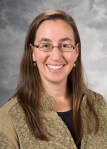
Corey Smith, PsyD

Corey Smith, PsyD

I believe that behavioral education in family medicine is the domain of the courageous and resilient. Behavioral scientists, the “Lone Wolf” of medical education, are asked to educate residents (often with little support) in areas sometimes antithetical to their students’ previous 4 years of medical school.

Example: Motivational Interviewing (MI). Teaching a group of intelligent overachievers, who recently finished training aimed at increasing their comfort with giving orders, that giving orders might be the worst choice they could make? Bring it on.


Continue reading

I Believe There’s no Such Thing as a Work-Life Balance

Katherine Fortenberry_Web

Katherine Fortenberry, PhD

I_BelieveLogoThis is the first in a series of collaborative blog posts between the Collaborative Family Healthcare Association and the Society of Teachers of Family Medicine.

There’s no such thing as work-life balance. I think this every morning when I leave for work, watching my 2-year-old son press his face against the front window and wave at me as I back down the driveway. It comes up again at work, as I guiltily feel relieved when a patient cancels and I have an unexpected half hour to work on a behavioral science presentation for residents. There is always somewhere else that I should be and something else that I should be working on.

Continue reading

Mentoring Female Residents

Sarina Schrager, MD, MS

Sarina Schrager,
MD, MS

There are many unique aspects to being a female physician. Being a female faculty member brings with it another layer of complexity to the relationships with female residents. As a mentor and role model for female residents, we have a unique responsibility to help shape their future.  Like it or not, our residents look to faculty as not only teachers of medicine but teachers about life as a physician. And, a female physician at that.

The female residents in my program often seek me out to discuss issues not related to their education in family medicine but related instead to how they want their lives to look after residency or how they can balance residency with their current lives.

Continue reading