Category Archives: Public Health

How a Great Idea and an STFM Fellowship Empowered Underserved Children to Pursue Health Care Careers

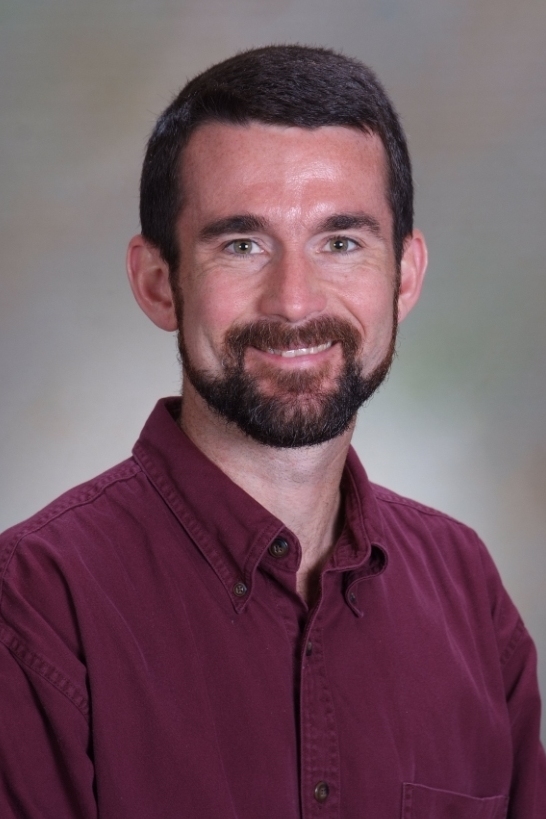
Renee Crichlow, MD,

Renee Crichlow, MD,

“What do you want to be when you grow up?”

My parents always asked me this. I learned later that this was about creating a vision and expectation of the future.

Now I am Dr Renee Crichlow, a family physician working and teaching family medicine in underserved North Minneapolis, and I ask every child I see, “What do you want to be when you grow up?”

Many answer doctor or nurse and yet in the medical school and the residency applications I rarely saw any kids from the neighborhood. My co-worker Shailey Prasad, MD, MPH, and I knew this was a complex problem not to be solved overnight.

We decided with the support of our department chair, Mac Baird, MD, MS, to build The Ladder, a structured health care pipeline mentorship program that incorporates hands-on science fun with values and character development designed to facilitate the development of lifelong learners and leaders interested in health care careers.
Continue reading

Growing the Impact of Family Medicine Through Advocacy

Nicholas Cohen, MD

Nicholas Cohen, MD

Since medical school, I have seen the unrivaled value family physicians provide to the patients they see. I was unaware—until this month—of the impact family physicians can have beyond their clinic walls on the health of their community at the local, regional, and national level. Our potential impact in this expanded sphere became clear to me on a visit to Capitol Hill with the Family Medicine Congressional Conference.

 What is the Family Medicine Congressional Conference?

FMCC attendees outside the office of Senator Sherrod Brown, D-OH.

FMCC attendees outside the office of Senator Sherrod Brown.

It is a 2-day conference in Washington, DC, open to anyone in family medicine. Day one I learned about the current priorities in family medicine and received practical, hands-on training in advocacy. Day two I visited  members of  Congress with others from my state in prearranged meetings to engage legislators in issues important to me and my patients.

Continue reading

Are We Teaching Template-Based Medicine? The Forest and the (Very Well Documented!) Trees

Bill Cayley, Jr

Bill Cayley, Jr,
MD MDiv

With the increasing use of electronic medical records (EMRs) and their ever-so-helpful templates, smart-sets, and forms for capturing information needed to support billing and guide protocols, I fear we are losing the narrative forest for the well-documented trees. Especially in family medicine, we have a long tradition of teaching our learners to appreciate narrative and nuance, and the flow of meaning and story that comes from a patient’s history can give far more insight into what may be going on than one gets from simple documentation of location, quality, quantity, etc. Now, however, our use of EMRs is pushing us more and more to documentation of positives and negatives, rather than story.

Case in point #1: As emergency room documentation has moved toward templates and away from dictation, I have found ER notes growing in length, yet declining in their ability to convey meaningful information. Documentation of an ER visit that in the past was captured by a one- or two-page dictated note, now comes in a eight- or nine-page template document that gives no real clue as to what really brought the patient in or what really happened.

Case in point #2: As EMRs use templates to guide information gathering, how often do you find yourself responding to the template in an office visit, or ordering something “because it is there,” rather than listening to the patient’s story? Continue reading