Category Archives: Family Medicine Stories

Double Feature: A Spotlight on Global Health Education

Note from the Editor: The December blog contains two important submissions on global family medicine and the factors that contribute to inequities in the field including but not limited to funding, climate change, geopolitical events, and more. Thank you to Barry Bacon, MD, Martha Sommers, MD, Bhargavi Chkuri, MD, and Meredith Milligan, MD

Dream School: How One Patient Encounter Can Change the Direction of Your Life

One patient encounter can change the direction of your life.

Our team, Gambella Medical Team Connections in Western Ethiopia and Anchor Health for South Sudan in South Sudan, dreams of creating a medical school to change health outcomes for the region. This long-term strategy will build up the region’s workforce with physicians and other local-to-the-area healthcare workers familiar with the area’s needs.

The challenges we face include:

  • Lack of livable wages. Doctors in South Sudan are employed by the government and receive $12 per month.
  • Lack of funding and support. Donor countries who had been sponsoring healthcare support in South Sudan have retracted their financial support.
  • Lack of access to quality medical care. There are five hospitals in the Gambella region serving a million people. These hospitals have one functioning x-ray machine and one functioning operating room.
  • Lack of physicians. There are 120 physicians in South Sudan serving a population of 12 million, a ratio of 1:100,000. In 2013, there were nine midwives and eight OB/GYNs identified in all of South Sudan. As a result, one in seven women die from childbirth complications. We witnessed a child dying in his parents’ arms while waiting to be seen by a physician at the central hospital.
  • Lack of access to medicines, equipment, and tools required to provide quality care.
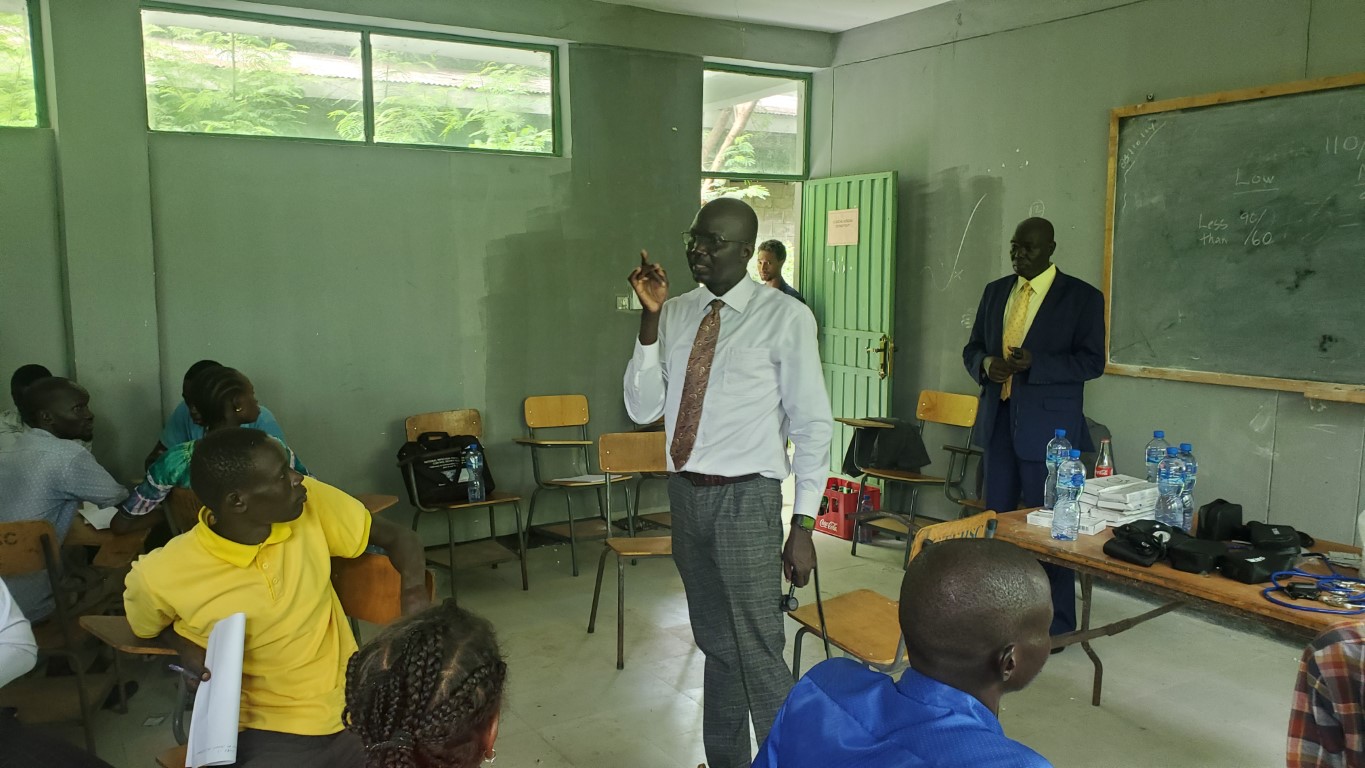
  • Lack of tools. Nursing schools in Gambella don’t even have a blood pressure cuff and must teach their students without one.
  • Outsourcing. Medical care is outsourced at a cost of $200 million per year to other countries.
  • Conflict. There are 400,000 refugees in the Gambella region. Facility transfers must transport patients during times of conflict.

Many members of our team fled South Sudan and Gambella due to the conflict and violence. After arriving in the United States, they received an education and they returned to the region, bringing colleagues and US recruits with them with the goal of transforming healthcare in South Sudan and the Gambella region of Ethiopia. Thanks to presentations at the 2019 and 2021 AAFP Global Health Summit, we were able to grow our team and support network. The connections built by our team, along with their local knowledge led to Marshall University’s Family Medicine Global Health Division joining the effort; and the sharing of widespread contacts that contribute to our progress.

We’ve been offered a hospital in Juba to create a multi-specialty healthcare center and a base for medical education. Our vision is to invite US-based instructors and specialty teams to provide care for patients while teaching medical students and South Sudanese physicians. Additionally, we must address the policy fiascos that prevent healthcare professionals from receiving sustainable, livable income. For over five years, we’ve worked on our dream of developing an international medical school with campuses, and teaching sites in remote hospital and clinical settings in South Sudan and Western Ethiopia. We have the support of both leaders in South Sudan, the Gamebella regional government, and are audacious enough to believe we will accomplish our dream.

Globally, the world is asking more of family medicine.  As teachers of family medicine, we are learning how to meet the needs in South Sudan and Gambella, and focusing on increasing opportunities to involve medical students, residents, and colleagues as we move forward.

Join us.

Barry Bacon, MD
250 S Main St
Colville, WA  99114
Anchor Health for South Sudan
Gambella Medical Team Connections
baconbarry@juno.com


Martha Sommers, MD
Assistant Professor
Department of Family and Community Medicine
Marshall University

References

(1)https://www.who.int/director-general/speeches/detail/the-rising-importance-of-family-medicine

Margaret Chan. (June 26, 2013). The rising importance of family medicine. Paper presented at the 2013 World Congress of the World Organization of Family Doctors, Retrieved from https://www.who.int/director-general/speeches/detail/the-rising-importance-of-family-medicine
Modernizing Global Women’s Health Curricula: Inclusivity, Intersectionality, and Climate Change

by Bhargavi Chekuri, MD, University of Colorado School of Medicine, Aurora, CO, and Meredith Milligan, MD, Dartmouth-Hitchcock Medical Center, Lebanon, NH

Gender inequality remains one of the most important drivers of disparities in health and well-being worldwide. To address these disparities, global women’s health research and curricula have been developed to better meet the unique health needs of women worldwide. While training programs often provide much needed focus on reproductive and obstetric care, infectious diseases, and cancer screening, significant blind spots remain.

First, gender continues to be categorized as binary in most of the research focused on global women’s health. As a result, teaching in this field fails to incorporate intersectionality, overlooking the physical and mental health needs of other sexual and gender minorities (SGMs). Additionally, teachers of global women’s health, and indeed medical educators more broadly, do not adequately integrate planetary health into their curricula. This is problematic because climate change is already worsening current global health disparities with well-documented gender-specific impacts, making it one of the most important, cross-cutting determinants of health in the 21st century. Research and teaching at the nexus of all three of these issues (global women’s health, health needs of other SGMs, and climate change) is even rarer, despite the fact that SGMs are particularly vulnerable due to compounding issues such as discrimination.

Gender-specific Impacts of Climate Change

Climate change harms human health by altering the quality and quantity of our air, water, food and weather. Increased temperatures and drought, poor air quality, more intense extreme weather events, and changing disease patterns all affect mortality and morbidity, resulting in injury, poor cardiovascular and respiratory outcomes, and worsening mental health worldwide. Globally, women and other SGMs face increased exposure to the consequences of climate change due to existing health disparities as well as differences in gender roles and responsibilities. When faced with these exposures, unequal resource distribution further limits the adaptive capacity and resilience of women and other SGMs. Women in low-income countries (LIC), for example, have disproportionate exposure to food insecurity because they are more likely to live in poverty and rely on subsistence farming to feed themselves and their families. When faced with lower crop yields, women are at higher risk for nutritional deficiencies, both because of increased reproductive demands (like menstruation and pregnancy), and because of underlying cultural norms that may prioritize feeding others. Similarly, gender-based social and cultural norms place responsibility for managing household water supply on women in LICs. As climate change strains freshwater resources globally, women spend more time and travel farther to locate, transport, and secure household water. Along the way, they can have increased exposure to heat, musculoskeletal injury, and face the threat of violence or abuse. Climate-related disasters like wildfires, storms, and flooding also have gendered health impacts. Women in low and middle-income countries are more likely to die from extreme weather or flooding events than their male counterparts because they are also more likely to be homebound, serving as caregivers, and unable to immediately escape climate-related disasters. Simultaneously, women have unequal access to disaster response services in the aftermath of such events, often losing access to essential sexual health and reproductive health services (SHRH) right when they need them the most.

SGMs are particularly socially vulnerable during disasters due to existing inequities as well as discriminatory disaster response policies. In the U.S., for example, LGBTQ+ people are more likely to live in poverty, experience unstable housing, and have chronic physical and mental health conditions, all leading to a higher risk of direct and indirect injury during extreme weather events. Additionally, disaster response policies in the U.S. do not explicitly prohibit discrimination based on sexual orientation or gender identity, or routinely recognize gender-diverse family structures, opening LGBTQ+ people to harm and separation when pursuing relief.

A Path Forward

Unfortunately, these are just a few of the many ways women and SGMs around the world are disproportionately impacted by the changing climate. Practitioners and teachers of global women’s health must be aware that current gaps in global health research limit our ability to fully understand and address gender-based health disparities worldwide. Integrating an intersectional and inclusive lens while defining, understanding, and teaching global women’s health is an important first step in addressing health disparities felt by women and other SGMs. Global women’s health practitioners must also use and teach a planetary health lens so they are better prepared to address contemporary health threats. Those leading community-based collaboration and bidirectional global women’s health partnerships must understand and teach concepts like gender-mainstreaming and climate action when developing projects aimed at improving women’s health. Lastly, global women’s health practitioners must understand and teach the importance of applying reproductive justice and human rights frameworks to climate action plans; this not only improves the adaptive capacity and resilience of women and other SGMs but also subsequently improves gender-based health disparities.

Definitions:

Sex refers to the biological characteristics that define humans such as female or male.

Gender refers to the socially constructed characteristics, norms, roles, and behaviors attributed to women, men, girls, boys, and non-binary people. Because gender is a social construct, ideas about gender vary across societies and time.

Gender equality refers to the equal rights, responsibilities, and opportunities of all genders.

LGBTQ+ is an acronym that collectively refers to individuals who are lesbian, gay, bisexual, transgender, or queer. The “Q” can also stand for questioning, referring to those who are still exploring their own sexuality and/or gender. The “+” represents those who are part of the community, but for whom LGBTQ does not accurately capture or reflect their identity.

Sexual and gender minorities (SGMs) refers more broadly to people whose biological sex, sexuality, gender identity and/or gender expression depart from majority norms. The term ‘sexual and gender minorities’ includes considerable diversity as well as a multiplicity of identities and behaviors, including, but not limited to, individuals who identify as LGBTQ+. The term ‘sexual and gender minorities’ is preferentially used in global health contexts because the term ‘LGBTQ+’ is derived from Western contexts which may not apply to many people in the world.

Intersectionality refers to a theoretical framework born out of the Black feminist movement which maintains that individual identities (such as race, class, gender, sexual orientation, immigration status, etc.) intersect to create experiences of inequality within society. Research using intersectionality methods is ideally built on a foundation of coalition-building with the aim of gaining a deep understanding of the diversity of lived experiences and the ways in which systems of oppression and privilege impact these varied experiences. Such research also maintains that emphasis on one identity over another fails to capture the true causes of disparity in the world.

Gender mainstreaming is defined by the UN as “the process of assessing the implications for women and men of any planned action, including legislation, policies, or programs, in all areas and at all levels. It is a strategy for making women’s as well as men’s concerns and experiences an integral dimension of the design, implementation, monitoring, and evaluation of policies and programs in all political, economic, and societal spheres so that women and men benefit equally, and inequality is not perpetuated. The ultimate goal is to achieve gender equality.”

Bhargavi Chekuri, MD, is Co-Director, Diploma in Climate Medicine, and Assistant Professor, Department of Family Medicine, University of Colorado School of Medicine, Aurora, CO

Meredith Milligan, MD, is Family Physician and Leadership Preventive Medicine Resident, Dartmouth-Hitchcock Medical Center, Lebanon, NH

Pharmacists as Family Medicine Teachers

Editors Note: In honor of American Pharmacists Month, STFM Member Scott Bragg, PharmD, former STFM Member at Large, pens an essay outlining his journey as a pharmacist in family medicine education.

by Scott Bragg, PharmD, Medical University of South Carolina

My journey to teaching family physicians started in 2009 as a second-year pharmacy student at West Virginia University. The previous year, I developed late-onset type 1 diabetes, which led me to volunteer at a diabetes camp called Camp Kno Koma in West Virginia. My first night at camp, one of the nurses asked me to check blood glucose values for the campers in our cabin and treat kids for any lows they experienced. Being relatively inexperienced with making treatment decisions with patients, I was anxious but made it through the night without incident. The whole week was a crash course in following trends, learning on my feet, and trusting others on our care team. My experiences at camp and subsequent learning in pharmacy school led me to pursue pharmacy residency training, because I loved working with a diverse care team and developing autonomy as a clinician.

In pharmacy, exposure to family medicine as a discipline is uncommon, as it is not a recognized specialty for residency programs. Also, there are very few opportunities for holistic training in interprofessional education. Many pharmacist educators in family medicine stumble upon this career path after residency training when they start their first clinical job and find they have a chance to start teaching. Like my experience at diabetes camp, it can be a challenging, learn-as-you-go opportunity. I was very fortunate to complete two years of residency training at UPMC St. Margaret in Pittsburgh, Pennsylvania, where they welcome pharmacy residents into their faculty development fellowship. This is where my love for teaching and family medicine grew. I was surrounded by passionate teachers who viewed their careers as a calling to better the lives of learners and their patients. The faculty development fellowship provided opportunities to partner with family physicians to develop curricula, research collaborations, and patient care initiatives. As a family medicine pharmacist, I hope to encourage more pharmacists to pursue positions within family medicine and contribute to the next generation of family medicine educators.

Family medicine is a uniquely interprofessional discipline, and that’s something I learned when working as a family medicine educator with the Medical University of South Carolina in Charleston, South Carolina. I knew early on that I had found a home when, during my first week on inpatient, one of our attendings insisted I round on their team. I observed early on as a faculty member that pharmacists often possess skills (eg, eye for detail, focus on transitions of care, attention to patient costs) useful to family medicine teams. Many of the pharmacy students I precept are surprised at how easy it is to collaborate with our family medicine team. More than other disciplines, family medicine educators and trainees create an environment that truly values an interprofessional approach.

The nuances of providing patient care in family medicine make it consistently challenging and rewarding. Family medicine teams proactively apply evidence-based medicine, navigate an evolving health care system, practice population health management, and consider social determinants of health. Family medicine providers are often described with the phrase “jack of all trades, but a master of none.” I disagree. I like to say that family medicine teams are a jack of all trades and a master of many. Our holistic team approach helps us deliver on patient-oriented outcomes that matter, despite many of the complex issues we encounter.

So how do we continue to push for innovation and optimize patient care outcomes? One way is by including pharmacists and other interprofessional team members, such as nurses, behavioral health providers, and social workers on family medicine care teams. With the transition in focus to value-based care, building bridges to multiple interprofessional groups will only strengthen the family medicine discipline. STFM and other organizations that make up the family of family medicine continue to serve as catalysts for innovation in our practice model and inclusion of interprofessional educators.

STFM has provided me and many other pharmacists with valuable professional development opportunities. I have worked as a fellow in the Emerging Leaders Fellowship, a member at large on the board of directors, and the program assessment chair for STFM. These leadership experiences have helped me understand the complexities of medical education and advocacy for family medicine as a discipline. I also belong to STFM’s Pharmacist Faculty Collaborative where I’ve grown in my understanding of the ways pharmacists contribute to family medicine education and networked with pharmacists across the country. Despite the name, the Pharmacist Faculty Collaborative is open to all STFM members; please check us out on STFM Connect.

Incoming STFM President Linda Myerholtz, PhD Sits Down for a Conversation With STFM

As the 2021-2022 term comes to a close, we sat down with incoming STFM President Linda Myerholtz, PhD to learn about her journey into family medicine education and her plans as President of the STFM Board of Directors.

"I'm proud and humbled to represent the STFM membership as president. My passion for interprofessional team-based education and practice promotes system change and supports wellbeing within the graduate medical education structure. The journey to family medicine education is exhilarating and exhausting. What I most look forward to, though, is continuing to foster connections among our members." - Linda Myerholtz, PhD
“I’m proud and humbled to represent the STFM membership as president. My passion for interprofessional team-based education and practice promotes system change and supports wellbeing within the graduate medical education structure. The journey to family medicine education is exhilarating and exhausting. What I most look forward to, though, is continuing to foster connections among our members.” – Linda Myerholtz, PhD

Linda Myerholtz, PhD, Associate Professor and Director of Behavioral Science Education at the University of North Carolina, Chapel Hill start her term as STFM President during the 2022 STFM Annual Spring Conference. She brings with her a passion for human behavior, building community, and integrated healthcare.

Growing up as a “professor’s kid”, Myerholtz was born in Caracas, Venezuela. “My father was working for a company at the time, though I have no memory of living in South America. Our family moved back to the US when I was 6 months old, and landed in Racine, Wisconsin.” Myerholtz explained. “I spent my early childhood in Wisconsin, before we moved to Bowling Green, Ohio when I was 14. There was quite a bit of culture shock going from a big city like Milwaukee to a very small town, where I could see cornfields growing from my bedroom window.”

Myerholtz began to love the rural, small town university life, and went on to complete her undergraduate and graduate work at Bowling Green State University in Bowling Green, Ohio. “I married my husband and we started our family. The winters were long and gray, and we dreamed of moving further south.”

When asked if she always knew medicine was the career for her, Myerholtz said “I’m not sure why, as I lived in the middle of the Midwest far away from any beach or ocean, but as a child, I always wanted to be a marine biologist. I loved biology, and it sounded exciting. When I took Introduction to Psychology my freshman year, I was fascinated about human behavior, and I knew this was my career path.” Myerholtz went on to give a shout out to her professor, Dr Stone, proving the impact good educators have on young minds beginning their academic medicine journey.

As Myerholtz’s career took off in community mental health, she moved into more administrative roles, but continued providing training for graduate psychology interns. “This brought me so much joy, and there were a few STFM members who trained with me at the same time.” While this passion for working with marginalized individuals continued to grow, the administrative aspects pulled Myerholtz away from the more enjoyable parts of her work, namely clinical care, teaching, program development, and research.

“One day, I saw a posting in my inbox for a position as a Director of Behavioral Science in a family medicine residency program [Mercy Family Medicine in Toledo, Ohio]. I was enticed by the opportunity to teach bright young adults who shared my passion in making communities healthier and the opportunity to resume my research and practice integrated behavioral healthcare. When I first started at Mercy, I couldn’t tell you much about medical education or what it was like to be a resident, but the residents taught me and I felt like I really found my passion.”

That passion resulted in Myerholtz’s ability to work closely with different learners and fellow faculty. “Each day is different,” she went on to explain. “We’re always reflecting on how we can continue to improve the wellbeing of our communities through the practice of family medicine – what could be better?”

Myerholtz is quick to mention lessons abound in family medicine education, but there is one that has stuck with her. “Be kind to your future self. As you reflect on your past self, do so with compassion,” she explained. The first part helps me prioritize and reminds me to make decisions today that support myself in the future. The second part reminds me not to judge my past self, based on the knowledge and the wisdom I have today. Past decisions and mistakes are a part of being human, and we need to offer compassion for the person we were when those things happened.”

While her career progressed, Myerholtz’s dream to move her family further south was solidified when she accepted a position with the University of North Carolina. “Being a behavioral scientist in graduate medical education is truly a dream job, and it’s been fantastic living in North Carolina. We still get the change of seasons, but the winter is much shorter! We can go hiking in the mountains, relax at the beach, and explore great restaurants and cultural gems.”

As she prepares to be installed as STFM President, Myerholtz looks forward to bringing that passion for wellbeing to STFM members. “I’m proud and humbled to represent the STFM membership as president. My passion for interprofessional team-based education and practice promotes system change and supports wellbeing within the graduate medical education structure. The journey to family medicine education is exhilarating and exhausting,” she explained. “What I most look forward to, though, is continuing to foster connections among our members. I’m so excited we will be able to renew collaborations together at our Annual Conference in Indianapolis. Connection is what makes STFM so exceptional,” she continued. “None of us can do this alone, nor do we have to reinvent the wheel. Through STFM, we come together to make the wheel even better.”

Part of improving that wheel comes from the utilization of STFM resources. “As I reflected on what I’ve used most, the list continued to grow. I was fortunate to participate in the first class of the Behavioral Science Family Systems Educator Fellowship, and this was pivotal in my career. I found so many collaborative relationships and true friendships. I also utilize the STFM Resource Library frequently to gain inspiration from other excellent educators. I’ve learned so much from our Collaboratives – being able to reach out to a Listserv of amazing colleagues when I have a question is so incredibly valuable. Whether through fellowships, collaboratives, toolkits, certificate programs, or the resource library, STFM allows us to connect with each other and share our learning, with the ultimate goal of transforming family medicine education and the health of our communities.”

When she’s not revolutionizing family medicine education and empowering marginalized communities, Myerholtz finds joy with her family. “While my career has brought me a strong sense of accomplishment, I’m most proud of the adults my children have become. Raising three human beings who are living the values that are important to me… kindness, compassion for others, generosity, a commitment to social justice, valuing diversity… it fills my heart. Watching them go out into the world, knowing they make the world a better place now, and for future generations, is a tremendous joy.”

That love for her family extends to acting as a personal travel guide for their adventures. “Planning the trip is about enhancing the joy while practicing delayed gratification.”

STFM and its members will benefit immensely from Myerholtz’s leadership, experience, compassion, and drive. We welcome her to the Board of Directors for the 2022-2023 year.