Tag Archives: mental health

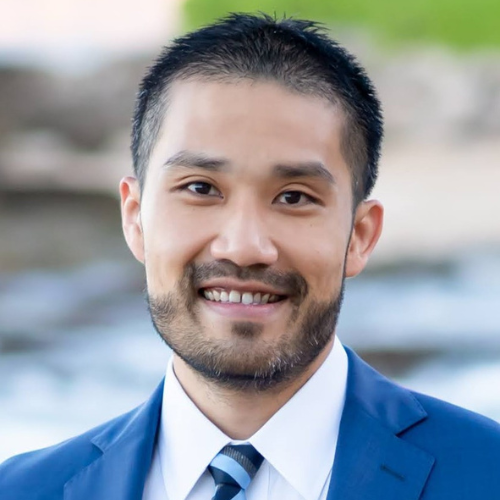
A Life in Family Medicine: Steven Lin, MD: A Journey to the STFM Presidency

The Power of Community in Family Medicine

For incoming STFM President Steven Lin, MD, STFM is more than an organization—it’s a home. “Going to an STFM conference with colleagues and friends from all over the world is like going back home for Thanksgiving!” he says. “That cozy feeling of purpose and belonging is what makes STFM and its community of members so indispensable, especially during times of challenge.” Coming from an institution that lacked a strong primary care culture, he found a sense of belonging in STFM’s network of educators and clinicians. This deep connection is why he is so committed to strengthening and expanding STFM’s role in supporting family medicine educators. “Our vision is to be the indispensable academic home for every family medicine educator” he added.

A Passion for Social Justice and Medicine

Before pursuing medicine, Dr Lin was enamored with music and musical theater. “My childhood dream was to become a symphony conductor or a Broadway musical director. By the time I graduated high school, I had learned how to play multiple instruments and earned a piano performance degree from the London College of Music.” As it turned out, fate had other plans. “It was during college that I became interested in health disparities and social determinants of health,” he says. “I dedicated much of my free time to volunteering at halfway homes in underserved communities to better understand the needs and struggles of vulnerable populations. In medical school, I committed my energies to the study and advocacy of immigrant health and addressing structural determinants,” he continued. “So naturally, I was led to pursue primary care and family medicine.”

Leadership and Lessons for the Future

“When I was younger, I never aspired to be a leader… My greatest fear was not knowing what to say or do.” However, leadership eventually found Dr Lin. “If I could travel back in time to my past self, I would impart this sage advice from Maya Angelou, renowned poet and civil rights activist: ‘People will forget what you said, people will forget what you did, but people will never forget how you made them feel.’” This perspective continues to shape his leadership philosophy, reminding him that empathy and impact matter more than perfection. “I have the same itch that drives many of my colleagues in family medicine: that deeply human urge to do something meaningful, something lasting, something that touches the lives of others, in the relatively short time we have on the planet. That, and a lot of coffee,” he said.

Finding Balance Beyond Work

When not advocating for family medicine education, Dr Lin enjoys binge-watching K-dramas and baking competitions on Netflix. He is also an avid fan of Disney, Marvel, Star Wars, Final Fantasy, and Harry Potter. “Oh, in case you’re wondering, I’m supposed to be a Gryffindor,” he quipped. And music still holds a special place in his life—especially when playing piano with his 7-year-old daughter. He stressed, “She is way more musically talented than I ever was!”  In fact, Dr Lin takes great pride in his titles of dad and husband. “I can’t think of anything else in life that is more crushingly difficult yet so endlessly fulfilling.”

A Message for Future Family Medicine Leaders

For medical students and residents embarking on their careers, Dr Lin offers a piece of advice: “Whatever it was that drew you to family medicine—whether it was a story, a cause, a loved one, a patient, a mentor—find a way to capture that memory. Write a letter to your future self, create a time capsule, or share your journey with those who can help remind you why you chose this noble path.”

The Challenges and Opportunities Ahead

As he prepares to step into his role as STFM President, Dr Lin is aware of the hurdles facing family medicine today. “There has never been a more challenging time to be a family medicine clinician, scholar, or educator. Global socio-political-economic unrest, the greed-driven corporatization of healthcare, the disruptive pace of artificial intelligence advancement, and a deepening crisis of human and planetary health all add to a practice and teaching environment that is increasingly complex. Now, more than ever, we need Family Medicine to be the countervailing force for a healthier world,” he emphasized.

When asked for his advice for young medical students and residents, he encourages future family medicine practitioners and educators to remember what drew them to the field in the first place. “Write a letter to your future self. Put photos in a time capsule. Share your personal journey with family and friends so they can help you remember why you walk this noble path,” he recommends. “The crippling forces of the modern medical-industrial complex can weigh you down sometimes. Whatever it was that drew you to family medicine—a story, a cause, a loved one, a patient, a mentor—find a way to capture that memory so that you can always go back to it when times get tough.”

Looking Forward

With a deep commitment to the future of family medicine, Dr Lin is ready to lead STFM into a new chapter. His vision is clear: to foster community, advocate for primary care, and support practitioners and educators in their vital work. “STFM members are on the frontlines, being the change that we so desperately need,” he says. “I’m proud to stand alongside each and every one of our members in this fight, and I look forward to finding new ways to support and empower our amazing community of family medicine heroes.”

Prior to being sworn in as president of the STFM Board of Directors, Dr Lin served as member-at-large on the STFM Board of Directors, the chair of the Artificial Intelligence in Medical Education Task Force, and the chair of the Telemedicine Curriculum Task Force.

Improving the Clerkship Learning Environment for Introverts

“There are strengths and weaknesses associated with introverted traits and with extroverted traits. Extroverts thrive in social situations, can rapidly form relationships with team members, and are comfortable with spontaneous brainstorming, thinking aloud and offering ideas quickly and assertively. Introverts’ strengths include thoughtfulness, listening, humility, and forming deep connections. They process internally, share fully formulated thoughts, and prefer to avoid bringing attention to themselves.”

—Kendall Jones, University of Washington School of Medicine

by Kendall Jones, University of Washington School of Medicine

When I meet a patient in clinic, I am in my comfort zone, focused on connecting and creatively problem-solving. But when I leave the exam room, I feel overwhelmed and misunderstood—my mind races as I struggle to communicate my thinking. Patient care settings can be chaotic and the requirement to perform on-the-spot for evaluators frequently does not create a learning environment that accommodates introverts.

While improving the learning environment for students from all backgrounds is an ongoing effort in medical education, I haven’t heard discussion about the experience of introverted students in clinical rotations. The current model of clinical phase medical education frequently does not create a safe learning environment for introverted students. For me, this has contributed to a negative cycle of anxiety and underperforming. Patients appreciate my careful listening and thoughtful responses. But in a rushed clinic, I feel any information I can share is treated as redundant. As I present, I feel concerned about taking up too much space despite the importance of this presentation for my grade. Preceptors observe my hesitancy and lack of self-assuredness and interpret it as failure. But confidently voicing my thinking process is much more difficult “on stage” than in a real-life patient-care setting. Awful feelings related to these experiences day-in and day-out are a significant challenge: I observe myself reaching burnout faster than other classmates, and I worry that I don’t have the energy-levels, constitution, and extroversion required to succeed in medical school and residency. However, I found that research and commentaries validate my feelings and experiences. I am not alone.

Over the course of the last three decades, the Center for Research in Medical Education and Health Care has investigated medical student personality and personal characteristics and correlations with student success and patient care. In 2004, they found that greater self-esteem and higher scores of extroversion could predict global ratings of clinical competence in core clerkships in medical school. Systematic reviews support the finding that introverted students tend towards poorer evaluations related to interpersonal behavior during clerkship rotations. 1 In 2005, Davis and Banken identified significant positive correlation of extrovert traits with clinical performance in an OBGYN clerkship but no correlation with performance on the standardized subject exam, consistent with other studies finding lack of correlation between more subjective clinical evaluations and more objective measures of clinical knowledge. They thus questioned, as have others before, whether clinical evaluations should be included in the overall evaluation score or if they should be labeled ‘interpersonal skills’ rather than ‘clinical evaluation’ to more accurately describe what the evaluation reflects. 2 Surveying nearly 3,000 students who completed core clerkships, Lee et al. found that more reserved students were more likely to report lower grades while more assertive students received lower grades less frequently. 3 A possible mediator for these findings is extroversion. This allows students to demonstrate their enthusiasm and knowledge to their evaluators which can improve their subjective grade. Another explanation is that the stress of constantly trying to impress evaluators has a greater effect on introverted students while extraverted students are more at ease; introverted students are known to feel less comfortable expressing themselves in high-pressure environments and are inclined to hold back and speak only if they are 100% sure of themselves. 4, 5 While inferior evaluations can affect students’ chances at residency, the challenge of having an introverted tendency in medical training can negatively affect students’ health as well.

Multiple studies have shown an association of introversion with burnout. 6, 7 Qualitative research agrees with these findings with introverted students reporting feeling like ‘misfits’ and that they must change their identities to succeed in medical school. 1 Introverts report working to make others comfortable at the expense of their own comfort and energy levels. 1 When introverted students experience medical training invalidating their innate style of thinking and social engagement, they are more likely to experience chronic stress and anxiety. Leadership research finds that both introverts and extroverts lend important and distinct contributions to teams. 8 Learning environments ought to be tailored to fit students who fall anywhere within this temperament spectrum.

There are strengths and weaknesses associated with introverted traits and with extroverted traits. Extroverts thrive in social situations, can rapidly form relationships with team members, and are comfortable with spontaneous brainstorming, thinking aloud and offering ideas quickly and assertively. Introverts’ strengths include thoughtfulness, listening, humility, and forming deep connections. They process internally, share fully formulated thoughts, and prefer to avoid bringing attention to themselves. In clerkships, extraverted traits are beneficial for adapting to the constant rotation of locations and team members. Extraverted students are likely to be more comfortable with presenting information in quick succession and processing this information as they speak, whereas introverts desire to thoroughly gather information and feel a need for focused time to formulate assessments before sharing them with others. Not only are extroverted traits are preferred in clinical rotations, they are preferred in modern Western society as a whole. As noted by Davidson et. al., “This trend of devaluing or pathologizing introverted behavior has been noted in national studies and is emphasized in Susan Cain’s best-selling book on introversion (Quiet: The Power of Introverts in a World that Can’t Stop Talking9) that Western society has shifted from appreciating a thoughtful approach of interaction with others to a more demonstrative social and assertive approach.” Natural introverts sense these preferences, and this can negatively affect students’ self-esteem. Introverts can try to act more extroverted, but this adds yet another obstacle in an already challenging environment.

In a review of literature, Davidson et. al. find that when a student’s personality and behavioral characteristics are harmonious with the learning environment this typically results in optimal performance, while an incongruent fit can lead to maladaptive behavior. 1 Unfortunately, this is personal for me—in the fast-paced, high-pressure, zero-continuity environment of clinical clerkships my introversion and anxiety increase. I’m evaluated as underperforming; I feel bad about myself, and I don’t recognize myself—someone who, when in a familiar environment, is passionate and conversational. But my brain is plastic and I have hope. I can remember the times when the learning environment was a good fit and I rose to the occasion and was recognized for what I truly have to offer. A bad fit was the rushed environment of a busy family medicine residency clinic where we were always behind and I didn’t want to hold anyone up. When I felt I had to choose between addressing the patient’s foremost concerns and impressing my preceptor, I struggled. But on inpatient medicine I knew what to expect— my attending gave me a defined time to plan for my admit and prepare to present; I was rewarded with the affirmation that my plan was nearly exactly what he would have done. The residents on the team gave daily helpful feedback allowing me to improve more during the next day’s rounds. I felt encouraged and supported in my growth as a student doctor. Unfortunately, I can’t say the same for other places I rotated.

I know the learning environment and I both have room for improvement, and we can meet in the middle. I will fight my learned anxiety with everything I can and will work on cultivating extraverted skills including thinking aloud, assertiveness, and sharing ideas before I’m 110% sure, even though it’s uncomfortable. But I demand better from the learning environment: in some patient-care settings, it feels as if there is little thought towards the goal of fostering the growth of student doctors. Showing support, encouragement and a little bit of empathy for students goes a long way, as does setting clear expectations and allowing time and space for the introverts to prepare and feel comfortable, whenever possible. If the student appears anxious, avoidant or introverted, try to meet them where they are rather than turning a blind eye. After all, as Lebin et. al. write, “the inclusion of both introverts and extroverts in leadership roles strengthens teams, departments, and organizations. We therefore champion embracing introversion in trainees, colleagues and, most importantly, in ourselves.” How can you better recognize introverted students for their thoughtfully, albeit more deliberately-formed ideas? How can you provide encouragement and attention to creating opportunities for these more reserved students to prepare and present their knowledge and reasoning?

References

  1. Davidson, B., Gillies, R. A., & Pelletier, A. L. Introversion and Medical Student Education: Challenges for Both Students and Educators. Teaching and Learning in Medicine, 2015; 27(1), 99-104. https://www.tandfonline.com/doi/abs/10.1080/10401334.2014.979183
  1. Davis K. R., Banken J. A. Personality Type and Clinical Evaluations in an Obstetrics/gynecology Medical Student Clerkship. Am J Obstet Gynecol. 2005 Nov;193(5):1807-10. doi: 10.1016/j.ajog.2005.07.082. PMID: 16260239.
  1. Lee, K. B., et al. “Making the Grade:” Noncognitive Predictors of Medical Students’ Clinical Clerkship Grades. J Natl Med Assoc. 2007; 99, pp. 1138-1150
  1. Noureddine L., Medina J. Learning to Break the Shell: Introverted Medical Students Transitioning Into Clinical Rotations. Academic Medicine. 2018; 93 (6): 822-822. doi: 10.1097/ACM.0000000000002222.
  1. de Jongh, R., de la Croix, A. 12 Tips to Hear the Voices of Introverts in Medical Education… and to Improve the Learning Climate for Everyone. MedEdPublish, 2021; 10(107), 107. https://mededpublish.org/articles/10-107
  1. Ramachandran, V., et al. Myers-Briggs Type Indicator in Medical Education: A Narrative Review and Analysis. Health Professions Education. 2020; 6(1), 31-46. https://www.sciencedirect.com/science/article/pii/S245230111830124X
  1. Hojat, M., Erdmann, J. B., & Gonnella, J. S. Personality Assessments and Outcomes in Medical Education and the Practice of Medicine: AMEE Guide No. 79. Medical Teacher, 2013; 35(7), e1267-e1301. https://www.tandfonline.com/doi/full/10.3109/0142159X.2013.785654
  1. Lebin, L. G., Riddle, M., Chang, S. et al. Continuing the Quiet Revolution: Developing Introverted Leaders in Academic Psychiatry. Acad Psychiatry. 2019; 43, 516–520. https://link.springer.com/article/10.1007/s40596-019-01052-8 
  1. Cain S. Quiet: The Power of Introverts in a World That Can’t Stop Talking. New York, NY: Crown/Random House, 2012.

Can Your Idea of Happily Ever After Interfere With IPV Patient Care?

Jennifer Ayres, PhD

Jennifer Ayres, PhD

As a trauma psychologist, I find that my greatest challenge in working with survivors of Intimate Partner Violence (IPV) is contending with my automatic bias that the “happily ever after” includes my patient leaving his or her perpetrator. When my bias arises, I reflect on three truths I learned from my undergraduate employment at a battered women’s shelter.

  • Most people go back.
  • If he or she goes back, and you made it clear that you thought it wasn’t a good decision, the patient can’t return to you the next time.
  • It will happen again.

And there are a couple truths I’ve learned since I worked at the shelter.

  • Basic decisions become complicated when you consider all the repercussions.
  • Leaving might not be the best decision.
  • If he or she does leave, the resources often aren’t available, and there is no referral for “make someone feel safe and free.”

These last three are challenging because I am much more comfortable with the patient who decides to flee the abusive situation or engage in the legal fight.

Continue reading