Tag Archives: medicine

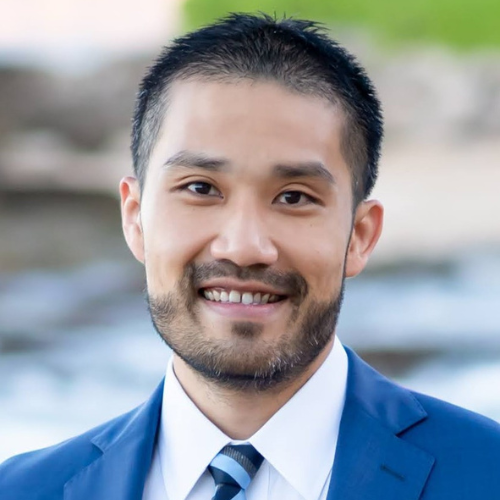
A Life in Family Medicine: Steven Lin, MD: A Journey to the STFM Presidency

The Power of Community in Family Medicine

For incoming STFM President Steven Lin, MD, STFM is more than an organization—it’s a home. “Going to an STFM conference with colleagues and friends from all over the world is like going back home for Thanksgiving!” he says. “That cozy feeling of purpose and belonging is what makes STFM and its community of members so indispensable, especially during times of challenge.” Coming from an institution that lacked a strong primary care culture, he found a sense of belonging in STFM’s network of educators and clinicians. This deep connection is why he is so committed to strengthening and expanding STFM’s role in supporting family medicine educators. “Our vision is to be the indispensable academic home for every family medicine educator” he added.

A Passion for Social Justice and Medicine

Before pursuing medicine, Dr Lin was enamored with music and musical theater. “My childhood dream was to become a symphony conductor or a Broadway musical director. By the time I graduated high school, I had learned how to play multiple instruments and earned a piano performance degree from the London College of Music.” As it turned out, fate had other plans. “It was during college that I became interested in health disparities and social determinants of health,” he says. “I dedicated much of my free time to volunteering at halfway homes in underserved communities to better understand the needs and struggles of vulnerable populations. In medical school, I committed my energies to the study and advocacy of immigrant health and addressing structural determinants,” he continued. “So naturally, I was led to pursue primary care and family medicine.”

Leadership and Lessons for the Future

“When I was younger, I never aspired to be a leader… My greatest fear was not knowing what to say or do.” However, leadership eventually found Dr Lin. “If I could travel back in time to my past self, I would impart this sage advice from Maya Angelou, renowned poet and civil rights activist: ‘People will forget what you said, people will forget what you did, but people will never forget how you made them feel.’” This perspective continues to shape his leadership philosophy, reminding him that empathy and impact matter more than perfection. “I have the same itch that drives many of my colleagues in family medicine: that deeply human urge to do something meaningful, something lasting, something that touches the lives of others, in the relatively short time we have on the planet. That, and a lot of coffee,” he said.

Finding Balance Beyond Work

When not advocating for family medicine education, Dr Lin enjoys binge-watching K-dramas and baking competitions on Netflix. He is also an avid fan of Disney, Marvel, Star Wars, Final Fantasy, and Harry Potter. “Oh, in case you’re wondering, I’m supposed to be a Gryffindor,” he quipped. And music still holds a special place in his life—especially when playing piano with his 7-year-old daughter. He stressed, “She is way more musically talented than I ever was!”  In fact, Dr Lin takes great pride in his titles of dad and husband. “I can’t think of anything else in life that is more crushingly difficult yet so endlessly fulfilling.”

A Message for Future Family Medicine Leaders

For medical students and residents embarking on their careers, Dr Lin offers a piece of advice: “Whatever it was that drew you to family medicine—whether it was a story, a cause, a loved one, a patient, a mentor—find a way to capture that memory. Write a letter to your future self, create a time capsule, or share your journey with those who can help remind you why you chose this noble path.”

The Challenges and Opportunities Ahead

As he prepares to step into his role as STFM President, Dr Lin is aware of the hurdles facing family medicine today. “There has never been a more challenging time to be a family medicine clinician, scholar, or educator. Global socio-political-economic unrest, the greed-driven corporatization of healthcare, the disruptive pace of artificial intelligence advancement, and a deepening crisis of human and planetary health all add to a practice and teaching environment that is increasingly complex. Now, more than ever, we need Family Medicine to be the countervailing force for a healthier world,” he emphasized.

When asked for his advice for young medical students and residents, he encourages future family medicine practitioners and educators to remember what drew them to the field in the first place. “Write a letter to your future self. Put photos in a time capsule. Share your personal journey with family and friends so they can help you remember why you walk this noble path,” he recommends. “The crippling forces of the modern medical-industrial complex can weigh you down sometimes. Whatever it was that drew you to family medicine—a story, a cause, a loved one, a patient, a mentor—find a way to capture that memory so that you can always go back to it when times get tough.”

Looking Forward

With a deep commitment to the future of family medicine, Dr Lin is ready to lead STFM into a new chapter. His vision is clear: to foster community, advocate for primary care, and support practitioners and educators in their vital work. “STFM members are on the frontlines, being the change that we so desperately need,” he says. “I’m proud to stand alongside each and every one of our members in this fight, and I look forward to finding new ways to support and empower our amazing community of family medicine heroes.”

Prior to being sworn in as president of the STFM Board of Directors, Dr Lin served as member-at-large on the STFM Board of Directors, the chair of the Artificial Intelligence in Medical Education Task Force, and the chair of the Telemedicine Curriculum Task Force.

Insights into Whole Person Care: A Reflection on My Visit to St. Joseph Hospital with Melissa Arthur, PhD, LCSW, LMFT


By Sydney Brown, Coordinator of Conferences and Special Projects at STFM

Sydney Brown’s work supports STFM fellowship programs, conference planning, special meetings, and more.

In July 2024, I had the invaluable opportunity to visit St. Joseph Hospital in Syracuse, NY, under the guidance of Melissa Arthur, PhD, LCSW, LMFT, Director of Behavioral Science at St. Joseph Hospital in Syracuse Former STFM BFEF Mentorship Director. My background, initially outside the realms of hospitals, medicine, or fellowships, made this experience particularly enlightening. I am deeply grateful to Dr Arthur for her encouragement and facilitation of this insightful visit.

Immersing in Patient Care

My visit began with attending a lecture for medical students, a profound introduction to the complexities of medical education. The session showcased not only the depth of academic instruction but also how behaviorists like Dr Arthur contribute to shaping the educational framework. Observing this integration of theoretical knowledge with practical application highlighted the comprehensive nature of medical training at St. Joseph Hospital.

A key highlight was sitting in on a “Bio Psycho Social” visit, where Dr Arthur was actively involved. This extended patient-doctor interaction illustrated the significance of addressing psychological and social factors in addition to physical health. Witnessing this whole person approach emphasized how understanding a patient’s emotional and social context can enhance overall care and efficacy in medical practice.

Understanding Institutional Support and Well-Being

Equally enlightening was my exposure to the hospital’s institutional support systems. Attending a committee meeting on the “Care of the Colleague” revealed St. Joseph Hospital’s commitment to creating a supportive work environment. This committee’s focus on the well-being of healthcare professionals underscores the importance of fostering a positive and effective healthcare environment, where the mental and emotional health of staff is prioritized.

Additionally, learning about Schwartz Rounds, known locally as Rena Rounds, provided insight into the hospital’s dedication to emotional support. These rounds address the psychological and emotional challenges faced by healthcare professionals, promoting resilience and empathy. The presence of Dr Arthur’s support dog, whom I had the pleasure of accompanying on rounds, further highlighted the impact of such initiatives. The comfort and joy the support dog brought to patients and staff underscored the importance of integrating emotional support into the healthcare environment.

Engaging with the Medical Community

My interactions with medical students and residents provided a broader perspective on their experiences. Discussing their rotations, challenges, and interests offered a personal view of their journey through medical training. This engagement also allowed me to promote the Society of Teachers of Family Medicine (STFM), emphasizing the value of community and support within the field.

A Reflection on Whole Person and Compassionate Care

The visit to St. Joseph Hospital was a transformative experience, offering a deep appreciation for the role of behaviorists like Dr Arthur in Family Medicine. Her work exemplifies the integration of whole-person patient care, institutional support, and emotional well-being, reflecting the core values of Family Medicine.

The insights gained from observing Dr Arthur and the team at St. Joseph Hospital reaffirmed the importance of a multi-dimensional approach in healthcare. I am profoundly grateful for the opportunity to witness their exemplary work and am inspired by the dedication and compassion demonstrated by all involved. Dr Arthur’s contributions to Family Medicine are both commendable and essential, and I am honored to have observed the impactful work she and her colleagues are doing.

Responding to Reviewer Suggestions…

By Sarina Schrager, MD, MS, Family Medicine editor-in-chief

It is exceedingly uncommon for a paper to get accepted when first submitted to a journal. The vast majority of papers are sent back to authors for revision. As editors, we depend on peer reviewers to provide feedback designed to make each paper better. We ask that you view the feedback that you receive from reviewers as a constructive way to improve your paper. As an author, you are asked to respond to every comment made by every reviewer, which can feel like a herculean task. The following suggestions from the editorial team are geared to help you organize and structure your responses whereby improving your chances of having your paper accepted the second time around.

  1. Don’t take it personally—remember that the reviewers are giving feedback on your paper, not on who you are as a person. Remember, by requesting a revision of your paper, the editors and the reviewers think it has potential. Creating space between yourself and the revision requests will help you move forward toward successful publication. Some people will put the revisions aside for a day or two before rereading them.
  2. Always, always respond respectfully to reviewer comments—there is nothing an editor dislikes more than an author being obstinate and dismissive about reviewer comments. The editors rely on peer reviewers volunteering their time. As such, we want to protect peer reviewers from abusive language coming from authors. It is actually common practice to thank the reviewers for their feedback (however unwelcome it may be). This is an important publishing convention because while you don’t know who the reviewers are, they see author names and they likely review for several publications.
  3. It’s okay to disagree—it is okay to disagree respectfully with a reviewer comment.  However, we recommend that you prioritize the comments you disagree with and only include a few (2-3 at maximum) in your responses. Include a detailed explanation of why you disagree and include references if available. The editors will weigh your comments and decide if they still want you to make changes.
  4. Make it easy for the editors—editors and reviewers are busy people who are often volunteering their time to help you improve your paper. So, it is up to you to do everything you can to make that task easier. We recommend that you structure your response letter in table form or use different fonts or underlines so that it is easy for the editor to see that you addressed every single comment. Also, it is good practice to specifically state how you addressed the comment. Instead of just saying “this was changed”, provide details about how you changed the paper or even cut and paste the new sentence into your table of reviewer responses.
  5. What if reviewers give me conflicting feedback?—it is challenging when reviewers have differing opinions about your paper. Most of the time, the associate editor will provide guidance about which reviewer’s comments to follow. If you don’t think that you are getting clear guidance, feel free to e-mail the editorial team for help.  It is perfectly appropriate to ask the associate editor what they think you should do.

Even if your revision does not get accepted, by following reviewer suggestions you have improved the quality of your work and are optimally positioned to submit the paper to a different journal. Happy writing and please consider signing up to be a reviewer to help make Family Medicine the best journal it can be.