Getting Started With Your Writing: Finding Your Voice

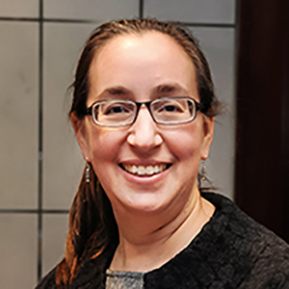
By Sarina Schrager, MD, MS, 
Family Medicine editor-in-chief

I will often talk to groups of junior faculty, fellows, residents, and students about writing. When I say enthusiastically, that writing is fun, I am faced with a sea of skeptical faces.  Is writing fun?  Well, for most people the answer is no. Why not?  Because it is hard and for many of us no one has taught us how to do it. One of my favorite quotes about writing is by Ernest Hemingway. He said, “We are all apprentices in a craft where no one ever becomes a master.”  Well, that’s frustrating you may say. If I can’t become a master, why bother?  My answer is that seeing your work in print is worth the effort. The process of writing and editing and developing a strong final product is very satisfying. You have something to say and writing is an excellent way to share your ideas with a broader public. So, how do we get started?  

  1. Just start writing.  No one is born a great writer and the only way to get better is to practice.  Think about what you want to write and start writing. You can practice when writing for work (craft well worded e-mails for example) or in your every-day life.
  2. Try writing short academic pieces like case reports or book reviews or letters to the editor. These forms of writing are less intimidating because they are short and very structured.  Family Medicine has a new article type called Family Medicine Focus. This infographic is less than 500 words and covers a narrow, specific topic on education or professional development. (Family Medicine (stfm.org))
  3. Think about how you want to structure your work. People have different techniques for planning out a writing project.  Many people use outlines. Some people will use bulleted lists of headings or topics to cover.  Some people start writing at the end and then go back and craft the beginning of their writing. Others will start with the section that is easiest for them—just to get something down on paper.
  4. Give up perfectionism. This may sound simple, but it is hard to be a good writer if you get lost in trying to find the perfect words.  Start off by just writing. If you want to dictate and then transcribe, that can help you put your ideas down on paper. Then, you can edit, craft your argument, and look for clear ways of communicating. Pulling out the thesaurus does not come until you are a couple of revisions into the process.
  5. Ask for help. Yikes, this is a hard thing to do.  But, asking a friend, colleague or family member to read your work before sending it into a journal can get you honest feedback that will improve your writing. It may be painful, but better to address weaknesses in your writing first rather than getting rejected from a journal.
  6. Find your voice. Writing takes a lot of time and can be frustrating if you are not writing about a topic that you care about. Look around you and explore writing about your teaching, your patient care, your work experiences, or your research. You have a story to tell!
  7. Finding a time to write.  For many of us, clinical duties, teaching responsibilities, and administrative tasks take precedence and writing and scholarship quickly fall down the “to do” list. The most prolific writers have one thing in common and that is that they designate time to write. It may not be daily, or even weekly, but if you talk to someone who writes a lot, they will tell you that they block off their calendar to write. Evaluate how, where, and when you work best and take advantage of that. I often recommend a 2009 article in the Emergency Medicine literature entitled, “Tuesdays to Write”.   The author talks about designating Tuesdays for academic time and blocking off the entire day to write.  Obviously, that is not possible for many of us, but the concept is alluring. Look ahead at your calendar. Are there mornings or afternoons that you can block off to write?  
  8. Keep practicing. Maya Angelou said, “Do the best you can until you know better. Then when you know better, do better.”  Start writing for yourself and as you get better at it, share it with your colleagues and the broader family medicine community.  

Reference:

  1. Lowenstein SR. Tuesdays to write … A guide to time management in academic emergency medicine. Acad Emerg Med. 2009 Feb;16(2):165-7. doi: 10.1111/j.1553-2712.2008.00337.x. Epub 2008 Dec 30.

Insights into Whole Person Care: A Reflection on My Visit to St. Joseph Hospital with Melissa Arthur, PhD, LCSW, LMFT


By Sydney Brown, Coordinator of Conferences and Special Projects at STFM

Sydney Brown’s work supports STFM fellowship programs, conference planning, special meetings, and more.

In July 2024, I had the invaluable opportunity to visit St. Joseph Hospital in Syracuse, NY, under the guidance of Melissa Arthur, PhD, LCSW, LMFT, Director of Behavioral Science at St. Joseph Hospital in Syracuse Former STFM BFEF Mentorship Director. My background, initially outside the realms of hospitals, medicine, or fellowships, made this experience particularly enlightening. I am deeply grateful to Dr Arthur for her encouragement and facilitation of this insightful visit.

Immersing in Patient Care

My visit began with attending a lecture for medical students, a profound introduction to the complexities of medical education. The session showcased not only the depth of academic instruction but also how behaviorists like Dr Arthur contribute to shaping the educational framework. Observing this integration of theoretical knowledge with practical application highlighted the comprehensive nature of medical training at St. Joseph Hospital.

A key highlight was sitting in on a “Bio Psycho Social” visit, where Dr Arthur was actively involved. This extended patient-doctor interaction illustrated the significance of addressing psychological and social factors in addition to physical health. Witnessing this whole person approach emphasized how understanding a patient’s emotional and social context can enhance overall care and efficacy in medical practice.

Understanding Institutional Support and Well-Being

Equally enlightening was my exposure to the hospital’s institutional support systems. Attending a committee meeting on the “Care of the Colleague” revealed St. Joseph Hospital’s commitment to creating a supportive work environment. This committee’s focus on the well-being of healthcare professionals underscores the importance of fostering a positive and effective healthcare environment, where the mental and emotional health of staff is prioritized.

Additionally, learning about Schwartz Rounds, known locally as Rena Rounds, provided insight into the hospital’s dedication to emotional support. These rounds address the psychological and emotional challenges faced by healthcare professionals, promoting resilience and empathy. The presence of Dr Arthur’s support dog, whom I had the pleasure of accompanying on rounds, further highlighted the impact of such initiatives. The comfort and joy the support dog brought to patients and staff underscored the importance of integrating emotional support into the healthcare environment.

Engaging with the Medical Community

My interactions with medical students and residents provided a broader perspective on their experiences. Discussing their rotations, challenges, and interests offered a personal view of their journey through medical training. This engagement also allowed me to promote the Society of Teachers of Family Medicine (STFM), emphasizing the value of community and support within the field.

A Reflection on Whole Person and Compassionate Care

The visit to St. Joseph Hospital was a transformative experience, offering a deep appreciation for the role of behaviorists like Dr Arthur in Family Medicine. Her work exemplifies the integration of whole-person patient care, institutional support, and emotional well-being, reflecting the core values of Family Medicine.

The insights gained from observing Dr Arthur and the team at St. Joseph Hospital reaffirmed the importance of a multi-dimensional approach in healthcare. I am profoundly grateful for the opportunity to witness their exemplary work and am inspired by the dedication and compassion demonstrated by all involved. Dr Arthur’s contributions to Family Medicine are both commendable and essential, and I am honored to have observed the impactful work she and her colleagues are doing.

Responding to Reviewer Suggestions…

By Sarina Schrager, MD, MS, Family Medicine editor-in-chief

It is exceedingly uncommon for a paper to get accepted when first submitted to a journal. The vast majority of papers are sent back to authors for revision. As editors, we depend on peer reviewers to provide feedback designed to make each paper better. We ask that you view the feedback that you receive from reviewers as a constructive way to improve your paper. As an author, you are asked to respond to every comment made by every reviewer, which can feel like a herculean task. The following suggestions from the editorial team are geared to help you organize and structure your responses whereby improving your chances of having your paper accepted the second time around.

  1. Don’t take it personally—remember that the reviewers are giving feedback on your paper, not on who you are as a person. Remember, by requesting a revision of your paper, the editors and the reviewers think it has potential. Creating space between yourself and the revision requests will help you move forward toward successful publication. Some people will put the revisions aside for a day or two before rereading them.
  2. Always, always respond respectfully to reviewer comments—there is nothing an editor dislikes more than an author being obstinate and dismissive about reviewer comments. The editors rely on peer reviewers volunteering their time. As such, we want to protect peer reviewers from abusive language coming from authors. It is actually common practice to thank the reviewers for their feedback (however unwelcome it may be). This is an important publishing convention because while you don’t know who the reviewers are, they see author names and they likely review for several publications.
  3. It’s okay to disagree—it is okay to disagree respectfully with a reviewer comment.  However, we recommend that you prioritize the comments you disagree with and only include a few (2-3 at maximum) in your responses. Include a detailed explanation of why you disagree and include references if available. The editors will weigh your comments and decide if they still want you to make changes.
  4. Make it easy for the editors—editors and reviewers are busy people who are often volunteering their time to help you improve your paper. So, it is up to you to do everything you can to make that task easier. We recommend that you structure your response letter in table form or use different fonts or underlines so that it is easy for the editor to see that you addressed every single comment. Also, it is good practice to specifically state how you addressed the comment. Instead of just saying “this was changed”, provide details about how you changed the paper or even cut and paste the new sentence into your table of reviewer responses.
  5. What if reviewers give me conflicting feedback?—it is challenging when reviewers have differing opinions about your paper. Most of the time, the associate editor will provide guidance about which reviewer’s comments to follow. If you don’t think that you are getting clear guidance, feel free to e-mail the editorial team for help.  It is perfectly appropriate to ask the associate editor what they think you should do.

Even if your revision does not get accepted, by following reviewer suggestions you have improved the quality of your work and are optimally positioned to submit the paper to a different journal. Happy writing and please consider signing up to be a reviewer to help make Family Medicine the best journal it can be.