Innovating Connections in Family Medicine

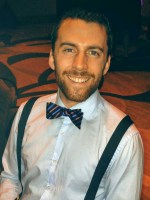
brian-picture

Brian Champagne, MD

This blog post is a finalist in the STFM Blog Competition.

Two years ago I chose family medicine not only to develop a diverse skill set and knowledge to handle almost any patient concern, but also to build a connection with numerous patients of different ages to learn from them as they learn from me.  

Fast-forward to now, I’m in the depths of a busy clinic, stabilizing a crying baby’s ear and desperately searching for a reflective hue amid a narrow tunnel of earwax. I’m not finding it.  I glimpse for 2 seconds before the child’s war cries rattle my own tympanic membranes and I abort the mission. On my third try, I hit the jackpot and visualize a reflective drum. My job is done. I instill some confidence in the mom that her baby will do fine without a goodie bag of antibiotics. We share a bonding laugh at the absurdity of spending over an hour out of her day for a one-second examination with a magnifying glass.

I scamper to my computer and slam in some orders for vaccines, glance at my schedule, and then briskly walk to the next room down the hall. Behind the door is a 70-year-old woman seated in the infamous tripod pose, hunched over with retracting neck muscles, swollen legs and appearing worried. She was discharged just 2 weeks ago for heart failure. I examine her and order 40mg of IV Lasix. A half of an hour later she’s still retracting. I kneel to tell her she’s going to get through this and she nods appreciatively, hoping I’m right. I send her to the hospital for more diuretics as I tap on the door of my next patient.

It’s a wiry 60-year-old man who describes brief spouts of right upper quadrant pain so severe that he swears it’s worse than childbirth. I examine him and explain the possibility of a problem in his liver or gallbladder. After ordering some labs and a right upper quadrant ultrasound, he thanks me for my care.  Days later, my suspicion is confirmed. Gallstones are present and off to surgery he goes.  

While I enjoy these hectic days and the meaningful connections I find through them, I also understand that in 10 years, my family medicine clinic will likely run differently.   

For the screaming baby with possible otitis media, if mom had sent in photos of her baby’s eardrum with a smartphone, perhaps a 10-minute video call would have provided all information that supportive care is appropriate.  

For the 70-year-old woman with persistent CHF exacerbations, perhaps if she were plugged into a system of communicating nurses trained in heart failure management, maybe she wouldn’t be in need of another hospitalization.  

For the 60-year-old man with right upper quadrant pain, if a quick bedside ultrasound by the physician were possible, perhaps he could have been referred to surgery that day.  

With small improvements in patient care, we have the opportunity to develop a more efficient and inexpensive health care system with better health outcomes.  While I delight in new technology that enhances our care for patients, some aspects of family medicine won’t change. Technology won’t change the reassuring words we can offer to a worried parent or acutely ill patient. It won’t alter the power of our receptive ears being present for a scared patient. And it definitely won’t replace the wisdom, laughs, perspectives, and connections we encounter with our patients each day. And that’s good thing.  

The Role International Medical Schools Play in Addressing America’s Primary Care Needs

heidi_chumley_march-2016

Heidi Chumley, MD

This year, the American Academy of Family Physicians’ report on the ACGME Family Medicine Match goes further than any of its previous 34 editions by acknowledging the existence of international medical schools, which collectively are a major contributor to the primary care workforce of the United States.

How big is the contribution? The report doesn’t tell us, though its purpose, according to its authors, is to help medical schools understand how well they are doing their part in contributing to the primary care workforce and guide strategies for further development. There is much to learn from international medical schools, particularly those that primarily educate and train students originating from the US to return to it for residency and practice.

International medical schools provide the ballast for a primary care workforce that desperately needs it. This year, Ross University School of Medicine, St. George’s University School of Medicine, and American University of the Caribbean School of Medicine (where I serve as executive dean) accounted for about 15% of all new family medicine residents in the United States. That’s not a passing comment in the US family medicine workforce story—that’s a major theme. And it’s a consistent theme: about 30% of the graduates in AUC’s history are practicing in family medicine.

International schools vary in size, and among the three mentioned above, AUC is the smallest. In 2015, 62 (28%) of our graduates entered family medicine residencies, a higher number and percentage than any US allopathic school reviewed in the report. For perspective, the 13 public and private schools in New York had 83, the six University of California system schools totaled 75, the four University of Texas schools had 70, and all seven medical schools in Florida combined for only 44.

Meanwhile family medicine advocates continue to worry over how to get more students into US medical schools instead of supporting the international schools that continue to produce family physicians. Two very powerful myths cloud the discussion about family medicine as a discipline and schools like mine as a separate issue. The first myth is the outdated notion that a US allopathic graduate is somehow better than an IMG. The second myth is actually a fantasy: the idea that US MD schools will somehow get better at producing family physicians. The evidence just doesn’t bear that out.

We all know of remarkable initiatives underway at some schools, but consider the US MD institution (AAMC, LCME, etc) as a whole. If there was real concern about family physicians, at a minimum new medical schools would be required to produce them, but it’s not happening. Last year the newer medical schools contributed very few family physicians. University of Central Florida, Florida Atlantic University, and Florida International University combined for only seven family medicine residents. Oakland in Michigan had just two, Texas Tech University Paul L. Foster five, and Virginia Tech Carillon three—while Hofstra had none. The best result I see is USC-Greenville notching six family medicine residents, which puts them at 8.5% and therefore at least close to the US average of 8.7%.

Schools like AUC want to be part of the solution when it comes to creating and nurturing a family medicine workforce that meets the country’s needs. Given that commitment and the desire of the vast majority of our students and graduates to practice in the US, there are numerous actions the family medicine community can take to support our participation and continued contribution:

  • Host sessions at your major educational meetings to increase the awareness of and understanding of international medical schools.
  • Allow medical students at international schools to be regular student members of your organizations. If you can’t go that far, at least allow US citizens attending international medical schools to join as regular student members.
  • Voice opposition to the practice of residency programs using percentage of US MD graduates who are residents as a quality measure.
  • Ask hard questions about social accountability of family medicine residency programs who will not consider international graduates who came from the underserved parts of their states and plan to return there to practice.
  • Encourage and support studies that look not only at the attributes of US allopathic schools but also at the attributes of international medical schools associated with higher percentages of graduates choosing family medicine.
  • Advocate for all loan repayment programs to extend eligibility to international graduates.
  • Help educate family physicians in your pre-med mentorships and shadowing programs to encourage students who are not admitted to US medical schools to consider an international school with a proven track record in producing family physicians.

There is much work to do to ensure that the US has an adequate supply of family physicians to make progress on the triple aim. It is time to be working together.

The Right Direction

Alexandra Tee

Alexandra Tee

This is a finalist in the 2016 STFM Student Blog Competition.

For my eighth grade graduation my aunt gave me a card that read, “It’s the journey, not the destination.” I loved it. I wrote it on other people’s cards. I think it was my senior year yearbook quotation. It made so much sense to me.  

Last year, as a bright-eyed second-year medical student chugging all the family medicine lemonade at the AAFP National Conference, I attended a session about caring for communities that argued, “It’s not the destination, or the journey. It’s the direction.”

All these years of journeying, and I was focused on the wrong cliché?

When I step back and think about direction, I notice a certain pattern: humans travel in circles. If anyone told 9-year-old me that there would be signs on the road warning, “Don’t Pokemon GO and Drive,” I would be ecstatic. But in 2016, the necessity of such signs stirs up a cocktail of disappointment, amusement, and irony. Turn on the news, scroll through the latest hashtags, or read the paper (if you know where to get one)—history still seems to repeat itself. Therefore, when prompted to answer where I see family medicine in 10 years, it made sense for me to look 10 years back. In 2006, an AAFP editorial written by Dr Sanford J. Brown, “Reinventing Family Medicine,” opens with, “Our specialty is ailing.”

After outlining the defining skill sets of family medicine: practice management, wellness medicine, information technology, home visits, family dynamics, and community medicine, Dr Brown concludes with:

“The fight for privileges to do procedures saps our energies and is one that we will eventually lose, not only because specialists are better trained to do them, but because in this day of consumer-driven health care, our patients will select the doctors with the most experience and best track records to do their colonoscopies, colposcopies, cardiac stress tests, C-sections, hernia repairs, and critical care. Perhaps no other specialty trains its residents to do so many things they will never use in practice, while spending so little time training them to do what most of them will wind up doing—clinic medicine.

To maintain the dynamism of our specialty, we must define ourselves by what we can do better than everyone else, not by what everyone else is doing.”1

I agree with Dr Brown in that we define ourselves by what we can do. Furthermore, I believe we must define ourselves by who we want to be for our patients. As family physicians we are advocates for our patients throughout their lives, through specialty visits, insurance changes, and health care reforms. We practice clinic medicine as active members in our communities. Contrary to Dr Brown, I believe that what everyone else is doing is extremely important to us. In the growing age of inter-professional health care teams, care coordination is becoming increasingly crucial in providing quality care for patients. As a future family physician, I want to voice my patient’s concerns and best interests in the medical jumble of specialties, insurance policies, and health care system red tape. I am inspired by family physicians involved in policy and practice model transformations, and I hope that more physicians-in-training recognize the role family medicine plays in the delivery of care. We assert ourselves in the processes that shape our patients’ experiences because we stick with patients from beginning to end. As patient advocates and community leaders, we must lead health care into a direction that improves health care for everyone.

Everything in my journey through medicine is the hardest thing I’ve ever done. The MCAT was the hardest test I’d taken, that is, before USMLE Step 1. A full history and physical OSCE was the hardest thing I’d ever done, until I had to convince a veteran who had avoided hospitals for 40 years and lost 50 pounds in a matter of months that he needed to finish his GoLYTELY so we could tell him he had end stage colorectal cancer. Unlike many decisions in my medical journey, choosing family medicine was not hard. However, like all my previous hardest-things-ever-done, figuring out the direction of family medicine will be a challenge. What direction is family medicine heading towards?

I believe family medicine is directed towards becoming leaders for change. As physicians-in-training, we have worked countless hours and made too many sacrifices to work in a sick care system that we are not confident provides the best quality care for our patients. Family medicine physicians play the ultimate advocate for our patients, their families, and our communities. We listen to the struggles of patients fighting to overcome health care barriers. In order to empower our patients, we must engage in leadership roles and national discussions. By doing so, we will be able to create change in the systems that often fail our most vulnerable patient populations. Ten years from now, family physicians will continue to grow as agents of change, directing our health care system to provide comprehensive, cost-effective, patient-centered care. Knowing who family medicine physicians are for their patients and communities, I know I will choose the journey of family medicine in any direction. I still believe in the journey, and I am hopeful in the direction that family medicine is moving towards.

Reference
  1. Brown S. Reinventing family medicine. Fam Pract Manage 2006 Apr;13(4):17-20.