Medicine Inherently Requires All Physicians to Be Teachers

50anni_headerfuture

Throughout my medical education, my best mentors have been family physicians. Without exception, they are enthusiastic, committed, passionate, intelligent, and innovative leaders who have inspired me to be the best family physician I can be. As I cross the midpoint of my residency training, I have spent more time thinking about the next steps in my career and how to best continue to affect change. I want to prioritize teaching family medicine and pursue a career either in academics or in a position where I can work closely with medical students or residents.

KarlDietrich2

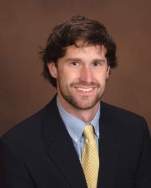
Karl Dietrich, MD, MPH

Medicine inherently requires all physicians to be teachers, and find effective and efficient ways to share information with patients. As a high school teacher prior to pursuing medicine, this was one of the appealing parts of becoming a physician. By embracing our role as teachers, we allow our patients to learn about their own health, become their own best advocates, and hopefully influence others to think more about their health. Teaching family medicine appeals to me because it could broaden my potential impact by not only increasing the number of future family physicians but by increasing the number of physicians in other fields with a strong understanding of the value of family medicine. We know that a strong primary care system will be essential to the ongoing success of our health care system, and I see no better way to ensure that than by increasing the number of committed family physicians in this country.

Continue reading

A Trip Down Family Medicine Lane

2016-11-12-20-00-45

Kalaki M.Clarke, MD

The health care road has been less than smooth on the family physician’s journey towards optimizing America’s health. Nevertheless, I’m optimistically looking down that road and believe that 10 years from now, many of the present potholes will be filled in and many flashing red traffic lights will be repaired.

One of the main potholes in the health care road that I foresee being repaired is the family physician deficit. Currently, one-third of physicians provide primary care while more than half of all clinical visits are in primary care offices. Clearly, this particular dip in the road begs reconstruction. How do we fix this? Repair begins when family physicians fully take full pride in our responsibilities as the cornerstone of American health. Our demonstrated passion as comprehensive care providers for patients from the womb to the tomb will draw the next generation of physicians to family medicine as their vehicle of societal contribution. Medical students will inevitably be compelled to join us for the ride and contrary to popular impression they’ll discover that we see more in our clinics than the self-limited rhinovirus. They will then be less lured by the fancy and shiny specialty-driven vehicles currently advertised as the sole solution to professional fulfillment.

As our workforce increases, down the road the disproportionate 2:1 specialist to primary care provider ratio will reciprocate. We are actually headed in the right direction evidenced by NRMP (National Residency Match Program) stats showing that 95% of family medicine training positions were filled in 2016 compared to 85% in 2006.

What about some of those flashing red traffic lights presently stalling our journey’s advancement? One of the largest of these is the one that fails to value the practice of primary care. An associated roadblock includes the imbalanced manner in which family physicians are financially compensated. On my recent sports medicine rotation I was taken aback when my attending shared with me that the encounter time we spent as consultants would have been reimbursed triple the amount had we served as primary care providers managing multiple chronic conditions.

Although that was a disturbing realization, I was filled with renewed appreciation for family medicine when I learned from the AAFP Immediate Past President, Wanda Filer, MD, that the death rate decreases in communities with family physicians. Intrigued, I investigated further and found literature that cited National Institute of Health (NIH) studies published in the 1990s which proved that US states with higher ratios of PCP to population had better health outcomes including lower rates of all cause mortality from heart disease, cancer, and stroke. All of these outcomes were independent of the highly relevant social determinants of health. If that information doesn’t scream “high value” with the potential to achieve the Triple Aim (and even the Quadruple Aim), please tell me what does.

Continue reading

Our Collective Voices Need to Be Heard

50anni_headerfuture

This past year I have had the honor of participating in the STFM Emerging Leaders Fellowship. As an Emerging Leaders fellow, I am learning the mindset, attitude, and behavior of an inspiring and effective physician leader.

ronya

Ronya Green, MD, MPH

The fellowship has provided both theoretical and practical tools for leadership. I have received invaluable mentoring and broadened my professional network within STFM. While meeting and working with other faculty across the country we have hopefully made connections that will span our careers.

As an Emerging Leaders fellow, I joined the Family Medicine for America’s Health (FMAHealth) Health Equity Cross Tactic Team. We are working to plan the second annual Starfield Summit—Primary Care’s Role in Achieving Health Equity April 22-25, 2017 in Portland, Oregon. The Summit will bring together thought leaders, experts in primary care and health disparities, and other community members to create collaborative partnerships. Summit participants will engage in strategic discussions and propose a future agenda for tangible ways in which we can bolster primary care education and research efforts to eliminate disparities and achieve equity.So how does this emerging leader imagine the future of family medicine? I believe our future shares common themes with our past. We will continue to advocate for optimal patient health and be accountable to training exceptional family physicians. Our daily work is bigger than us as individuals. Now, more than ever, our collective voices need to be heard.

The future of family medicine includes physicians continuing to work as advocates. We are advocates for our patients—especially the most vulnerable populations that require compassionate, integrative care. We are advocates for our learners who need engaged teachers who willdemonstrate excellence in the comprehensive practice of our specialty.

We are accountable to our patients and communities. We will make the communities we serve better with a holistic approach–such as lobbying to eliminate food deserts and enhancing transportation services. We are accountable to our learners with our words and actions. Our attitude says “You can count on me!” We will teach them to be socially accountable to the future communities they will serve.

I look forward to practicing in a specialty that continues to be on the front line of patient care. I am proud to help train socially conscious physicians who will eliminate health disparities and work towards health equity for all. Our future is bright and I am excited for the journey ahead. Happy 50th anniversary, STFM!