

“All advocacy is, at its core, an exercise in empathy.”
—Samantha Power, Former US Ambassador to United Nations, Penn Commencement Address 2015.

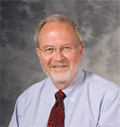
Joseph W. Gravel, Jr, MD
On the day The Society was officially born, on Friday October 27, 1967, I was in Miss Steinman’s second grade class at the Samuel Huntington Elementary School in Norwich, Connecticut focusing on my penmanship that would later be destroyed by 4 years of medical school.
Two weeks earlier our “Impossible Dream” Red Sox, a perennial doormat who had finished in 9th place the previous 2 years, had lost Game 7 of the World Series to the St Louis Cardinals after winning the American League pennant. This followed a summer of massive urban riots, particularly in Newark (23 killed, more than 1100 wounded) and Detroit (43 killed, 1189 injured). Catholic priest Philip Berrigan was arrested on the same day as STFM’s founding (10/27/67) with other members of the “Baltimore Four” for pouring blood on Selective Service records to protest the Vietnam War. That week’s Time magazine cover showed marchers at the Lincoln Memorial with the headline banner “Protest! Protest! Protest! Protest! A Week of Antiwar Demonstrations” after 70,000 had marched. The #1 song on the Billboard charts was “To Sir With Love” by Lulu (from the film of the same name) about an African American teacher (Sidney Poitier) dealing with social and racial issues while inspiring students in a rough East End of London school. The Andy Griffith show was the top-rated TV show on our black and white (with a rabbit ears antenna) Philco television with three channels (and no remote, kids!). Three of the most popular movies in 1967 were “The Graduate”, “Guess Who’s Coming to Dinner” and “Bonnie and Clyde.” Twenty-year-old Syracuse student Katherine Switzer, registering as “KV Switzer” became the first woman to officially run in the Boston Marathon; during which the co-director jumped into the street and tried to forcibly remove her from the race and subsequently disqualified her.
It was in this milieu of protest, advocacy, and social change that family medicine and The Society was born. The timing of STFM’s founding 50 years ago was by no means coincidental, but part of a larger tapestry. To me, STFM has always excelled more than other academic organizations at operationalizing what Rudolph Virchow described as “physicians (being) natural attorneys of the poor”. This also includes, to STFM’s credit, a rich diversity of professional disciplines integrally involved with teaching family physicians.
There has always been a palpable sense of taking our collective social accountability seriously, activating an underlying STFM culture of realistic idealism working to “transform health care through education.” Developing excellent teachers in an unusually supportive, collegial environment has made STFM the envy of other specialties.
Although we look back during this gold anniversary year, STFM has always been much more future oriented—empowering learners to create a better health system and world through our shared values, put into action every day. STFM embodies the Olympic motto of Citius, Altius, Fortius—faster, higher, stronger—allowing us to exceed our own individual abilities by being supported by our colleagues, and without all the cost overruns of an Olympic Games!
Like the 1967 Red Sox, who had a fantastic season but came up one game short, we all know we haven’t gotten “there” yet either—there is still a lot of work to do to make those STFM ideals become reality for all our patients, families, and communities.
Our continued advocacy—speaking truth to power on behalf of those without a voice—which increasingly includes America’s middle class- and leveling the playing field through the best possible (primary care- based) health care, is needed now more than ever. Exercise your empathy and be an advocate!


 STFM Blog