Behind the Curtain: What Really Happens After You Submit a Paper to a Journal

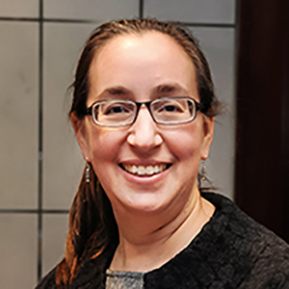
By Sarina Schrager, MD, MS, 
Family Medicine editor-in-chief

Many people express confusion about the process of submitting a paper to a journal, receiving peer reviews, and ultimately getting published. This post attempts to answer your questions. Editors do not want their activity to be opaque. We want everyone to know what really happens when you submit a paper. The team at Family Medicine may do things a little differently than other journals, but the major steps will be the same.

You hit “submit”, then what? Once you submit your paper into the electronic portal (we use ScholarOne) the paper will be evaluated by our editorial assistant. S/he will determine if your paper conforms to our author instructions (please read before submitting) for formatting and whether you have IRB approval, if needed. The assistant will unsubmit your paper if it is too long, has too many references, or if the references are not in the proper format.

First review by the editor in chief: At Family Medicine, I read each submitted paper carefully before assigning it to an associate editor. I will occasionally reject a paper at this stage if it is not in scope for our journal (ie, we do not publish clinical papers) or if I think it is in the wrong category. For example, papers describing educational studies in one residency or one medical school fit in our Brief Report category, but probably not in Original Research. I will send those papers back to the authors if they are submitted in the Original Research category and ask the author(s) to shorten them. Another common mistake I often see is papers submitted as a narrative essay when they are really a commentary or an editorial. Narratives are personal stories about an experience you have with patient care, teaching, or your career.

Assigning papers to the associate editors: We have a team of fabulous associate editors at
Family Medicine. Papers that are both in scope and of interest our readers go on to the next step. I assign these papers to one of our associate editors who carefully reads the paper again, and either advises me they don’t think the paper is appropriate for our journal, or, more commonly, sends the paper for peer review.

Requesting peer reviewers: We have hundreds of peer reviewers who volunteer their time and expertise to help us publish the best papers we can. The associate editors aim to get 2-3 reviewers to evaluate each paper before sending it back to me with a recommendation. The associate editor sends requests to 4-6 people. Sometimes these invited reviewers don’t respond, and sometimes they respond but decline the invitation. It will occasionally require upwards of 10 invitations to find the 2-3 reviewers needed for a thorough review of each paper. We give all peer reviewers 3 weeks to return the review. Sometimes a
paper will be caught in this step for a few months. Family Medicine designates 4 potential
outcomes for a paper after peer review: accept (it’s very unusual to accept after initial peer review),
minor revision, major revision, and reject.

Revisions: The vast majority of authors will be asked to revise their paper. This is a good thing.
It means that the editorial team believes that the paper will be an important addition to the literature when revised. We expect authors to respond to every reviewer comment and explain how they addressed each comment. After the revised manuscript is submitted, I will review it again and then send back to the associate editor. In some cases, if there were many revisions, the associate editor will send the revision back to the reviewers to assure that all comments were addressed. After those reviews come back, the associate editor indicates an outcome. It is not unusual for a paper to be revised a second (and occasionally a third) time. It is important for authors to remember at this point that these further reviews are designed to improve your paper.

Recommendations for publication: Even great papers can be improved, and this is always the goal of peer review. Our peer reviewers and our associate editors provide feedback to authors to help make
their papers better. A minor revision decision signifies that a paper needs only small changes before it is appropriate to publish. A major revision decision signifies that the peer reviewers and the associate editor like the paper and think it has potential to be a meaningful addition to the scholarly literature, but has some weaknesses. We do not ask people to revise a paper if we do not think it will be interesting to our readers and contribute to the literature. Those papers are denied further review.

Acceptance: Once the associate editor believes that the authors have addressed all revision
requests, they send it to me with a recommendation for publication: Yay! Our production
team has worked hard to decrease the time from acceptance to online publication. You may expect your paper to be published online about 6 weeks after you get your acceptance notice. It will be available on the journal’s ‘Recently Published’ page before being assigned to a monthly issue. As you can see, there are a lot of steps in the process! However, they all aim to support authors through optimizing their paper’s impact.

A Life in Family Medicine: Steven Lin, MD: A Journey to the STFM Presidency

The Power of Community in Family Medicine

For incoming STFM President Steven Lin, MD, STFM is more than an organization—it’s a home. “Going to an STFM conference with colleagues and friends from all over the world is like going back home for Thanksgiving!” he says. “That cozy feeling of purpose and belonging is what makes STFM and its community of members so indispensable, especially during times of challenge.” Coming from an institution that lacked a strong primary care culture, he found a sense of belonging in STFM’s network of educators and clinicians. This deep connection is why he is so committed to strengthening and expanding STFM’s role in supporting family medicine educators. “Our vision is to be the indispensable academic home for every family medicine educator” he added.

A Passion for Social Justice and Medicine

Before pursuing medicine, Dr Lin was enamored with music and musical theater. “My childhood dream was to become a symphony conductor or a Broadway musical director. By the time I graduated high school, I had learned how to play multiple instruments and earned a piano performance degree from the London College of Music.” As it turned out, fate had other plans. “It was during college that I became interested in health disparities and social determinants of health,” he says. “I dedicated much of my free time to volunteering at halfway homes in underserved communities to better understand the needs and struggles of vulnerable populations. In medical school, I committed my energies to the study and advocacy of immigrant health and addressing structural determinants,” he continued. “So naturally, I was led to pursue primary care and family medicine.”

Leadership and Lessons for the Future

“When I was younger, I never aspired to be a leader… My greatest fear was not knowing what to say or do.” However, leadership eventually found Dr Lin. “If I could travel back in time to my past self, I would impart this sage advice from Maya Angelou, renowned poet and civil rights activist: ‘People will forget what you said, people will forget what you did, but people will never forget how you made them feel.’” This perspective continues to shape his leadership philosophy, reminding him that empathy and impact matter more than perfection. “I have the same itch that drives many of my colleagues in family medicine: that deeply human urge to do something meaningful, something lasting, something that touches the lives of others, in the relatively short time we have on the planet. That, and a lot of coffee,” he said.

Finding Balance Beyond Work

When not advocating for family medicine education, Dr Lin enjoys binge-watching K-dramas and baking competitions on Netflix. He is also an avid fan of Disney, Marvel, Star Wars, Final Fantasy, and Harry Potter. “Oh, in case you’re wondering, I’m supposed to be a Gryffindor,” he quipped. And music still holds a special place in his life—especially when playing piano with his 7-year-old daughter. He stressed, “She is way more musically talented than I ever was!”  In fact, Dr Lin takes great pride in his titles of dad and husband. “I can’t think of anything else in life that is more crushingly difficult yet so endlessly fulfilling.”

A Message for Future Family Medicine Leaders

For medical students and residents embarking on their careers, Dr Lin offers a piece of advice: “Whatever it was that drew you to family medicine—whether it was a story, a cause, a loved one, a patient, a mentor—find a way to capture that memory. Write a letter to your future self, create a time capsule, or share your journey with those who can help remind you why you chose this noble path.”

The Challenges and Opportunities Ahead

As he prepares to step into his role as STFM President, Dr Lin is aware of the hurdles facing family medicine today. “There has never been a more challenging time to be a family medicine clinician, scholar, or educator. Global socio-political-economic unrest, the greed-driven corporatization of healthcare, the disruptive pace of artificial intelligence advancement, and a deepening crisis of human and planetary health all add to a practice and teaching environment that is increasingly complex. Now, more than ever, we need Family Medicine to be the countervailing force for a healthier world,” he emphasized.

When asked for his advice for young medical students and residents, he encourages future family medicine practitioners and educators to remember what drew them to the field in the first place. “Write a letter to your future self. Put photos in a time capsule. Share your personal journey with family and friends so they can help you remember why you walk this noble path,” he recommends. “The crippling forces of the modern medical-industrial complex can weigh you down sometimes. Whatever it was that drew you to family medicine—a story, a cause, a loved one, a patient, a mentor—find a way to capture that memory so that you can always go back to it when times get tough.”

Looking Forward

With a deep commitment to the future of family medicine, Dr Lin is ready to lead STFM into a new chapter. His vision is clear: to foster community, advocate for primary care, and support practitioners and educators in their vital work. “STFM members are on the frontlines, being the change that we so desperately need,” he says. “I’m proud to stand alongside each and every one of our members in this fight, and I look forward to finding new ways to support and empower our amazing community of family medicine heroes.”

Prior to being sworn in as president of the STFM Board of Directors, Dr Lin served as member-at-large on the STFM Board of Directors, the chair of the Artificial Intelligence in Medical Education Task Force, and the chair of the Telemedicine Curriculum Task Force.

Optimize the Chances of Getting Your Research Published

by Jen Lochner, MD; Valerie Gilchrist, MD; Sarina Schrager, MD, MS

Research is purposeful curiosity. Every day, we encounter questions about our work, but turning those questions into formal investigations can feel like a leap. A quality improvement (QI) project often begins with questions like, “Why is it this way? Can we do it differently?” Family Medicine publishes research and QI projects focused on medical education and faculty development. This blog post will guide you from asking a question to creating a successful, publishable product. By following these steps, you’re more likely to answer your question and share your findings.

  1. Developing a research question: The first step in any scholarly project is to come up with an effective research question. Albert Einstein stated, “Imagination is the highest form of research.” Being creative to develop a question may be the most important part of the whole process. One mnemonic to make sure that your question is the best it can be is FINER:
    • F—Feasible. Can this question be answered? Do you need millions of $ to do the project? Or can it be done with a reasonable budget?
    • I—Interesting. Do others care about your question?
    • N—Novel. Has this been done before?
    • E—Ethical. Will your project impact subjects in a way that is detrimental?
    • R—Relevant. Does the research question and subsequent research matter to family medicine or primary care.
  2. Do Your Homework:
    Start by thoroughly understanding your question. Why are you interested in it? How will it impact learners, colleagues, or patients? What assumptions are you making? Write them down. Ask yourself “Why?” at least three times to dig deeper. Then, check if others have explored the same question. Consult peers and conduct a literature review. If the question remains unanswered or insufficiently addressed, ask a medical librarian to refine your search. Many online resources, including STFM, can help you develop hypotheses for educational projects. https://www.stfm.org/media/1824/research-minute-25-writing-hypotheses_1.pdf.
    Once you have a strong research question and a hypothesis that addresses what you think is the answer to your question, you are ready to go to the next step.
  3. Build a Team:
    What if you’re unsure about the baseline data to collect? Or lack expertise in analyzing data from your EHR? Or haven’t had formal training in education but are interested in improving a curriculum? You don’t need to become a statistician or earn a degree in education to contribute to research—though you certainly can. Most organizations have experts you can partner with. The STFM Collaboratives are a great resource for finding collaborators. A team strengthens your project by bringing in new perspectives. “You don’t know what you don’t know!” Collaborating not only enhances your work, but it’s also more enjoyable and can increase the impact of your results.
  4. Plan to Publish From the Start:
    From the outset, approach your project with the goal of sharing your findings. Your investigation should be designed to answer the question in a way that’s at least presentable, and ideally, publishable. As journal editors, we look for the following when evaluating papers:’
    • Is the topic important? Will it contribute to the literature and help learners, teachers, or practitioners?
    • Is the research well done? Do the conclusions seem credible?
    • Is the paper well written? Is it easy to understand? (Questions from Josh Freeman)
  5. Begin With the End in Mind:
    Passion can drive us to dive into a project quickly, assuming that our idea is an improvement on the existing process. Without baseline data though, we can’t definitively say whether the changes are improvements worth spreading. By pausing at the beginning of your project to envision the end result, you’ll recognize the importance of defining important outcomes and collecting baseline data. Simple steps taken early on will allow you to rigorously assess the impact of your work and increase the likelihood of publication.

    We want you to be successful in your research and we want to be able to publish your paper
    so that you can share your work with colleagues.