Category Archives: interview

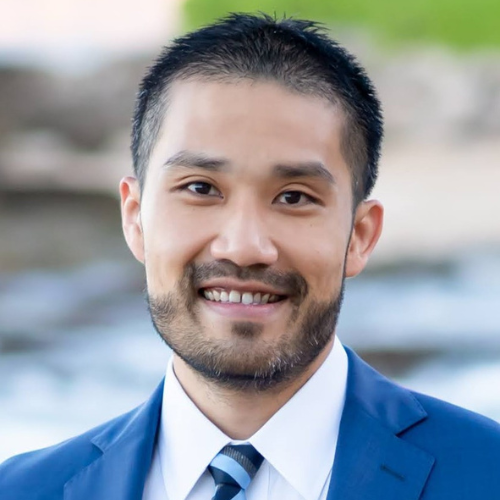
A Life in Family Medicine: Steven Lin, MD: A Journey to the STFM Presidency

The Power of Community in Family Medicine

For incoming STFM President Steven Lin, MD, STFM is more than an organization—it’s a home. “Going to an STFM conference with colleagues and friends from all over the world is like going back home for Thanksgiving!” he says. “That cozy feeling of purpose and belonging is what makes STFM and its community of members so indispensable, especially during times of challenge.” Coming from an institution that lacked a strong primary care culture, he found a sense of belonging in STFM’s network of educators and clinicians. This deep connection is why he is so committed to strengthening and expanding STFM’s role in supporting family medicine educators. “Our vision is to be the indispensable academic home for every family medicine educator” he added.

A Passion for Social Justice and Medicine

Before pursuing medicine, Dr Lin was enamored with music and musical theater. “My childhood dream was to become a symphony conductor or a Broadway musical director. By the time I graduated high school, I had learned how to play multiple instruments and earned a piano performance degree from the London College of Music.” As it turned out, fate had other plans. “It was during college that I became interested in health disparities and social determinants of health,” he says. “I dedicated much of my free time to volunteering at halfway homes in underserved communities to better understand the needs and struggles of vulnerable populations. In medical school, I committed my energies to the study and advocacy of immigrant health and addressing structural determinants,” he continued. “So naturally, I was led to pursue primary care and family medicine.”

Leadership and Lessons for the Future

“When I was younger, I never aspired to be a leader… My greatest fear was not knowing what to say or do.” However, leadership eventually found Dr Lin. “If I could travel back in time to my past self, I would impart this sage advice from Maya Angelou, renowned poet and civil rights activist: ‘People will forget what you said, people will forget what you did, but people will never forget how you made them feel.’” This perspective continues to shape his leadership philosophy, reminding him that empathy and impact matter more than perfection. “I have the same itch that drives many of my colleagues in family medicine: that deeply human urge to do something meaningful, something lasting, something that touches the lives of others, in the relatively short time we have on the planet. That, and a lot of coffee,” he said.

Finding Balance Beyond Work

When not advocating for family medicine education, Dr Lin enjoys binge-watching K-dramas and baking competitions on Netflix. He is also an avid fan of Disney, Marvel, Star Wars, Final Fantasy, and Harry Potter. “Oh, in case you’re wondering, I’m supposed to be a Gryffindor,” he quipped. And music still holds a special place in his life—especially when playing piano with his 7-year-old daughter. He stressed, “She is way more musically talented than I ever was!”  In fact, Dr Lin takes great pride in his titles of dad and husband. “I can’t think of anything else in life that is more crushingly difficult yet so endlessly fulfilling.”

A Message for Future Family Medicine Leaders

For medical students and residents embarking on their careers, Dr Lin offers a piece of advice: “Whatever it was that drew you to family medicine—whether it was a story, a cause, a loved one, a patient, a mentor—find a way to capture that memory. Write a letter to your future self, create a time capsule, or share your journey with those who can help remind you why you chose this noble path.”

The Challenges and Opportunities Ahead

As he prepares to step into his role as STFM President, Dr Lin is aware of the hurdles facing family medicine today. “There has never been a more challenging time to be a family medicine clinician, scholar, or educator. Global socio-political-economic unrest, the greed-driven corporatization of healthcare, the disruptive pace of artificial intelligence advancement, and a deepening crisis of human and planetary health all add to a practice and teaching environment that is increasingly complex. Now, more than ever, we need Family Medicine to be the countervailing force for a healthier world,” he emphasized.

When asked for his advice for young medical students and residents, he encourages future family medicine practitioners and educators to remember what drew them to the field in the first place. “Write a letter to your future self. Put photos in a time capsule. Share your personal journey with family and friends so they can help you remember why you walk this noble path,” he recommends. “The crippling forces of the modern medical-industrial complex can weigh you down sometimes. Whatever it was that drew you to family medicine—a story, a cause, a loved one, a patient, a mentor—find a way to capture that memory so that you can always go back to it when times get tough.”

Looking Forward

With a deep commitment to the future of family medicine, Dr Lin is ready to lead STFM into a new chapter. His vision is clear: to foster community, advocate for primary care, and support practitioners and educators in their vital work. “STFM members are on the frontlines, being the change that we so desperately need,” he says. “I’m proud to stand alongside each and every one of our members in this fight, and I look forward to finding new ways to support and empower our amazing community of family medicine heroes.”

Prior to being sworn in as president of the STFM Board of Directors, Dr Lin served as member-at-large on the STFM Board of Directors, the chair of the Artificial Intelligence in Medical Education Task Force, and the chair of the Telemedicine Curriculum Task Force.

Insights into Whole Person Care: A Reflection on My Visit to St. Joseph Hospital with Melissa Arthur, PhD, LCSW, LMFT


By Sydney Brown, Coordinator of Conferences and Special Projects at STFM

Sydney Brown’s work supports STFM fellowship programs, conference planning, special meetings, and more.

In July 2024, I had the invaluable opportunity to visit St. Joseph Hospital in Syracuse, NY, under the guidance of Melissa Arthur, PhD, LCSW, LMFT, Director of Behavioral Science at St. Joseph Hospital in Syracuse Former STFM BFEF Mentorship Director. My background, initially outside the realms of hospitals, medicine, or fellowships, made this experience particularly enlightening. I am deeply grateful to Dr Arthur for her encouragement and facilitation of this insightful visit.

Immersing in Patient Care

My visit began with attending a lecture for medical students, a profound introduction to the complexities of medical education. The session showcased not only the depth of academic instruction but also how behaviorists like Dr Arthur contribute to shaping the educational framework. Observing this integration of theoretical knowledge with practical application highlighted the comprehensive nature of medical training at St. Joseph Hospital.

A key highlight was sitting in on a “Bio Psycho Social” visit, where Dr Arthur was actively involved. This extended patient-doctor interaction illustrated the significance of addressing psychological and social factors in addition to physical health. Witnessing this whole person approach emphasized how understanding a patient’s emotional and social context can enhance overall care and efficacy in medical practice.

Understanding Institutional Support and Well-Being

Equally enlightening was my exposure to the hospital’s institutional support systems. Attending a committee meeting on the “Care of the Colleague” revealed St. Joseph Hospital’s commitment to creating a supportive work environment. This committee’s focus on the well-being of healthcare professionals underscores the importance of fostering a positive and effective healthcare environment, where the mental and emotional health of staff is prioritized.

Additionally, learning about Schwartz Rounds, known locally as Rena Rounds, provided insight into the hospital’s dedication to emotional support. These rounds address the psychological and emotional challenges faced by healthcare professionals, promoting resilience and empathy. The presence of Dr Arthur’s support dog, whom I had the pleasure of accompanying on rounds, further highlighted the impact of such initiatives. The comfort and joy the support dog brought to patients and staff underscored the importance of integrating emotional support into the healthcare environment.

Engaging with the Medical Community

My interactions with medical students and residents provided a broader perspective on their experiences. Discussing their rotations, challenges, and interests offered a personal view of their journey through medical training. This engagement also allowed me to promote the Society of Teachers of Family Medicine (STFM), emphasizing the value of community and support within the field.

A Reflection on Whole Person and Compassionate Care

The visit to St. Joseph Hospital was a transformative experience, offering a deep appreciation for the role of behaviorists like Dr Arthur in Family Medicine. Her work exemplifies the integration of whole-person patient care, institutional support, and emotional well-being, reflecting the core values of Family Medicine.

The insights gained from observing Dr Arthur and the team at St. Joseph Hospital reaffirmed the importance of a multi-dimensional approach in healthcare. I am profoundly grateful for the opportunity to witness their exemplary work and am inspired by the dedication and compassion demonstrated by all involved. Dr Arthur’s contributions to Family Medicine are both commendable and essential, and I am honored to have observed the impactful work she and her colleagues are doing.

Get to Know Incoming STFM President Joseph Gravel, MD

As the 2023-2024 term comes to a close, we sat down with incoming STFM president Joseph Gravel, MD, to learn about his journey to family medicine education, his plans for the presidency, what he’d tell his younger self, and his message to students and residents.

1. When you were a child, what did you want to be when you grew up?

I wanted to be the left fielder for the Boston Red Sox and would have done that if it weren’t for just a few things in the way— my hitting, fielding, throwing, and speed.  In high school I was thinking it might be fun to be a sports columnist for a newspaper. I was always really interested in history, current events, and government as a kid, and remember staying up late to watch all the political conventions and inspired by RFK and MLK, could see getting somehow involved with government which at the time was still widely considered a noble profession to serve the public good. 

2. As you grew, what drew you to medicine and family medicine education in particular?

I think looking back it was always subconsciously there, but I wasn’t sure I could ever actually do that. As a kid, my own primary care physician would not just send me to the ER but instead would meet me and my mother at her private office at 2 am to give me shots of epinephrine for asthma attacks (this was 1970’s asthma treatment and 1970’s relationship-based medicine…). When I got to college — I was thinking maybe public defender law, not pre-med and found the social sciences more interesting than the biological sciences (and still do, although I like both). The family medicine side— I’m a generalist at heart with lots of interests in lots of things, and the big picture and relationship focus appealed to me. The education side— my 4 siblings all teach in various capacities, so maybe nature, maybe nurture, although I didn’t think about academic FM at all until the latter part of residency.  I also had a fantastic Program Director (Sam Jones) who has been one of my most important mentors and still is to this day, almost 40 years later. Now that’s continuity! 

3. When you’re not revolutionizing family medicine education, how do you like to spend your time?

Of course, revolutions occur only when a group of people believe in something important and then do something about it together concordant with those shared beliefs. Anyway, I love sports — the Boston sports teams, the Milwaukee-area sports teams; baseball and college basketball are my favorites. I’ve been to 45 major league baseball parks (every city including those parks now closed/replaced).  I love documentaries on pretty much any subject, the History Channel, and try to read (online) newspapers every day including political or social commentaries, more because I simply find it interesting rather than for fact-gathering. I find myself watching the Milwaukee local government channel for its entertainment value- the human pageantry is better than “reality” tv. Oh yeah, also Conan O’Brien’s podcast and Seinfeld reruns despite often knowing the next line at this point….

4. What do you wish all members and non-members alike knew about STFM?

I think many members understand this— but if you think of STFM as it’s mostly about a big meeting once a year, you’re missing out. The annual meeting is a highlight of the year, but there is so much more to be gained through actively participating in a collaborative that interests you, or getting involved in some of the many ongoing initiatives where great experiences and relationships outside your own institution are to be had. The other thing I think many suspect but I’m here to confirm— the executive leadership and the STFM staff are second to none— so talented, hard-working, and passionate about bringing our ideas to life.

5. If you could impart your past self with any wisdom from the future, what would it be and why?

This new company called Apple may be worth investing in. Why this? So, I would have more to donate to the STFM Foundation of course. ;0

I’d emphasize Ferris Bueller’s advice— “Life moves pretty fast. If you don’t stop and look around once in a while, you could miss it.” And patience is a virtue. Really.

6. In life, what accomplishment are you most proud of, and why?

Three kids now in their 20s who are good people, grounded, and with good values. Givers, not takers. (more so due to my spouse Barbara’s efforts, but I helped…)

7. What drives you to show up every day?

The work is so meaningful. If you do it right it can have an impact right now, but even better it can have a multi-generational effect on those you come in contact with and indirectly many more —whom you’ll never meet or know. This is the beauty of teaching and the beauty of family medicine.  Combining the two is even better and even more awesome, in both the traditional meaning and the modern slang of that word.

8. What is your most used STFM resource?

STFM Connect— delivered to my Email box so I don’t need to even think about it.  Keeps me connected to what is going on and who is doing things. Hey, I think “Connect” delivers on that branding!

9. What would you tell medical students and residents about their journey ahead?

You are entering the best profession in the entire world, bar none, working with the best people. You get to be a lifelong learner while doing good, which is a special opportunity. Don’t let all the background noise- which is at times deafening— drown out why you chose this remarkable profession and all the good you will do in the world.   Be adaptive, have a growth mentality, and be an advocate for self, your team, and patients. There will be many opportunities disguised as irksome challenges that you didn’t ask for and that you believe you didn’t deserve.  A “blessing in disguise” is a real thing, often realized only in retrospect, and you will succeed if you keep this in mind. Lastly, think of your career path as an interesting adventure to be savored rather than a journey to be endured. It’ll go better and feel better that way.

10. Is there a lesson you’ve learned that’s stuck with you your whole life?

Said to be Abraham Lincoln’s favorite saying and my parents’ frequent lesson— “this too shall pass”. It’s applicable to every situation— when things are going well, it is useful to remember to appreciate it as it is fleeting; when things are not going as well as we would like, it provides perspective— and is always true.

11. What do you look forward to most in your term as STFM president?

Working with our fantastic Executive Director and CEO, our wonderful staff, members of our Executive Committee, and our Board of Directors to advance STFM’s missions through our strategic plan, as well as collaborating with our sister family medicine organizations to benefit the entire specialty, our learners, and our patients.  And the unanticipated things are what will make the experience even more interesting. I appreciate the opportunity!