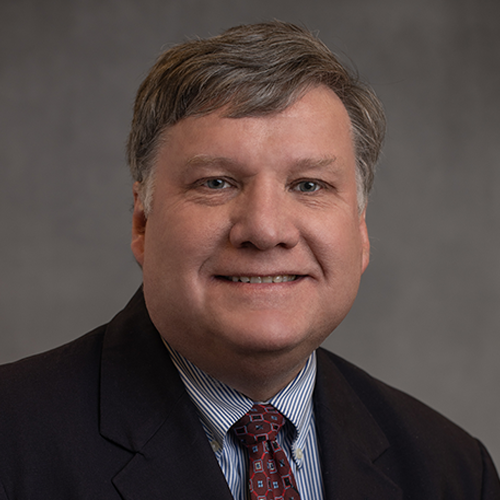
 As the 2023-2024 term comes to a close, we sat down with incoming STFM president Joseph Gravel, MD, to learn about his journey to family medicine education, his plans for the presidency, what he’d tell his younger self, and his message to students and residents.
1. When you were a child, what did you want to be when you grew up?
I wanted to be the left fielder for the Boston Red Sox and would have done that if it weren’t for just a few things in the way— my hitting, fielding, throwing, and speed. In high school I was thinking it might be fun to be a sports columnist for a newspaper. I was always really interested in history, current events, and government as a kid, and remember staying up late to watch all the political conventions and inspired by RFK and MLK, could see getting somehow involved with government which at the time was still widely considered a noble profession to serve the public good.
2. As you grew, what drew you to medicine and family medicine education in particular?
I think looking back it was always subconsciously there, but I wasn’t sure I could ever actually do that. As a kid, my own primary care physician would not just send me to the ER but instead would meet me and my mother at her private office at 2 am to give me shots of epinephrine for asthma attacks (this was 1970’s asthma treatment and 1970’s relationship-based medicine…). When I got to college — I was thinking maybe public defender law, not pre-med and found the social sciences more interesting than the biological sciences (and still do, although I like both). The family medicine side— I’m a generalist at heart with lots of interests in lots of things, and the big picture and relationship focus appealed to me. The education side— my 4 siblings all teach in various capacities, so maybe nature, maybe nurture, although I didn’t think about academic FM at all until the latter part of residency. I also had a fantastic Program Director (Sam Jones) who has been one of my most important mentors and still is to this day, almost 40 years later. Now that’s continuity!
3. When you’re not revolutionizing family medicine education, how do you like to spend your time?
Of course, revolutions occur only when a group of people believe in something important and then do something about it together concordant with those shared beliefs. Anyway, I love sports — the Boston sports teams, the Milwaukee-area sports teams; baseball and college basketball are my favorites. I’ve been to 45 major league baseball parks (every city including those parks now closed/replaced). I love documentaries on pretty much any subject, the History Channel, and try to read (online) newspapers every day including political or social commentaries, more because I simply find it interesting rather than for fact-gathering. I find myself watching the Milwaukee local government channel for its entertainment value- the human pageantry is better than “reality” tv. Oh yeah, also Conan O’Brien’s podcast and Seinfeld reruns despite often knowing the next line at this point….
4. What do you wish all members and non-members alike knew about STFM?
I think many members understand this— but if you think of STFM as it’s mostly about a big meeting once a year, you’re missing out. The annual meeting is a highlight of the year, but there is so much more to be gained through actively participating in a collaborative that interests you, or getting involved in some of the many ongoing initiatives where great experiences and relationships outside your own institution are to be had. The other thing I think many suspect but I’m here to confirm— the executive leadership and the STFM staff are second to none— so talented, hard-working, and passionate about bringing our ideas to life.
5. If you could impart your past self with any wisdom from the future, what would it be and why?
This new company called Apple may be worth investing in. Why this? So, I would have more to donate to the STFM Foundation of course. ;0
I’d emphasize Ferris Bueller’s advice— “Life moves pretty fast. If you don’t stop and look around once in a while, you could miss it.” And patience is a virtue. Really.
6. In life, what accomplishment are you most proud of, and why?
Three kids now in their 20s who are good people, grounded, and with good values. Givers, not takers. (more so due to my spouse Barbara’s efforts, but I helped…)
7. What drives you to show up every day?
The work is so meaningful. If you do it right it can have an impact right now, but even better it can have a multi-generational effect on those you come in contact with and indirectly many more —whom you’ll never meet or know. This is the beauty of teaching and the beauty of family medicine. Combining the two is even better and even more awesome, in both the traditional meaning and the modern slang of that word.
8. What is your most used STFM resource?
STFM Connect— delivered to my Email box so I don’t need to even think about it. Keeps me connected to what is going on and who is doing things. Hey, I think “Connect” delivers on that branding!
9. What would you tell medical students and residents about their journey ahead?
You are entering the best profession in the entire world, bar none, working with the best people. You get to be a lifelong learner while doing good, which is a special opportunity. Don’t let all the background noise- which is at times deafening— drown out why you chose this remarkable profession and all the good you will do in the world. Be adaptive, have a growth mentality, and be an advocate for self, your team, and patients. There will be many opportunities disguised as irksome challenges that you didn’t ask for and that you believe you didn’t deserve. A “blessing in disguise” is a real thing, often realized only in retrospect, and you will succeed if you keep this in mind. Lastly, think of your career path as an interesting adventure to be savored rather than a journey to be endured. It’ll go better and feel better that way.
10. Is there a lesson you’ve learned that’s stuck with you your whole life?
Said to be Abraham Lincoln’s favorite saying and my parents’ frequent lesson— “this too shall pass”. It’s applicable to every situation— when things are going well, it is useful to remember to appreciate it as it is fleeting; when things are not going as well as we would like, it provides perspective— and is always true.
11. What do you look forward to most in your term as STFM president?
Working with our fantastic Executive Director and CEO, our wonderful staff, members of our Executive Committee, and our Board of Directors to advance STFM’s missions through our strategic plan, as well as collaborating with our sister family medicine organizations to benefit the entire specialty, our learners, and our patients. And the unanticipated things are what will make the experience even more interesting. I appreciate the opportunity!