Author Archives: stfmguestblogger

Crafting Narratives for Publication

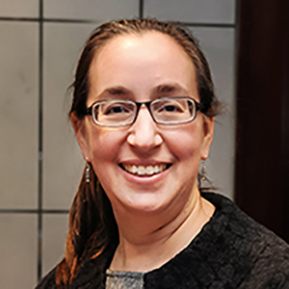
By Sara Shields, MD
associate editor
,
Family Medicine

You’ve had a defining clinical, teaching, or learning experience in your role as a family physician educator, clinician or student.  Someone suggests that you write about it. Here are some pearls for crafting your reflective piece in hopes of publication in a journal like Family Medicine that accepts such narrative work.

  • What story are you trying to tell? Just as with any written piece, consider first your content. What are your key themes (keeping in mind that any word limit may mean focusing on just one theme)?  Consider the readership of the journal—how would a medical student on a family medicine rotation respond to your story? How would a seasoned family medicine faculty member?
  • Avoid judgment–In general, an effective narrative piece is a personal story that shares a particular learning point, but does so without editorializing or requiring references.  How can your writing avoid judgment even as you elucidate and emphasize what you hope the reader will learn with you in your story?
  • Focus on the writing–In narratives, the “methods” of your writing enrich your themes and help them resonate for your readers.  The term “methods” refers to the craft of the writing—how are you using language to move your meaning along?  While avoiding redundancies or complicated phrasing is important, your writing may “sing” more to your readers with careful use of specific literary devices such as metaphor, alliteration, rhythm, or repetition of key words.  No matter whether you are choosing prose or poetry, remember the adage “show, don’t tell” –how can you describe people or events in ways that invoke the reader’s sensory or emotional response rather than simply stating what happened?
  • Every word matters–Especially for formats with strict word counts such as 6 word stories or 55 word essays, every word needs to move your story along. 
  • Circle back to the meaning—When looking at every word,do not lose sight of the totality of the essay.  Does this piece make sense overall?  Does it still say what you want it to say?
  • Do your homework–If your themes seem like they are common in narrative work (e.g. a physician’s experience of their own illness), you may want to look for similar pieces and think about how your story offers new angles or reflections compared to other similar work.  What can you contribute that may be new or surprising for readers?
  • Ask a friend or colleague to read your story–Consider asking someone to read your work before submitting it, to help assess both the content/themes and your storytelling style.  Do these readers resonate with your language?  Your themes?
  • You may need permission__If you describe a patient or learner scenario with enough detail, you may need to get their permission to submit your story for possible publication.
  • Don’t lose yourself–Be authentic; challenge yourself to dig deeply into both personal and professional lessons from your story.   How can you help the reader to consider multiple perspectives?

Reference: Walling A, Shapiro J, Ast T. What Makes a Good Reflective Paper? Fam Med 2012;45(1):7-12.

Reflections on Participation in Community Outreach Event

By Sarah Willoughby, LCSW, Freeman Health System

On Sunday, Sept 7, 2025, I attended a community outreach event hosted by the Neighborhood Resilience Project in collaboration with McAuley Ministries and the Society of Teachers of Family Medicine (STFM). This was a partnership through the 2025 STFM Conference on Practice & Quality Improvement in Pittsburgh, PA.

I rode to the main site with Marisol Valentin, the director of McAuley Ministries, who told me about the sad history of the Hill District of Pittsburgh and the area’s increased poverty, violence, and other problems. Then we met Father Paul Abernathy, who had the vision to start the Neighborhood Resilience Project—a trauma-informed community development nonprofit.

He provided a tour of the medical/behavioral health facility and led a round table discussion along with one of the McAuley Ministries board members, two volunteer physicians, chief administrator, the nursing director, and the volunteer coordinator. Together, they described their work in revitalizing the Hill community—a neighborhood negatively affected by gentrification.

Father Abernathy and others realized residents of this neighborhood have experienced individual and community trauma, which is affecting their emotional and physical health. I loved their focus “to promote resilient, healing and healthy communities so that people can be healthy enough to sustain opportunities and realize their potential.” I have spent my entire career—35 years—doing this in various rural and urban areas.

During the last 15 years, the Neighborhood Resilience Project has worked with community members, leaders, volunteers, and donors to strengthen the community by focusing on three pillars:

  • Community Support
  • Health and Well-Being
  • Leadership Development

The Neighborhood Resilience Project’s motto is to engage community members to transform them into a resilient, healing, and healthy community. Programs include a free Health Care Center, a Trauma Response Program, a Backpack Feeding Program, and, during the COVID-19 pandemic, a Vaccination Collaborative.

Father Abernathy was working in a predominantly black and underserved community in Pittsburgh and regularly interacting with men, women, and children who had repeatedly experienced multiple forms of trauma. He was a combat veteran of the Iraq War and realized that trauma in the form of hunger, abuse, homelessness, lack of opportunity, racism, lack of health care, and violence greatly informed the worldview and culture of the community.

Understanding that trauma was the greatest barrier facing the development of his community, Father Abernathy began to ask the question, “how do you heal an entire community that has been inundated with trauma for generations?”

Here are some of the Neighborhood Resilience Project’s recent accomplishments:

  1. Through 2021, the organization has helped facilitate more than 2,500 COVID-19 vaccinations, deployed more than 60 times to homicides related to gun violence, provided more than 14,000 items of food and 5,000 clothing items, provided more than $23,000 in emergency relief and document recovery, and had close to 200 volunteer hours through clinicians alone such as to provide free care to the uninsured in the region.
  2. The organization has hosted groups from across the nation who had been previously trained in the Trauma Informed Community Development Framework for a Summit in June 2021.
  3. The organization utilized “Micro-Community Interventions” in the Hill District and saw an improvement in overall well-being as analyzed by the well-being tool, “ImHealthy.”
  4. The organization has renovated its Free Health Center space to double in size and now offers medical and dental care.
  5. In partnership with the Jefferson Regional Foundation, the Neighborhood Resilience Project is rolling out work in the Mon-Valley – first by training one cohort from the McKeesport, Clairton and Duquesne neighborhoods (for a total of three cohorts) in the Trauma Informed Community Development Framework and then coaching those cohorts through the roll-out phase.

Visiting the Neighborhood Resilience Project and meeting key team members was inspiring to me personally and professionally. We’d like our community residents in the Joplin, MO, area to be healthier, and we struggle to find ways to do this. In April, we had a serious storm in our rural area, causing damage to trees, fences, homes, and sheds. Just this week, a woman whose farm is still significantly damaged and whose life has seriously been impacted told her story.

This “Trauma Informed Community Development” (TICD) model in our community might be helpful to Joplin, as many were devastated by the EF5 tornado in 2011 that killed more than 200 people. I plan to meet with someone from the Neighborhood Resilience Project in the next month and learn more about the imHealthy tool and ”micro interventions” we might be able to implement in our community.

Reading in Turbulent Times

By Bill Cayley, MD, MDiv


“Literary experience heals the wound without undermining the privilege of the wound.” —C S Lewis (Goodreads)

In turbulent times, withdrawing to a quiet place with a good book seems more tempting than ever. Escaping to another story, another place, or another time can seem the best refuge from chaos and uncertainty. Yet escaping in reading can also feel like a guilty pleasure when it seems that something should be done. While rest and refuge are important for pacing oneself and avoiding burnout, reading can also provide inspiration as the stories of others give us insight into how they faced turbulence and chaotic change. Perhaps, as we face the current moment, a good book might be just the right thing.

Looking back over recent history, it is hard to think of a more turbulent time than the 1930s and 1940s, when the world learned that the “war to end all wars” (World War I) actually was not. In 1943, Langdon Gilkey was a teacher in China and one of about 2000 expatriates interned at the Weihsien compound for “safety and comfort” during the Japanese occupation of China in World War II. Shantung Compound (HarperCollins) is Gilkey’s story of that experience, as the interned expatriates were essentially left to themselves to organize and run life inside their compound. From dealing with hunger, jealousy, boredom, and fear (and even an exploding egg) to finding ways to make life more civilized and tolerable, the book tells a story of community and humanity in the face of isolation and deprivation. As Gilkey concludes, “Out of apparent evil, new creativity can arise if the meanings and possibilities latent within the new situation are grasped with courage and with faith.”

From World War II also comes the story of Le Chambon, a French village that was the center of a movement which sheltered nearly 5000 people (including more than 3000 Jews) between 1940 and 1944. While many find the stories of Raoul Wallenberg and Oskar Schindler inspiring, most of us are not diplomats or industrial magnates. Lest Innocent Blood Be Shed (HarperCollins) tells the gripping story of how “goodness happened” in Le Chambon as ordinary people daily risked their ordinary lives to overcome an extraordinary evil. As the author concludes his book, he reflects on the way the Chambonnais affected him during his research and writing: “I know now that I want to have a door in the depths of my being, a door that is not locked against the faces of all other human beings. I know that I want to be able to say, from those depths, ‘Naturally, come in, and come in.’”

The biographies of individuals can also motivate us and inform us with the wisdom of others who have trod paths of challenge. In Man’s Search for Meaning (Beacon Press), psychiatrist Viktor Frankl tells his own story of finding meaning in life as he faced the horrors and loss of life in a Nazi concentration camp. Coming to more recent times, the stories of those who fought for civil rights during and since the 1960s provide more than ample inspiration. While nearly all are familiar with Martin Luther King Jr, the name of John Lewis may be less familiar. The great-grandson of an enslaved man, Lewis first aspired to be a preacher, later took part in many central events of the 1960s civil rights movement, and subsequently served 17 terms in the US House of Representatives until his death in 2020. In His Truth Is Marching On (Penguin Random House), Jon Meacham tells the story of Lewis’s decades in public service, shaped by his faith-based belief that one should love one’s neighbor as oneself. Another influential leader shaped by the civil rights movement, family physician David Satcher served as US Surgeon General from 1998 to 2002. My Quest for Health Equity (Johns Hopkins University Press) is Dr Satcher’s autobiographical account of his decades-long work on equity issues through academia and public health.

Finally, at a time when the essence of family medicine seems at risk of being lost amid politics, culture wars, and threats to the integrity of science, stories of others who have walked the path of general (or family) medicine can be grounding. The breadth of medical autobiographies can be overwhelming, but a small sample of noteworthy narratives includes A Fortunate Man (AbeBooks), the story of an English country doctor in the mid–20th century; A Fortunate Woman (AbeBooks), the story of another physician (this time a woman) in the same English rural town; and What Matters in Medicine: Lessons From a Life in Primary Care (University of Michigan Press), Dr David Loxterkamp’s stories from a career in rural Maine.

How to face the current moment? Take a deep breath, take some time for reflection, and consider taking time to find inspiration and wisdom from those who have gone before.