Tag Archives: Resident Author

My Dream: Closing the Nation’s Achievement Gap Through Teaching Family Medicine

50anni_headerfuture

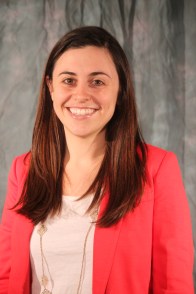
whitney.headshot (1)

Whitney LeFevre, MD

During most of my adult life, I’ve felt called to help close the achievement gap that exists in our country. So I deferred medical school to teach middle school math and science in inner city Baltimore with Teach For America. During my 2 years of teaching, I found that while I loved my students and I loved teaching them algebra and life sciences, I felt called back into the field of medicine. I saw that the best way for me to close the achievement gap was to return to medicine to find ways to address the many social determinants of health that kept my students from success.

In medical school, I was the education director for the MedZou Student-Run Free Clinic. The clinic both teaches medical students the joys of primary care and provides health care to the uninsured. My time at MedZou not only inspired me to become a family physician but also gave me the opportunity to create new programs to teach medical students while providing quality care to those in need. It’s at this intersection—the intersection of helping those in need while also stimulating medical students to be future family doctors for the underserved—where I truly feel I am able to fulfill my calling to close the achievement gap in our country.

In residency, I worked in an urban underserved environment with a predominantly Spanish-speaking population. Our patients had many social issues, including homelessness, addiction, food instability—the list goes on. In a place of great need like Lawrence, MA, I was motivated by how much family medicine was valued there. My patients deserved doctors who are full-spectrum trained and committed to quality, access, and patient-centeredness. And that’s what they got.
Continue reading

Family Medicine Residents Are Underutilized Resources for Quality Improvement

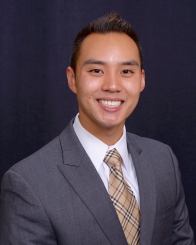
DanNguyenMD

Dan Nguyen, MD

I think it’s time for family medicine to rock the boat. Family physicians, and especially family medicine residents, are uniquely qualified to promote quality improvement by standardizing patient care processes.

As a family medicine intern at an urban academic institution, these past 6 months have been a blur of rotations. Every 4 weeks, we start a new service and drink from a fire-hose of learning the intricacies of “how-to-be-a resident.” Our intern training is the most diverse; we rotate through inpatient services in OBGYN, pediatrics, family medicine, internal medicine, general surgery, intensive care, and the emergency department.

For inpatient services, there are common tasks that all residents perform. We answer pages, place admission orders, write progress notes, discharge patients, sign-out the patient lists, etc. We have access to the same electronic medical record, the same resources, and are unified by an academic institution.

What dawned on me is that every service seems to coordinate patient care completely differently. Every 4 weeks, I would re-learn how to do the same types of tasks but with different methodology. The most glaring disparities I noticed were in how different services handle transitions of care, especially patient sign-out.

Continue reading

Medicine Inherently Requires All Physicians to Be Teachers

50anni_headerfuture

Throughout my medical education, my best mentors have been family physicians. Without exception, they are enthusiastic, committed, passionate, intelligent, and innovative leaders who have inspired me to be the best family physician I can be. As I cross the midpoint of my residency training, I have spent more time thinking about the next steps in my career and how to best continue to affect change. I want to prioritize teaching family medicine and pursue a career either in academics or in a position where I can work closely with medical students or residents.

KarlDietrich2

Karl Dietrich, MD, MPH

Medicine inherently requires all physicians to be teachers, and find effective and efficient ways to share information with patients. As a high school teacher prior to pursuing medicine, this was one of the appealing parts of becoming a physician. By embracing our role as teachers, we allow our patients to learn about their own health, become their own best advocates, and hopefully influence others to think more about their health. Teaching family medicine appeals to me because it could broaden my potential impact by not only increasing the number of future family physicians but by increasing the number of physicians in other fields with a strong understanding of the value of family medicine. We know that a strong primary care system will be essential to the ongoing success of our health care system, and I see no better way to ensure that than by increasing the number of committed family physicians in this country.

Continue reading