We Do Not Interrupt Our Patients

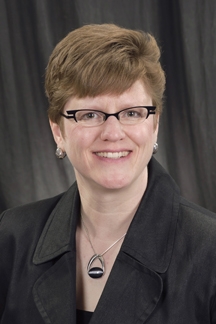
Joseph Scherger, MD, MPH

Ever notice a patient wince when interrupted describing his or her problem? It is well known that physicians interrupt their patients much of the time and usually within 30 seconds of the start of the visit. One study in Family Medicine showed that residents interrupted patients 12 seconds into a visit 25% of the time (article pdf).  We even teach interruptions as part of “controlling the conversation” and “limiting the agenda” for the visit.

In a practice where there is ample time for visits, there is rarely if ever a need to interrupt a patient. I’m now in such a setting after more than 30 years of brief office visits, and I had to train myself to not interrupt patients. What a great feeling that is! At our practice, we sit back and let every patient finish what he or she has to say. Patients notice this, too, saying they have never had a physician listen to them like we do. We learn things about patients they have not had the chance to share with physicians before.

Since we have an hour for every new patient visit, early in the encounter I ask the patient to tell me his or her story. The patient often asks, “Which story?” I say, “Where were you born and what happened after that?” It is amazing to me how most patients finish this story in about 5 minutes. As a matter of fact, I’m impressed with how brief most patients are when giving their narratives uninterrupted.

Our physicians are now demonstrating an uninterrupted communication style to medical students in their family medicine clerkships. By the time they arrive at our practice, they have already been taught to interrupt patients, so we teach them otherwise. Often, this helps them love family medicine. We look forward to training residents in uninterrupted narrative next year when our residency program starts.

Interrupting patients is a part of the paternalistic culture of medicine where the physician’s time is more important than the patient’s, and the physician knows better than the patient what the problem is. Such paternalism is unprofessional and even dangerous and should not be a part of patient-centered care.

I admire professionals who let people have their say completely. Counselors are very good at this and so are good lawyers, realtors, designers, and many others. Interruptions seem to be mainly a physician behavior.

Visits with patient can be efficient without interruptions. When patients have been given the chance to say everything they want during the visit, they are more receptive to hearing our assessment and recommendations for managing their problems. After all, patients are in charge of their care. Our job is to serve them, respectfully and without interruption.

Why Medical Students Should Advocate

Attending the Family Medicine Congressional Conference in Washington, DC,  last month was an amazing experience.

Aaron Meyer

Aaron Meyer
Medical Student

Physicians, residents, and students spent the first day immersing ourselves in family medicine action on Capitol Hill. Thought-provoking discussions on family medicine pipeline and payment reform helped me understand how these issues affect students currently and will continue to do so in the near future. Issues like ensuring continued funding for National Health Service Corps so students can follow their convictions and work in underserved areas. Advocating for a permanent repeal to the Sustainable Growth Rate (SGR) so students don’t have to worry about the financial stability of their future practices. And encouraging modernization of Graduate Medical Education (GME) funding so our training can more fully reflect who we are as family physicians.

After the first day of updates on family medicine’s governmental advocacy, we were able to meet Congressional Representatives, Senators, and their aides. The Missouri Academy of Family Physicians delegation and I were able to sit down and talk with US Representative Russ Carnahan about what we had learned the previous day. We told him about two House Bills related to GME funding reform and SGR repeal and urged him to support the future of family medicine (and possibly be a co-sponsor on the bills).

I’m a political junkie, so meeting Rep. Carnahan was exhilarating. I was so happy that I was able to talk to him about the importance of protecting National Health Service Corps funding and other issues that affect students. Reflecting on my experiences at this conference, I am 100% positive that a student’s voice is incredibly important on Capitol Hill. Hearing a student like me talk about my $200,000 debt upon graduation and how vital pipeline and payment reform are in ensuring that all patients have a family doctor is a message that all legislators need to hear.

Advocating on behalf of the future of family medicine is advocating on behalf of the future of health care in this country. I encourage all students to become involved in advocacy because we have an important voice, and we will form the backbone of the next generation of physicians.

 For more information on medical student advocacy check out these resources:

The 2014 Family Medicine Congressional Conference April 7-8

Students, Residents: Stand Up and Make a Difference for Family Medicine

Watch advocacy videos and view the advocacy toolkit

Office Stories

I find office spaces interesting. The piles (or lack of piles), photos, and mementos share a glimpse of the personality of the people, work styles, and things individuals value.

Stacy Brungardt, CAE STFM Executive Director

A little more than a year ago, STFM revamped our headquarters office. In our 4,000 square-foot corner of the 5th floor of the AAFP building, STFM staff publishes the journal, plans our conferences, and runs the more than 40 initiatives of the Society. We wanted the space to be both inspiring, practical, and reflect the core values of STFM. We squeezed a lot from our lean redecorating budget and started by getting rid of stuff—old office furniture and unused items you collect over time that clutter the mind. That felt good.

Now when you walk in our offices, the first thing you’ll likely notice are five 8-foot color images of a stethoscope and lab coat, tree-lined arched path, a journal/smart phone, a circle of hands, and a capital building. These images depict the Society’s core priorities of workforce development, professional and leadership development, scholarship and innovation, professional relationships, and policy advocacy. They’ve added a splash of color and meaning to our space. This wall used to display all our past presidents’ photos. We took those down and put them in a nice scrapbook. Admittedly, they were interesting to see and are missed by some of our staff. At the same time, staff agreed that the message we want to communicate to one another and visitors is that we are here to serve and celebrate all our members, not just those who move to STFM’s highest ranks.

As part of the revamp, we took a storage area and interior office and created a conference room as a space to come together for meetings or just to build relationships by eating together at lunch or special occasions.

We painted several walls nutmeg (think nice burnt orange), which added warmth to our sterile walls. A little table and lamp provide an extra homey touch. Around the top of all our walls we have black and white framed and matted pictures. These are pictures staff provided of images that inspire them. The pictures show children and grandchildren, landscapes and beaches, and people and places that matter to each of us.

Staff selected a quote for the top of one wall that says, “You can’t discover new oceans unless you have the courage to lose sight of the shore.” This reminds us that taking risks is a necessary part of our business, and the success of the Society depends on it.

On two walls we created a montage of members, photos and conference locations. Highlighting another wall are images that spell out the letters STFM in photos, a thoughtful gift to staff from past President Terry Steyer.

My favorite part of our space is my office wall with member photos of individuals who have had an impact on my career with STFM. My favorite shot is a photo of Lucy Candib and Peter Coggan dancing on stage when Lucy accepted the 2010 F. Marian Bishop Award. That moment captured so much of what I love about STFM – the joy and celebration of our members who make a difference in the world every day.

That’s our story. Does your space reflect the values you want to communicate? Let us know; we’d like to share your story.