Category Archives: Uncategorized

Pre-Existing Conditions and the Potential Cost of Repeal and Replace on the Medically Underserved

ERAS photo-001

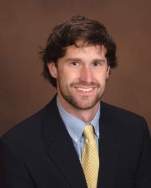
Michael Castellarin, MD

In March of 2010, the Affordable Care Act (ACA) became the most significant change to the US healthcare system in almost half a century. This January, health care reform again entered the national conversation as discussions to repeal and replace the ACA ensue. One of the most influential provisions of the ACA was the pre-existing conditions clause which led to a ban on medical underwriting, thus providing health insurance coverage for a multitude of people previously ineligible unless covered by an employer.

As a family medicine intern training at an urban federally qualified health center (FQHC), I care for the medically underserved; a population defined by their complex health care needs and lack of financial resources which, prior to the ACA, left this group particularly vulnerable to medical underwriting. As health care policy shifts once again, the importance of pre-existing condition coverage must be realized and must be protected, particularly for those less fortunate.

Prior to the passage of the ACA, the practice of medical underwriting was commonplace in the individual health insurance market. Common ailments such as diabetes, heart disease, and obesity left patients uninsurable. Those insured through an employer avoided underwriting but oftentimes those in medically underserved populations were forced to shop for health insurance on the individual market because of unemployment or low wage employment without employer-sponsored insurance.

Continue reading

Feed a Discipline (With Research Questions): Become Shark Bait

Winston R Liaw, MD, MPH

Winston R Liaw, MD, MPH

Research is to see what everybody else has seen and to think what nobody else has thought.

  • Albert Szent-Gyorgyi

Each year, my colleague, Alex Krist, and I sit down with our Virginia Commonwealth University family medicine residents to brainstorm potential research topics for their scholarly activities, and each year, we encounter a similar series of events. Initially, there is silence (frequently prolonged and often deafening) followed by musings about their lack of research experience. Then, a brave soul offers a question that has been plaguing her. A classmate asks a similar but related question. The conversation reminds a third resident about a different question he always wanted to answer. By the end of the hour, we have a list of fascinating, important questions.

  • Do calorie counters improve patient outcomes?
  • Why do our patients use the emergency room next door when our walk in clinic is open?
  • Has the new patient portal affected the volume and type of phone calls we receive?
  • Are patients at the community health center interested in doing video visits?

Your STFM Research Committee thought that family medicine residents and faculty nationwide may similarly have pressing questions to answer but lack the means to do so. Initially conceived by STFM Research Committee members Tammy Chang and Rob Post, we launched a session at the 2016 STFM Conference entitled: “Shark Tank for Family Medicine: Real-time Feedback for Primary Care Research Ideas”. During the workshop, seven participants pitched research ideas to three “sharks” (well-established primary care researchers). The sharks provided real-time feedback and then selected participants to mentor over the year. For those of you not tuned in to pop culture, our workshop is based on the TV show Shark Tank where contestants pitch business ideas to established entrepreneurs and winners receive funding and mentorship.

Continue reading

Our Collective Voices Need to Be Heard

50anni_headerfuture

This past year I have had the honor of participating in the STFM Emerging Leaders Fellowship. As an Emerging Leaders fellow, I am learning the mindset, attitude, and behavior of an inspiring and effective physician leader.

ronya

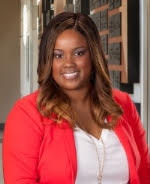
Ronya Green, MD, MPH

The fellowship has provided both theoretical and practical tools for leadership. I have received invaluable mentoring and broadened my professional network within STFM. While meeting and working with other faculty across the country we have hopefully made connections that will span our careers.

As an Emerging Leaders fellow, I joined the Family Medicine for America’s Health (FMAHealth) Health Equity Cross Tactic Team. We are working to plan the second annual Starfield Summit—Primary Care’s Role in Achieving Health Equity April 22-25, 2017 in Portland, Oregon. The Summit will bring together thought leaders, experts in primary care and health disparities, and other community members to create collaborative partnerships. Summit participants will engage in strategic discussions and propose a future agenda for tangible ways in which we can bolster primary care education and research efforts to eliminate disparities and achieve equity.So how does this emerging leader imagine the future of family medicine? I believe our future shares common themes with our past. We will continue to advocate for optimal patient health and be accountable to training exceptional family physicians. Our daily work is bigger than us as individuals. Now, more than ever, our collective voices need to be heard.

The future of family medicine includes physicians continuing to work as advocates. We are advocates for our patients—especially the most vulnerable populations that require compassionate, integrative care. We are advocates for our learners who need engaged teachers who willdemonstrate excellence in the comprehensive practice of our specialty.

We are accountable to our patients and communities. We will make the communities we serve better with a holistic approach–such as lobbying to eliminate food deserts and enhancing transportation services. We are accountable to our learners with our words and actions. Our attitude says “You can count on me!” We will teach them to be socially accountable to the future communities they will serve.

I look forward to practicing in a specialty that continues to be on the front line of patient care. I am proud to help train socially conscious physicians who will eliminate health disparities and work towards health equity for all. Our future is bright and I am excited for the journey ahead. Happy 50th anniversary, STFM!