By Sara Shields, MD associate editor, Family Medicine
You’ve had a defining clinical, teaching, or learning experience in your role as a family physician educator, clinician or student. Someone suggests that you write about it. Here are some pearls for crafting your reflective piece in hopes of publication in a journal like Family Medicine that accepts such narrative work.
What story are you trying to tell? Just as with any written piece, consider first your content. What are your key themes (keeping in mind that any word limit may mean focusing on just one theme)? Consider the readership of the journal—how would a medical student on a family medicine rotation respond to your story? How would a seasoned family medicine faculty member?
Avoid judgment–In general, an effective narrative piece is a personal story that shares a particular learning point, but does so without editorializing or requiring references. How can your writing avoid judgment even as you elucidate and emphasize what you hope the reader will learn with you in your story?
Focus on the writing–In narratives, the “methods” of your writing enrich your themes and help them resonate for your readers. The term “methods” refers to the craft of the writing—how are you using language to move your meaning along? While avoiding redundancies or complicated phrasing is important, your writing may “sing” more to your readers with careful use of specific literary devices such as metaphor, alliteration, rhythm, or repetition of key words. No matter whether you are choosing prose or poetry, remember the adage “show, don’t tell” –how can you describe people or events in ways that invoke the reader’s sensory or emotional response rather than simply stating what happened?
Every word matters–Especially for formats with strict word counts such as 6 word stories or 55 word essays, every word needs to move your story along.
Circle back to the meaning—When looking at every word,do not lose sight of the totality of the essay. Does this piece make sense overall? Does it still say what you want it to say?
Do your homework–If your themes seem like they are common in narrative work (e.g. a physician’s experience of their own illness), you may want to look for similar pieces and think about how your story offers new angles or reflections compared to other similar work. What can you contribute that may be new or surprising for readers?
Ask a friend or colleague to read your story–Consider asking someone to read your work before submitting it, to help assess both the content/themes and your storytelling style. Do these readers resonate with your language? Your themes?
You may need permission__If you describe a patient or learner scenario with enough detail, you may need to get their permission to submit your story for possible publication.
Don’t lose yourself–Be authentic; challenge yourself to dig deeply into both personal and professional lessons from your story. How can you help the reader to consider multiple perspectives?
Reference: Walling A, Shapiro J, Ast T. What Makes a Good Reflective Paper? Fam Med 2012;45(1):7-12.
Sarina Schrager, MD, MS Editor-in -Chief, Family Medicine
Family Medicine, along with most other scientific journals, depends on volunteer peer reviewers to assure that we are publishing high quality papers. The act of peer reviewing advances the science of family medicine. Our editorial team is looking for a diversity of opinions and voices to assure the excellence of our published papers. I love peer reviewers and tell everyone I work with that they should volunteer to be one. Now, I am a little biased (being an editor of a journal that depends on peer reviewers), but I can’t overstate the important contributions of peer reviewers to the publication of our journal. So, if you already volunteer your time to do peer review, thank you. If you have not done any peer reviews, then let me tell you why you should.
First, being a peer reviewer will help you become a better writer and scholar. Reviewers may be inspired by positive attributes of papers while avoiding mistakes identified during the review. By reading what other people do, the way that they write and even how they do the research, you can decide what works and what you would do differently and then incorporate what you learn into your next paper. You can also learn about research methodology by reading about how others conducted studies.
Peer reviewing can also help you learn about the publishing process and about science itself by reading what other reviewers and the associate editor says about a paper, and seeing what ends up getting published. I always learn by reading reviewer comments and am excited when other reviewers had similar feedback to my own.
Second, being a peer reviewer can help your career. It is an accomplishment that you can put on your CV and some journals will send a letter to your dean or chair recognizing you as a peer reviewer. Also, if you do a good job with the review, you will be asked to review some more. Potentially, you may be asked to be on the editorial board of the journal where you do peer reviews. If you are interested in becoming an associate editor at a journal, the Editor in Chief will look at how many reviews you have done and whether they were high quality as a metric of your application. Being a peer reviewer can also build connections for future collaborations. This is one way that you build your professional reputation.
Lastly, being a peer reviewer helps the discipline. By reading papers submitted to the journal, you will learn what is important in family medicine and what other scholars are studying in your area of interest. You will be able to impact the quality of the papers that the journal publishes. There is something very satisfying about seeing a paper in print that you reviewed because you helped make it as good as it is.
Doing a high-quality review does take time. The time needed to do a review will depend on the type of article (ie, an original research paper will take longer than a brief report or narrative because is it longer). Most people spend 1-3 hours on a review depending on the complexity of the article, your familiarity with the topic, and experience doing peer reviews. It is time well spent! Even one review a year greatly helps our journal.
We appreciate that people volunteer their time to do peer reviews and hope that we have helped convince you to sign up. Your voice is important. You bring unique skills and experience and can contribute to the excellence of our journal. You can sign up to be a reviewer at https://journals.stfm.org/familymedicine/reviewers/.
What’s in a Title? Establishing Clear Expectations and Professional Culture Through How We Address Our Colleagues
Kelly M. Roberts, PhD, LMFT; P.K. Grafton, DO; Jaspreet Kaur, DO
“Bye, Doctor [male intern last name]. Bye, [female resident first name],” said the male attending physician as the residents left the continuity clinic.
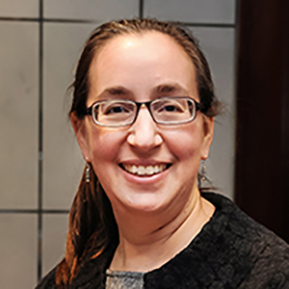
Kelly M. Roberts, PhD; Ada, Oklahoma
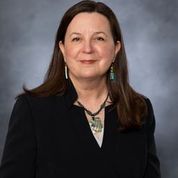
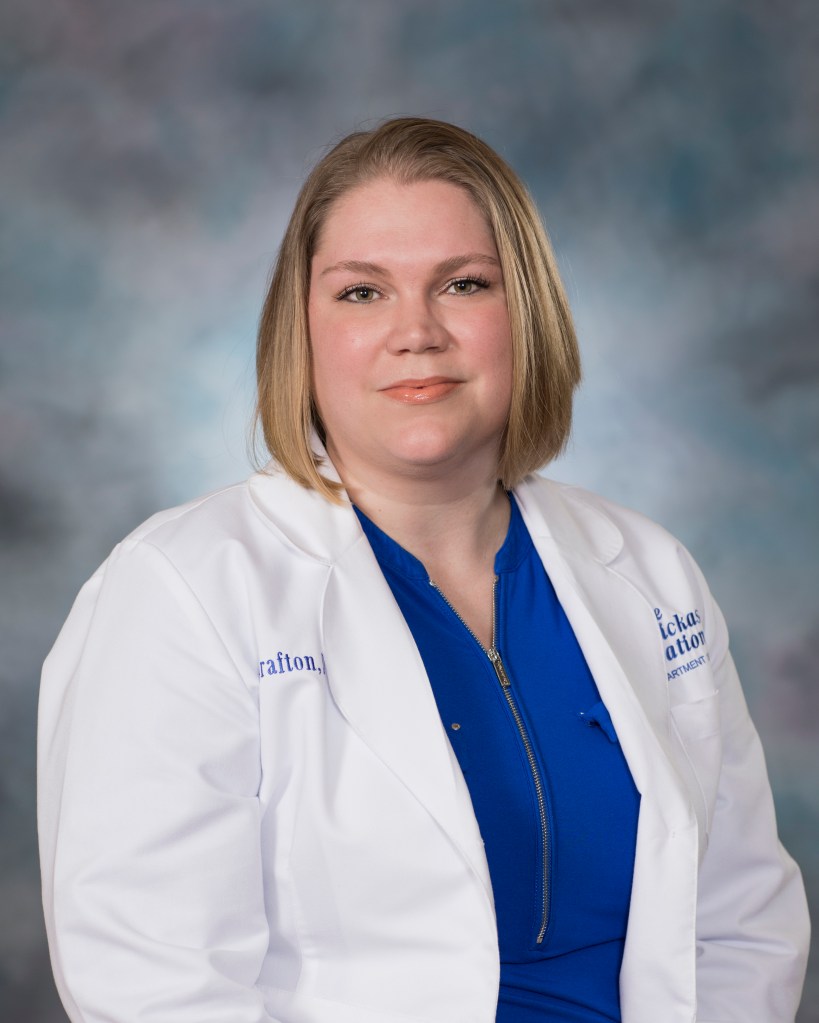
P.K. Grafton, DO; Michael Scott Photographer, 2018
Jaspreet Kaur ,DO; Michael Scott Photographer, 2019
“What’s in a name?” wondered the female resident, having been casually addressed with her first name multiple times, in comparison to colleagues addressed with their professional titles.
This interaction, however, was particularly unsettling for her and raised multiple internalized questions. Was this the attending’s attempt to encourage the intern to use his newly earned title and foster professional development, or was this an attempt to demean her? Was it intentional or unintentional? Conscious or subconscious? Did the matter warrant further attention and discussion? Would failure to contend with the issue affect her performance or growth?
This wasn’t the first instance of title imbalance; multiple versions of this same scenario had been raised by residents over the course of two years, yet our program wasn’t realizing lasting change. Meetings were held based upon this particular instance, and since that time everyone involved has reflected on multidimensional aspects related to title utilization.
As a debriefing exercise, we are sharing combined administrator and resident perspectives covering a few title utilization conceptual areas such as identity formation, power differentials, programmatic culture, and clarity of expectations
Identity Formation
Becoming a physician involves more than acquiring medical knowledge and developing clinical skills. Physicians also need to develop professional identities—physician, community leader, medical board member, etc. These identities start long before medical school but must be cultivated during school, residency, fellowships, and throughout attending practice. Students and residents establish evolve their identities through social experiences, patient encounters, and educational time spent with attending physicians and mentors. Helping students and residents form their professional identities, and function appropriately within them, is a critical component of the medical education system. The title of “doctor” is one that a student will need guidance and education growing into and maintaining.
Power Differentials and Hierarchies
Physician burnout and well-being is a current hot topic. Many studies discuss the use of Maslow’s hierarchy of human needs as the potential framework for addressing wellness. Part of this hierarchy is esteem. A physician’s esteem is tied to multiple internal and external factors. Especially during residency training, external factors play a large role in physician esteem. After working through undergraduate, medical school, and then additional years of residency, achieving the title “doctor” has significant and powerful meaning. Hearing patients, attendings, and nurses refer to you as “doctor X” is empowering. While on the flip side, being addressed without your title by a superior can leave you questioning their respect and opinion of you as a physician.
Professional Culture
Residents are encouraged to use their titles in lieu of first name when introducing themselves to patients or nurses at most training programs. The formality of titles is generally lax when residents are amongst their colleagues in resident work areas, call rooms, and table rounds. However, the title strategically finds its place during bedside rounds, a formal setting involving patient care. Deciphering between the appropriate use and setting for casual versus formal communication is foundational in building trust and respect, and is unique to training programs. A 2017 study examined the likelihood of professional titles usage during introductions at internal medicine grand rounds and found females introduced male speakers with formal titles 95% of the time in comparison to 49% male introducing female speakers. Female introducers in general were more likely to use professional titles when introducing any gender speaker in comparison to male introducers.
Clarity of Expectations
The possibly unintentional variation in formality may undermine the expertise of female physicians and impact their professional growth. In a training environment, it is imperative to follow a unified, though not necessarily formalized process for addressing resident physicians—male and female—as they advance in their professional roles. Establishing the appropriateness of casual versus formal communication is unique to institutions given its multifactorial nature; although universally clarifying expectations could enhance sensitivity and potentially mitigate existing gender bias in medicine.
Our Own Process
One exercise that assisted with defining a few of these elements was the decision to deploy an STFM CONNECT post over this topic. The following quotes pulled from that post demonstrate the diversity of perspectives offered at the time:
…Lopsided use of titles is arrogant to my ear. My ego and confidence as a physician are not wrapped up in a title.
…This is something that physicians in a larger community, such as where I practice now, rarely have to consider. But in small towns, physicians interact with their staff and their patients in a host of very close ways that would be quite avoidable – and even considered of questionable ethics – in regions of higher population density. The use of the title allows us to take a step back and be more “objective” while continuing to address health issues of those for whom we care (care, in every sense of the word).
…I call residents “Doctor” so the patients, nurses, others, and they themselves know who they are and their role, especially important for URM and women. They are not expected to be the patient’s friend, nurse, pal, aide, etc. They are expected to be each patient’s physician.
Attendings hold immeasurable power to propitiate, or stunt, resident growth on a daily basis. As members of STFM, externalizing your own questions will undoubtedly prevent residents from internalized struggles about their own identity, helping them own, with all the rights and responsibilities, the true and noble title of doctor.



 STFM Blog