Category Archives: Family Medicine Stories

The Joy (and Jostling) of Team-Based Care

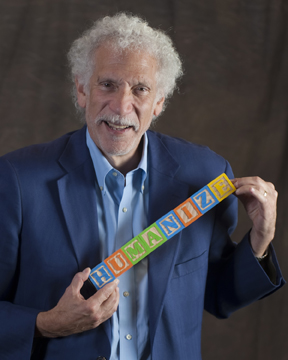
Barry J. Jacobs, PsyD

In the early 1990s, at the outset of my career as a psychologist in medical settings, I spent 5 years at a physical medicine rehabilitation hospital on what I was sure was a team of perennial all-stars. During our weekly clinical meetings, daily curbside dialogues in the hallways and cafeteria, and co-care in the PT gym and patients’ rooms, I always marveled at the competence, youthful confidence, and innumerable skills of the doggedly optimistic physical and occupational therapists, canny speech therapists, hardy nurses, and street-smart social workers on my assigned squad. At the head of this team was usually a gray-haired, white-coated physiatrist, wizened and patient, offering subtle guidance to team members but generally allowing us to practice our crafts. Not that harmony always reigned. We would have table-pounding debates about treatment plans. Rivalries simmered about who best evaluated cognition or ambulatory status.  But the team worked proudly and effectively and patients usually thrived.

I’ve been waxing nostalgic recently about those years because of family medicine’s ostensible move toward team-based care. The patient-centered medical home (PCMH) is intended to be a collaborative, integrated, multidisciplinary place where family physicians work shoulder to shoulder with behaviorists, pharmacists, case managers, social workers, medical assistants, and administrators to deliver improved, cost-effective, chronic disease management. But the culture of family medicine, in my opinion, is not yet team driven. What is second nature in physical medicine rehab is of necessity first nature for us—a new set of spiffy dress-up clothes without the well-worn comfort of habitual garb. I think there is much we can learn from rehab medicine’s decades-long experience with teams:

Multidisciplinary isn’t interdisciplinary. An oft-cited truism in the field of  integrating behavioral health services into primary care is that “co-location isn’t integration”—that is, proximity by itself doesn’t lead diverse clinicians to work in tandem toward better patient outcomes. I think this truism extends to team-based care in general. A multidisciplinary PCMH just connotes different disciplines under the same roof, which are working on their own respective and possibly divergent goals. Rehab was distinctly interdisciplinary—different disciplines working on commonly agreed upon goals. I believe that the PCMH likewise needs to be interdisciplinary to best blend the talents and skills of multiple specialists striving together. That means, like rehab, there needs to be processes in place for ongoing team communication and decision making. (An EHR alone won’t suffice.)  That means somehow creating team meeting times out of the hectic primary care work flow.

Continue reading

Aligning Our Efforts to Transform the System

Robert Cushman, MD

As a longtime member of the Society of Teachers of Family Medicine (STFM) and the incoming president of the Collaborative Family Healthcare Association (CFHA), I am both excited and a bit anxious about taking on this role at this time, because we are truly at a critical juncture. As health care providers and educators, we offer clinical services in a “system” that is about to either continue making important strides forward toward becoming a true system achieving meaningful outcomes or to slip backward into the free-for-all chaos that has complicated delivering good, patient-centered care for decades. We need to work together as members of STFM and CFHA to navigate through these twists and turns, or plow through some obstacles, so that we, our trainees, and our patients and communities, come out in better shape on the far end.

I want to share one of the “clinical pearls” I learned in my residency, which has served me well as a “compass,” and which I have quoted (with attribution!) many times to my own trainees as I precept them in the hospital and the office. I offer it now because it is applicable beyond the direct patient care process. I can still hear Tom Campbell saying, “When you’re stuck, expand the system.” He of course meant to explore more into the patient’s family and community context, gathering the perspective of some of those folks that make up that social network or enlisting their assistance in changing parts of that context to achieve change for the patient. He also meant to ask for input and additional, new, and different perspectives and suggestions from one’s professional colleagues, both diagnostically and for interventions. This approach has proved hugely valuable to me, repeatedly. And I think the current emphasis on team-based care is a result of a collective recognition that this systemic approach is valuable and more effective than “going it alone.”

I want to challenge us all to continue to “expand the system” in three ways. I want us to expand our concept of teams, to expand our measurements of what we’re doing, and to expand our reach. Let me elaborate briefly on each of these.

Continue reading

Without Collaborative Care, the PCMH Fails

Gene “Rusty” Kallenberg, MD

I want to tell you a story that is both personal and also parallels the evolution of primary care and collaborative care over the past decade and predicts its future.

I arrived in San Diego to take over the Division of Family Medicine at UCSD in the fall of 2001. I came from “the East” where I had been at George Washington University Medical Center and School of Medicine (GW) for the preceding 20 years.  My clinical primary care practice fortuitously shared a waiting area with the outpatient mental health team. It was a short walk to the therapists’ offices and in the course of wandering over to seek help on various patients I met a clinical psychologist with whom I developed a close working and collegial relationship.  When I needed help with a patient I would seek his counsel and/or refer the patient over to the group with an “Attention Pat” comment on the referral.  I ended up hiring him to be the psychologist in our new family medicine residency program. We did an international consultation together for an Eastern European country’s developing academic family medicine program, and he introduced me to the concept of motivational interviewing, among other things. I began to realize that without this kind of key help the practice of primary care/family medicine would be a lot harder. I began to talk with a psychiatrist who headed the 3rdyear clerkship about deeper collaboration, but then circumstances changed significantly at GW and I decided to move. Long story made short, I ended up taking up the leadership of the UCSD Division of Family Medicine.

One of the most pleasant and propitious surprises on arrival was that there was an outstanding group of academic PhD marriage and family therapists (MFT) from the University of San Diego (USD) who were in discussions with our UCSD Psychiatry Department about transferring their activities to UCSD from the Sharp Family Medicine Residency which, unfortunately, was winding down to closure. Todd Edwards and JoEllen Patterson were the dynamic duo I was privileged to meet.  Unfortunately, these discussions were mired down with our Psych folks in what seemed like a circular and non-progressing research-oriented discussion. Being the new kid on the block, I was able to ingratiate myself with the Chair of Psychiatry and got him to “let our people go” and actually set up a clinical operation where we could deliver co-located care along with directly observed behavioral science teaching sessions (fondly referred to as “BS Sessions”) within our family medicine offices.

Continue reading