Category Archives: Family Medicine Stories

A Trip Down Family Medicine Lane

2016-11-12-20-00-45

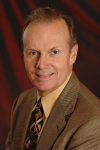
Kalaki M.Clarke, MD

The health care road has been less than smooth on the family physician’s journey towards optimizing America’s health. Nevertheless, I’m optimistically looking down that road and believe that 10 years from now, many of the present potholes will be filled in and many flashing red traffic lights will be repaired.

One of the main potholes in the health care road that I foresee being repaired is the family physician deficit. Currently, one-third of physicians provide primary care while more than half of all clinical visits are in primary care offices. Clearly, this particular dip in the road begs reconstruction. How do we fix this? Repair begins when family physicians fully take full pride in our responsibilities as the cornerstone of American health. Our demonstrated passion as comprehensive care providers for patients from the womb to the tomb will draw the next generation of physicians to family medicine as their vehicle of societal contribution. Medical students will inevitably be compelled to join us for the ride and contrary to popular impression they’ll discover that we see more in our clinics than the self-limited rhinovirus. They will then be less lured by the fancy and shiny specialty-driven vehicles currently advertised as the sole solution to professional fulfillment.

As our workforce increases, down the road the disproportionate 2:1 specialist to primary care provider ratio will reciprocate. We are actually headed in the right direction evidenced by NRMP (National Residency Match Program) stats showing that 95% of family medicine training positions were filled in 2016 compared to 85% in 2006.

What about some of those flashing red traffic lights presently stalling our journey’s advancement? One of the largest of these is the one that fails to value the practice of primary care. An associated roadblock includes the imbalanced manner in which family physicians are financially compensated. On my recent sports medicine rotation I was taken aback when my attending shared with me that the encounter time we spent as consultants would have been reimbursed triple the amount had we served as primary care providers managing multiple chronic conditions.

Although that was a disturbing realization, I was filled with renewed appreciation for family medicine when I learned from the AAFP Immediate Past President, Wanda Filer, MD, that the death rate decreases in communities with family physicians. Intrigued, I investigated further and found literature that cited National Institute of Health (NIH) studies published in the 1990s which proved that US states with higher ratios of PCP to population had better health outcomes including lower rates of all cause mortality from heart disease, cancer, and stroke. All of these outcomes were independent of the highly relevant social determinants of health. If that information doesn’t scream “high value” with the potential to achieve the Triple Aim (and even the Quadruple Aim), please tell me what does.

Continue reading

50 Years of Growing Family Medicine

50anni_header

When I think of the 50-year history of the Society of Teachers of Family Medicine (STFM), I get warm and fuzzy. It has been a glorious history and I have been fortunate to have viewed most of it.

Joseph Scherger, MD, MPH

Joseph Scherger, MD, MPH

Family Medicine From the Beginning

I committed to family medicine in 1973 as a third-year medical student at UCLA, when Tom Stern, MD, was still in Santa Monica. I joined the AAFP and the California chapter and became active, encouraging other medical students to join this emerging counter-culture specialty. I read everything I could and studied the pictures of the founders, such as Lynn Carmichael, MD,  G. Gayle Stephens, MD, and so many others. While at the University of Washington in 1977, I jumped at the chance to become the first resident on the STFM Board of Directors. I have been engaged and passionate for this organization ever since.

STFM Is THE FAMILY OF FAMILY MEDICINE

For the first 25 years, Ed Shahady, MD, served as my mentor and father figure, and Marian Bishop, MD, as my mother. (I teased her because she looked like my real mother.) David Swee, MD, was like a brother. Everyone who becomes active in STFM has stories like this. The people of STFM become a family. STFM’s abundant communities allow for many cultural homes and families for faculty.

Growing Academic Family Medicine

Of the many achievements of STFM, a legacy of faculty development shines brightest. From the newbies who attend the conferences in great numbers to the deans and high-level leaders in medical education, STFM, and its Foundation has continued to create stellar training and resources for their development.

Continue reading

What Will Family Medicine Look Like in 10 Years?

This blog post is a finalist in the STFM Blog Competition.

megan2

Megan Chock, MD

This year, instead of receiving a written invitation to my 10-year high school reunion, I got a Facebook invite. My classmates from Honolulu, Hawaii are scattered across the US, overseas, and work in countless different fields. When I think of what family medicine will look like in 10 years, I imagine what this year’s Class of 2017 is going to do in the world. They will be the family physicians that will shape our specialty’s direction, and I am very excited to see what they do.

Every summer, our residency program sponsors a pipeline program for high school students interested in health care careers. Many of them are considering family medicine. These students are from a high school near the San Diego/Mexico border with traditionally low graduation rates, and most are bilingual and the first in their families to even think about college. Daily activities are run by undergraduates in pre-medical studies and a second-year medical student from the community. We residents get to present to the students on topics they request. One of these was “health issues affecting teens” and I chose to talk about mental health and suicide prevention.

Stepping into that classroom energized me. The students were engaged and open. They asked questions and shared personal experiences about friends and family members with mental illness. At the end of the lesson, when we discussed how to recognize and help a suicidal peer, many asked about volunteering in suicide hotlines. They demonstrated insight into the issue of mental illness in their community, a desire to help, and awareness of how to make that impact.

Using that microcosm, I believe that family medicine in 10 years will be open to sharing ideas and engaging patients, communities, and other medical professionals to improve health. The Class of 2017 has grown up in an era of increased global and national awareness and changing demographics. Technology is a natural extension of relationships and they have learned to communicate through text, e-mail, Facebook, Instagram, Skype, Snapchat, YouTube, Twitter, Reddit, and more. In a 2015 Pew survey, 92% of teens reported going online daily.1 The result is a constant sharing of ideas, and a recognition that this world is both larger and smaller than previous generations realized. Celebrities and world leaders share their inner thoughts and everyday routines, while millions view viral videos of baby animals sneezing and police shootings. These virtual channels reveal a shared human experience that has shown future family physicians that we are all connected. More than that, these channels give family medicine a unique mechanism to better care for our patients and communities.

In 10 years, family medicine will be pioneering better ways to bring prevention and health maintenance to everyday life. Others in this blog have written about technology in the form of the electronic medical record and big data, which are important in optimizing our healthcare system. However, the Class of 2017 will change health culture as well. They will e-mail patients, share healthy recipes on social media, and weigh in on public health issues by writing blogs and doing video interviews. The culture of health will be one of openness that recognizes that healthcare is only responsible for 10% of health; people’s social networks, everyday routine, and resources matter much more.

Our residency’s summer program is one of many pipeline projects that will bring more diversity into our field. These future physicians from different backgrounds will recognize shared issues affecting patients and seek solutions based on interconnectedness, searching for possible solutions through peer networks or building on pilot projects involving health care teams. The awareness that a single physician or a single patient is not insular already exists  and the next ten years will be full of learning on how to harness the capability of social networks to improve health and healthcare.

Family medicine will always be primary care. In 10 years, we will still act as the first person patients touch within the medical system, and serve as the principle coordinator of medical activities. What will continue to evolve is our awareness of the many factors affecting health and our willingness to engage with patients outside of 15-minute visits. In ten years, I see family physicians sharing ideas worldwide from California to New Zealand, and better understanding our patients’ lives through increased communication. And, at the Class of 2017’s ten-year reunion, I would love to hear their predictions for the Class of 2027.