Category Archives: Family Medicine Journal

Responding to Reviewer Suggestions…

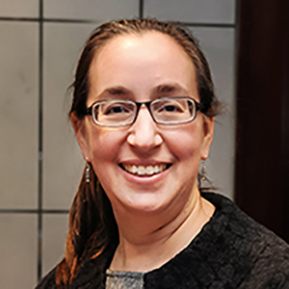
By Sarina Schrager, MD, MS, Family Medicine editor-in-chief

It is exceedingly uncommon for a paper to get accepted when first submitted to a journal. The vast majority of papers are sent back to authors for revision. As editors, we depend on peer reviewers to provide feedback designed to make each paper better. We ask that you view the feedback that you receive from reviewers as a constructive way to improve your paper. As an author, you are asked to respond to every comment made by every reviewer, which can feel like a herculean task. The following suggestions from the editorial team are geared to help you organize and structure your responses whereby improving your chances of having your paper accepted the second time around.

  1. Don’t take it personally—remember that the reviewers are giving feedback on your paper, not on who you are as a person. Remember, by requesting a revision of your paper, the editors and the reviewers think it has potential. Creating space between yourself and the revision requests will help you move forward toward successful publication. Some people will put the revisions aside for a day or two before rereading them.
  2. Always, always respond respectfully to reviewer comments—there is nothing an editor dislikes more than an author being obstinate and dismissive about reviewer comments. The editors rely on peer reviewers volunteering their time. As such, we want to protect peer reviewers from abusive language coming from authors. It is actually common practice to thank the reviewers for their feedback (however unwelcome it may be). This is an important publishing convention because while you don’t know who the reviewers are, they see author names and they likely review for several publications.
  3. It’s okay to disagree—it is okay to disagree respectfully with a reviewer comment.  However, we recommend that you prioritize the comments you disagree with and only include a few (2-3 at maximum) in your responses. Include a detailed explanation of why you disagree and include references if available. The editors will weigh your comments and decide if they still want you to make changes.
  4. Make it easy for the editors—editors and reviewers are busy people who are often volunteering their time to help you improve your paper. So, it is up to you to do everything you can to make that task easier. We recommend that you structure your response letter in table form or use different fonts or underlines so that it is easy for the editor to see that you addressed every single comment. Also, it is good practice to specifically state how you addressed the comment. Instead of just saying “this was changed”, provide details about how you changed the paper or even cut and paste the new sentence into your table of reviewer responses.
  5. What if reviewers give me conflicting feedback?—it is challenging when reviewers have differing opinions about your paper. Most of the time, the associate editor will provide guidance about which reviewer’s comments to follow. If you don’t think that you are getting clear guidance, feel free to e-mail the editorial team for help.  It is perfectly appropriate to ask the associate editor what they think you should do.

Even if your revision does not get accepted, by following reviewer suggestions you have improved the quality of your work and are optimally positioned to submit the paper to a different journal. Happy writing and please consider signing up to be a reviewer to help make Family Medicine the best journal it can be.

The STFM Medical Editing Fellowship: A Gateway to Scholarly Growth For Community Physicians

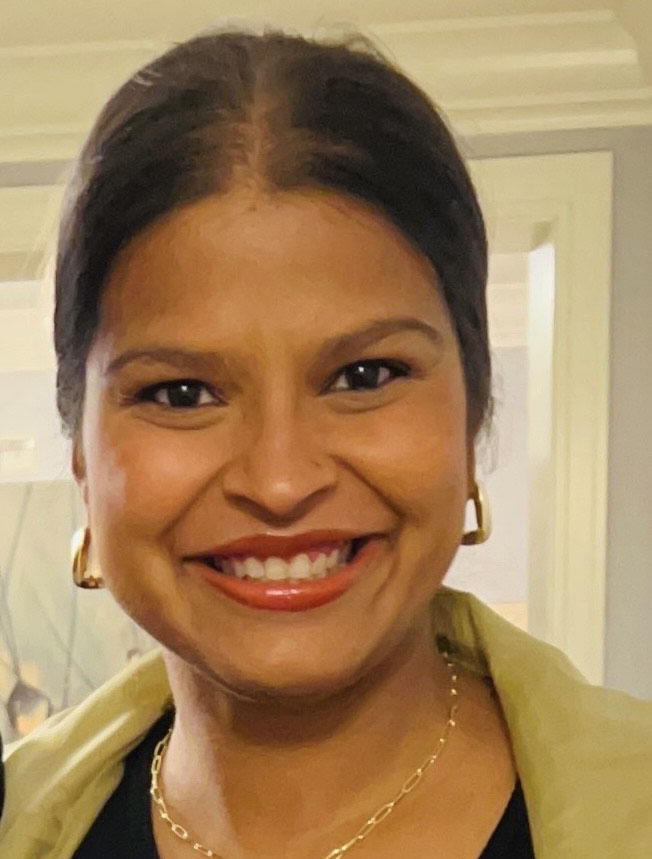
Priyanka Tulshian, MD, MPH
STFM Medical Editing Fellow (2023-2024)

The path of a community physician is replete with personal patient interactions, localized health solutions, and the day-to-day fulfillment that comes from serving the immediate needs of a community.  Yet, the pursuit of scholarship can sometimes seem like a distant reality, reserved for those in academia or large research-focused institutions. The Society of Teachers Family Medicine (STFM) Medical Editing fellowship presented me with a bridge between these two worlds, offering a community physician and educator a pathway to enhance my scholarly pursuits. My experience as a fellow has augmented my career in ways I had scarcely imagined.

For community physicians, scholarship often takes a back seat to the pressing demands of patient care. The STFM fellowship has opened the doors to the world of medical literature, providing tools and opportunities to contribute to the broader academic conversation without sacrificing the essence of community practice. I have come to embrace and recognize the similar skill set required in managing a patient… and managing a manuscript.

For me, the fellowship has been instrumental in the cultivation of a critical eye. As a physician, critical appraisal of literature underpins out practice, but the editorial lens is discerning of not just the content but the clarity, coherence, and contribution of a piece to the existing body of knowledge. This deepened sense of discernment is a skill that has enhanced both my practice and my teaching.

Moreover, engaging in the editing process has expanded my network, connecting me with authors, researchers, and educators from diverse backgrounds. These interactions have not only enriched my understanding of various healthcare issues but have also positioned me as a liaison who brings community based concerns to a national platform. I have the opportunity to become increasingly involved in dialogues that shape family medicine education and policy, thereby influencing patient care on a much broader scale.

The art of editing also cultivates the skill of writing, an invaluable asset for any physician-scholar. With each manuscript I review and edit, I hope that my own writing has become more precise and impactful.  The enhanced visibility of my work fosters further scholarly opportunities, contributing to a virtuous cycle of academic growth and reputation- building in the medical community. 

Furthermore, the mentorship inherent in the fellowship has been a rich source of professional development. Learning from seasoned editors and educators has provided me with a unique perspective on leadership in medicine. The mentorship provided has paved the way for long term relationships that support my ongoing professional journey.

The STFM fellowship has catalyzed my evolution from a community physician to a physician-scholar.  It has afforded me the platform to contribute to important conversations in family medicine and to apply those insights directly to my learners, patients, and community.  It has also taught me the value of scholarly activity as a means of professional satisfaction and career advancement. Community physicians have much to contribute to the landscape of family medicine and we should amplify our voices, share our unique insights, and ultimately enhance the health of our communities through scholarship.

Learn more about the STFM Medical Editing Fellowship and how to apply at https://www.stfm.org/medicaleditingfellow

Why Should I Be a Peer Reviewer?

Sarina Schrager, MD, MS
Editor-in -Chief, Family Medicine

Family Medicine, along with most other scientific journals, depends on volunteer peer reviewers to assure that we are publishing high quality papers. The act of peer reviewing advances the science of family medicine. Our editorial team is looking for a diversity of opinions and voices to assure the excellence of our published papers. I love peer reviewers and tell everyone I work with that they should volunteer to be one. Now, I am a little biased (being an editor of a journal that depends on peer reviewers), but I can’t overstate the important contributions of peer reviewers to the publication of our journal. So, if you already volunteer your time to do peer review, thank you. If you have not done any peer reviews, then let me tell you why you should.

First, being a peer reviewer will help you become a better writer and scholar. Reviewers may be inspired by positive attributes of papers while avoiding mistakes identified during the review. By reading what other people do, the way that they write and even how they do the research, you can decide what works and what you would do differently and then incorporate what you learn into your next paper. You can also learn about research methodology by reading about how others conducted studies. 

Peer reviewing can also help you learn about the publishing process and about science itself by reading what other reviewers and the associate editor says about a paper, and seeing what ends up getting published.  I always learn by reading reviewer comments and am excited when other reviewers had similar feedback to my own.

Second, being a peer reviewer can help your career.  It is an accomplishment that you can put on your CV and some journals will send a letter to your dean or chair recognizing you as a peer reviewer.   Also, if you do a good job with the review, you will be asked to review some more.  Potentially, you may be asked to be on the editorial board of the journal where you do peer reviews.   If you are interested in becoming an associate editor at a journal, the Editor in Chief will look at how many reviews you have done and whether they were high quality as a metric of your application. Being a peer reviewer can also build connections for future collaborations.   This is one way that you build your professional reputation.

Lastly, being a peer reviewer helps the discipline. By reading papers submitted to the journal, you will learn what is important in family medicine and what other scholars are studying in your area of interest.   You will be able to impact the quality of the papers that the journal publishes.  There is something very satisfying about seeing a paper in print that you reviewed because you helped make it as good as it is.

Doing a high-quality review does take time. The time needed to do a review will depend on the type of article (ie, an original research paper will take longer than a brief report or narrative because is it longer). Most people spend 1-3 hours on a review depending on the complexity of the article, your familiarity with the topic, and experience doing peer reviews. It is time well spent! Even one review a year greatly helps our journal.

We appreciate that people volunteer their time to do peer reviews and hope that we have helped convince you to sign up. Your voice is important. You bring unique skills and experience and can contribute to the excellence of our journal. You can sign up to be a reviewer at https://journals.stfm.org/familymedicine/reviewers/