Category Archives: Education

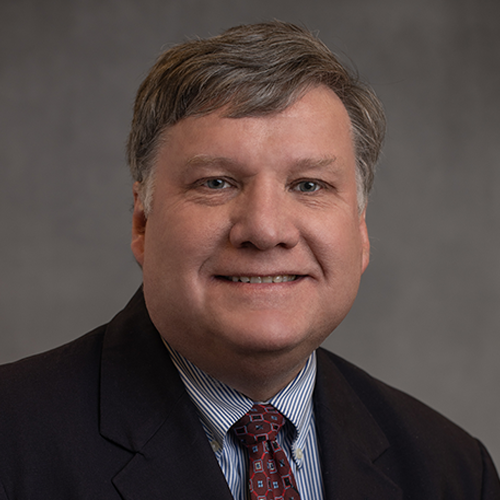
Get to Know Incoming STFM President Joseph Gravel, MD

As the 2023-2024 term comes to a close, we sat down with incoming STFM president Joseph Gravel, MD, to learn about his journey to family medicine education, his plans for the presidency, what he’d tell his younger self, and his message to students and residents.

1. When you were a child, what did you want to be when you grew up?

I wanted to be the left fielder for the Boston Red Sox and would have done that if it weren’t for just a few things in the way— my hitting, fielding, throwing, and speed.  In high school I was thinking it might be fun to be a sports columnist for a newspaper. I was always really interested in history, current events, and government as a kid, and remember staying up late to watch all the political conventions and inspired by RFK and MLK, could see getting somehow involved with government which at the time was still widely considered a noble profession to serve the public good. 

2. As you grew, what drew you to medicine and family medicine education in particular?

I think looking back it was always subconsciously there, but I wasn’t sure I could ever actually do that. As a kid, my own primary care physician would not just send me to the ER but instead would meet me and my mother at her private office at 2 am to give me shots of epinephrine for asthma attacks (this was 1970’s asthma treatment and 1970’s relationship-based medicine…). When I got to college — I was thinking maybe public defender law, not pre-med and found the social sciences more interesting than the biological sciences (and still do, although I like both). The family medicine side— I’m a generalist at heart with lots of interests in lots of things, and the big picture and relationship focus appealed to me. The education side— my 4 siblings all teach in various capacities, so maybe nature, maybe nurture, although I didn’t think about academic FM at all until the latter part of residency.  I also had a fantastic Program Director (Sam Jones) who has been one of my most important mentors and still is to this day, almost 40 years later. Now that’s continuity! 

3. When you’re not revolutionizing family medicine education, how do you like to spend your time?

Of course, revolutions occur only when a group of people believe in something important and then do something about it together concordant with those shared beliefs. Anyway, I love sports — the Boston sports teams, the Milwaukee-area sports teams; baseball and college basketball are my favorites. I’ve been to 45 major league baseball parks (every city including those parks now closed/replaced).  I love documentaries on pretty much any subject, the History Channel, and try to read (online) newspapers every day including political or social commentaries, more because I simply find it interesting rather than for fact-gathering. I find myself watching the Milwaukee local government channel for its entertainment value- the human pageantry is better than “reality” tv. Oh yeah, also Conan O’Brien’s podcast and Seinfeld reruns despite often knowing the next line at this point….

4. What do you wish all members and non-members alike knew about STFM?

I think many members understand this— but if you think of STFM as it’s mostly about a big meeting once a year, you’re missing out. The annual meeting is a highlight of the year, but there is so much more to be gained through actively participating in a collaborative that interests you, or getting involved in some of the many ongoing initiatives where great experiences and relationships outside your own institution are to be had. The other thing I think many suspect but I’m here to confirm— the executive leadership and the STFM staff are second to none— so talented, hard-working, and passionate about bringing our ideas to life.

5. If you could impart your past self with any wisdom from the future, what would it be and why?

This new company called Apple may be worth investing in. Why this? So, I would have more to donate to the STFM Foundation of course. ;0

I’d emphasize Ferris Bueller’s advice— “Life moves pretty fast. If you don’t stop and look around once in a while, you could miss it.” And patience is a virtue. Really.

6. In life, what accomplishment are you most proud of, and why?

Three kids now in their 20s who are good people, grounded, and with good values. Givers, not takers. (more so due to my spouse Barbara’s efforts, but I helped…)

7. What drives you to show up every day?

The work is so meaningful. If you do it right it can have an impact right now, but even better it can have a multi-generational effect on those you come in contact with and indirectly many more —whom you’ll never meet or know. This is the beauty of teaching and the beauty of family medicine.  Combining the two is even better and even more awesome, in both the traditional meaning and the modern slang of that word.

8. What is your most used STFM resource?

STFM Connect— delivered to my Email box so I don’t need to even think about it.  Keeps me connected to what is going on and who is doing things. Hey, I think “Connect” delivers on that branding!

9. What would you tell medical students and residents about their journey ahead?

You are entering the best profession in the entire world, bar none, working with the best people. You get to be a lifelong learner while doing good, which is a special opportunity. Don’t let all the background noise- which is at times deafening— drown out why you chose this remarkable profession and all the good you will do in the world.   Be adaptive, have a growth mentality, and be an advocate for self, your team, and patients. There will be many opportunities disguised as irksome challenges that you didn’t ask for and that you believe you didn’t deserve.  A “blessing in disguise” is a real thing, often realized only in retrospect, and you will succeed if you keep this in mind. Lastly, think of your career path as an interesting adventure to be savored rather than a journey to be endured. It’ll go better and feel better that way.

10. Is there a lesson you’ve learned that’s stuck with you your whole life?

Said to be Abraham Lincoln’s favorite saying and my parents’ frequent lesson— “this too shall pass”. It’s applicable to every situation— when things are going well, it is useful to remember to appreciate it as it is fleeting; when things are not going as well as we would like, it provides perspective— and is always true.

11. What do you look forward to most in your term as STFM president?

Working with our fantastic Executive Director and CEO, our wonderful staff, members of our Executive Committee, and our Board of Directors to advance STFM’s missions through our strategic plan, as well as collaborating with our sister family medicine organizations to benefit the entire specialty, our learners, and our patients.  And the unanticipated things are what will make the experience even more interesting. I appreciate the opportunity!

Demystify the Superhero Role of High-Resource Countries in Low- and Middle-Income Countries (LMICs)

Mariquita Belen, MD, MAS, FAAFP,
Northeast Ohio Medical University, Rootstown, OH

Almost 16 years after being in the United States of America as a physician, we visited our birth country—Philippines. An 18-hour flight seemed nothing compared to more than a decade of being away. The excitement to speak in Tagalog again, touch Filipino patients, and heal the people who cannot afford to pay private physicians motivated us to plan this medical mission for more than a year. The partnership with the local municipal health officer and the mayor made the collaboration easy.  But no! The process of applying for temporary medical licensure, recruiting local physicians who would be available while we were there, and sending the medical supplies from the US was not pain-free and fast.

In the midst of the humid summer, we arrived on site, armed with our American way of training. Yet, we were not in America.  We were ready to screen for cervical cancer. There was no liquid-based cytology.  Not all beds had stirrups.   The local health center used the conventional glass slides and hair spray as fixatives. We had to use a rolled towel to lift the pelvis up while the women’s legs were in frog-leg position. We used a flashlight to illuminate the pelvic area. We learned their way of doing it, which was their right way.

They were the expert and we were their partners. We were there as extra hands. In eight hours, with five physicians, we did pelvic examination and pap smear on 219 women. It felt like an assembly line with the community health workers doing the intake history-taking, then we did the speculum and pelvic examination, then another team of health workers doing the fixation, labelling, and packing.

It flowed very smoothly. Nobody complained.  Patients waited for their turn with smiles on their face. One glass slide broke during the packing and the patient came back with no signs of disappointment.  She eagerly went to the examination table since she already knew the drill.

Clearly, we were not the superhero in this mission. We were impressed that with very limited resources, how could they make this process worked so well.  How community health workers who had elementary or high school diploma be an effective and efficient part of the health care team. They were empowered.

We concluded with a better understanding of ourselves and how we could mutually learn and support one another. The adaptability, resilience and community engagement during the medical mission in the Philippines shed more light to me.  Health care collaboration was a meaningful and sustainable experience when resource-rich countries partnered horizontally with host countries. Letting them lead their right way, and we would follow along.

Looking Back to Look Forward: In Support of the STFM Foundation

by Peter Coggan, MD

Peter Coggan, MD, pictured in fall 2023 at STFM headquarters in Leawood, KS.

Editors Note: The Winter 2023 STFM Blog features guest author and long-time STFM member Peter Coggan, MD, on the importance of preserving the sanctity of the physician-patient relationship through financial support of the STFM Foundation.

At the beginning of my career, looking back on it, like many faculty in the 1970s I was recruited out of private practice where I had enjoyed teaching medical students and residents rotating through my office. I approached my new role as full-time faculty with enthusiasm and rapidly realized that I was ill-prepared for it.

My first STFM meeting in 1979 was a revelation that was both exhilarating and intimidating. The plethora of workshops, presentations, and other activities were exactly what I needed, and, equally important, were the casual hallway conversations with other attendees – all of us struggling with many of the same questions. These were conversations in which shared problems were openly discussed, mistakes freely disclosed, and solutions offered but, perhaps most important of all, these were conversations that grew into mentorships and friendships over the years. I had found my academic home and in it a place that, at the heart of it all, would help me to realize my desire to teach the physicians of the future to provide better care and in doing so, become a better physician myself.

The middle of my career, as I look back on it, was marked by an increasing involvement with STFM – an almost unbroken attendance for 35 years at the national meeting – the privilege of running the Pre-Doc meeting (now retitled as the Conference on Medical Student Education), participating in multiple presentations, serving on STFM committees and the STFM Board of Directors (twice, in fact) and, with each experience, learning skills that were invaluable to my career.

In the autumn of my career, as I look back on it, the urging of Roger Sherwood (our then Executive Director), led me to the Foundation Board and the discovery of a wonderful opportunity to pay back for all that I had received through my membership in STFM through the Foundation’s many programs and initiatives.

Today in my dotage, as I look back on it, there is the grateful recognition that I could not have had the career opportunities that came my way without STFM. It is also gratifying to reflect on the many members I have met along the way who have become leaders in our field, with successful careers of their own as they carry the STFM mission forward.  Their innovations in presentations and projects first aired in the early and middle years of my STFM membership have, in many instances, joined the mainstream in teaching and patient care. And our specialty is much the better for it.

As for tomorrow, as I look forward to it, I close this brief homily. I hope you will forgive me for a reflection born of, as William Wordsworth expresses it “the inward eye that is the bliss of solitude”. Excellence in the care of patients and their families is the goal we all share in our teaching and our personal practice. Within that, and central to it, is the importance of the doctor-patient relationship, which is a core value for STFM, its Foundation, and the specialty of family medicine. As the practice of medicine continues to evolve as it must, new ways to identify and treat medical problems and ways to communicate with our patients will become everyday tools and, in this context, I look with confidence to STFM to ensure the doctor-patient relationship is preserved. After all, that relationship is central to the practice of medicine, the most intimate and personal of the professions, and, should it not survive, our profession will fade into obscurity.

That, as I look forward to, is the context in which I hope you will join me in supporting the STFM Foundation. My motivation, at the heart of it all, is my wish for you to teach the physicians of the future to provide better care and in doing so, become a better physician yourself, enhancing and preserving that essential quality of our profession – the sanctity of the physician-patient relationship.

We invite you to join Dr Coggan in ensuring future generations of family medicine educators continue to have access to the invaluable STFM resources. Just as the personal and professional contributions you’ve made to family medicine education have undoubtedly had a profound impact on those you’ve met, mentored, led, and collaborated with throughout your journey, a bequest to the STFM Foundation Endowment ensures that impact for generations to come. Your contribution directly supports STFM initiatives and programming like scholarship opportunities for underrepresented in medicine (URM) learners and educators, research grants, conferences, curricula, and more. The STFM Foundation Trustees created the Foundation Endowment to provide a mechanism for passionate family medicine educators to contribute to the long-term success of the STFM Foundation and STFM as a whole.