Author Archives: stfmguestblogger

Our Nation’s Primary Care Academic Infrastructure: What Is Needed to Protect it During Obamacare “Repeal and Replace?”


head-shot-nov-2015

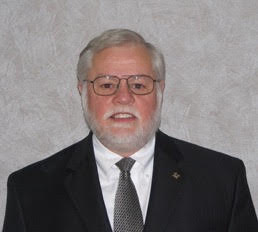
Hope Wittenberg, MA Director, Government Relations

When one thinks of the repeal of the Affordable Care Act (ACA), the major tax and coverage provisions required by insurance come to mind. Efforts by the new Trump Administration and Congress to repeal the ACA will obviously have a tremendous impact on these features of the law.

What is less known is other provisions of the law, many of which have an impact on academic family medicine–they affect workforce or primary care research, or both. These issues do not have large constituencies behind them–we may be alone or in slim company trying to maintain key portions of the law that impact our academic infrastructure.


Academic Primary Care Provisions in the Affordable Care Act

  • Establishment of payments for training provided to Teaching Health Centers, rather than hospitals
  • Reauthorization of Title VII Primary Care Training and Enhancement with an emphasis on the patient-centered medical home
  • Primary Care Extension programs to assist primary care practices regarding innovations and best practices
  • Medicare Graduate Medical Education (GME) provisions supporting community-based training within the confines of historic GME
  • Establishment of the Patient-Centered Outcomes Research Outcomes Institute (PCORI), to improve patient care and outcomes through comparative clinical effectiveness research
  • US Preventive Services Task Force (USPSTF) gained a new requirement that private insurance plans cover recommended preventive services without any patient cost-sharing

A Campaign We Must Not Lose

Assuming others will make the case for us is not an option. Working in partnership, STFM and the other CAFM organizations, along with our members, will need to actively engage on our key issues. If each of us does not get involved, we may not have the political might to support our position(s.) We do not have the luxury of large population size to assume that others will make the case for us. Members of Congress need many voices educating them about what we know–that the overall health of a population is directly linked to the strength of its primary health care system and workforce.  They need to hear why each of these provisions is important to the primary care infrastructure of the United States.

Continue reading

The Development and Maturation of STFM

50anni_headerpast

Roger Sherwood

Roger Sherwood, past STFM executive director

When 105 family medicine educators signed on in 1967 to become a part of the newly formed Society of Teachers of Family Medicine, little did they realize the impact they would have on educating medical students and residents in this new medical specialty. These pioneers spread the message of family medicine education and they and their successors affected the lives of countless students, residents, physicians, and patients.

In its early days, STFM administratively was essentially a file drawer in the president’s office. The Society received a major boost when the American Academy of Family Physicians offered to provide administrative services in the early 1970s. Growth and success during the 1970s led STFM to build its infrastructure and hire its own staff, though the AAFP provided support through 1980, both financially and by providing office space in the AAFP headquarters.

in 1981, when I became the STFM Executive Director, incoming president F. Marian Bishop, PhD, MSPH,  initiated an outreach program to the members by introducing the concept of special interest groups. The initiative invited STFM members to develop groups to address their special areas of interest. This outreach program marked a new stage of development — the creation of an infrastructure to involve members in new ways.

Building and growing the Society resulted in a number of initiatives that enabled the Society to develop a stronger base before moving to its next stage—outreach to other organizations and the larger world of medical education.

Continue reading

50 Years of Growing Family Medicine

50anni_header

When I think of the 50-year history of the Society of Teachers of Family Medicine (STFM), I get warm and fuzzy. It has been a glorious history and I have been fortunate to have viewed most of it.

Joseph Scherger, MD, MPH

Joseph Scherger, MD, MPH

Family Medicine From the Beginning

I committed to family medicine in 1973 as a third-year medical student at UCLA, when Tom Stern, MD, was still in Santa Monica. I joined the AAFP and the California chapter and became active, encouraging other medical students to join this emerging counter-culture specialty. I read everything I could and studied the pictures of the founders, such as Lynn Carmichael, MD,  G. Gayle Stephens, MD, and so many others. While at the University of Washington in 1977, I jumped at the chance to become the first resident on the STFM Board of Directors. I have been engaged and passionate for this organization ever since.

STFM Is THE FAMILY OF FAMILY MEDICINE

For the first 25 years, Ed Shahady, MD, served as my mentor and father figure, and Marian Bishop, MD, as my mother. (I teased her because she looked like my real mother.) David Swee, MD, was like a brother. Everyone who becomes active in STFM has stories like this. The people of STFM become a family. STFM’s abundant communities allow for many cultural homes and families for faculty.

Growing Academic Family Medicine

Of the many achievements of STFM, a legacy of faculty development shines brightest. From the newbies who attend the conferences in great numbers to the deans and high-level leaders in medical education, STFM, and its Foundation has continued to create stellar training and resources for their development.

Continue reading