STFM’s Top 10 Ways to Win (Policy) Friends and Influence (Government) People

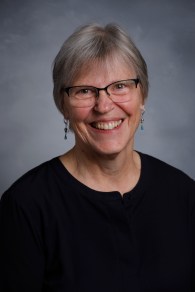
by Joseph W. Gravel, Jr, MD and Hope Wittenberg, MA

Wikipedia defines advocacy as “an activity by an individual or group which aims to influence decisions within political, economic, and social systems and institutions.” This blog will focus on federal legislative advocacy, but you can use the very same skills in state or local legislatures, your home institution, or advocating for patients in the course of your work.

# 1: Begin With the End in Mind

Identify what change you want, how to make it happen, and who can make it happen. For example, is the issue a federal law that needs changing? Which committees have jurisdiction over that issue? Who sits on that committee? If it’s not legislation, who holds the decision-making power? Refining the problem and the solution you want, along with knowing who can make it happen, is the first step to moving forward with an advocacy goal. When you meet with who can make it happen, come ready with viable solutions, not just problems. There’s power in providing viable solutions, as you could be essentially writing a bill’s “first draft”, even if/when your ask gets amended in the legislative process.

#2: “Friends” Wasn’t Just a 90’s Show

Are you alone in trying to create change? Who can you identify that might strengthen your position? With whom might you ally? There is strength in numbers and power in broad movements. A corollary question is who would oppose the change you want? What are their arguments and how can you address them? Can you change their minds?

#3: Tell Me a Story. I Like Stories

How do you reach people to gain their support? Data and facts are important, but not enough. With advocacy, forget what you learned in professional school about the scientific method and the problem with anecdotal evidence. You’re not writing a paper here. Anecdotes are often more powerful than data in the advocacy realm. You need to develop a good story that both portrays the problem you are trying to solve and captures one’s attention at an emotional level. What are the key reasons to support your cause that would reach someone? Use examples that come from your patients, practice, or neighborhood. Remember that your community is your legislator’s community as well, and their job is to represent you and the community. (Read the blog posts Moving Away From Data Points and Back to the Patient Story and From Journalism to Medicine: Not Such a Huge Leap After All to be prepared.)

Continue reading

Believing in Our Stories and in Our Field

Megan M Chock, MD, MPH

Megan M Chock, MD, MPH

Mariana’s commitment to her community, love of learning, and sincere support inspired me to become a family physician. This blog post is my way of thanking her and showing the influence she’s had on me and my journey and goals in family medicine.

It was an early fall evening in Rochester, Minnesota, and I was trying to put on my newest possession, a big black down-filled coat which made me feel twice as wide and five times as clumsy. I stumbled into the workroom of our free smoking cessation clinic at the local Salvation Army, shrugging the glorified sleeping bag over my shoulders. It was 2010 and I was in my first year of medical school, still trying to figure out how to layer against the cold.

“Hey, are you from Hawaii?”

I turned around, almost knocking over the objects behind me, and saw a smiling, brown-eyed, brown-haired young woman, maybe a few years older than me. “Um–yeah…?”

“Hi, I’m Mariana!”

This was my introduction to Mariana Cook-Huynh, one of the most influential people in my journey to family medicine.

Continue reading

The Joy In Family Medicine

TamAnthony

Anthony Tam, MD
University of Michigan FMR

When I look back and think about who I thought a doctor was when I was a kid, I imagined that person taking care of kids, adults, and even pregnant mothers. I saw them as a primary responder for minor injuries and illnesses or even for acute processes. And I looked up to these role models and hoped that, some day, I could be that doctor and role model for others. It wasn’t until medical school that I figured out the role model I looked up to was a family medicine physician.

After doing my clerkship rotation in family medicine, I knew this was the field I wanted to enter. A specific patient I had talked to at the clinic was “Mary”.  Mary had come in for a follow-up on her thyroid medication. Routinely, I went in before the resident I was working with to talk to “Mary” and discuss any issues she had. She suddenly burst into tears about how she has been feeling sad and giving up on life. However, after a long discussion about how much good she had done for her family, kids, and community, she came to the conclusion that she deserved to be alive and should continue helping others.  When my resident came in to review what we had discussed, the first thing “Mary” said was, “Will this be the doctor that will replace you when you are gone?  I felt so comfortable talking to him about my troubles in life and really hope that I can continue seeing him in the future for my care.”  It was this moment when I knew that family medicine was the career path for me. I wanted to be that doctor that builds trust in relationships and provides the care that any person needs, regardless of their economic or social situation.

Family physicians present themselves with great confidence, leadership, and sincerity.  They exude confidence by helping patients make informed decisions on preventive care.  They show true leadership in working with not only other doctors, but also the staff that helps run the clinic. And most importantly, they show true sincerity in making sure each patient feels as though they are being seen by a doctor that cares about them.

How do I know that I chose the right profession?  Fast forward now to my second year in a family medicine residency where I am looking forward to the days I have clinic so I can see the patients I started seeing as an intern. The staff I work with make me smile every day I’m here and I enjoy the time I spend in clinic.  I exit each room with my patients laughing and catching up with their lives as I walk them out to checkout.

The great, long-lasting relationships and trust developed with a patient and the continuity of care are priceless. I am so happy to have matched into an amazing family medicine residency that helps me become the doctor whose hand patients can hold in a time of sorrow, the one who encourages them to make the right lifestyle choices, or maybe even the one who takes care of an injured athlete on the field. I am more than eager to continue my time here with Michigan Medicine.