Author Archives: stfmguestblogger

The Road to Family Medicine

This blog post is a finalist in the STFM Blog Competition.
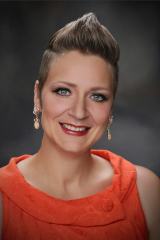
Jeanne Wigant, MD

Jeanne Wigant, MD

On the highway, en route to an important destination, you notice a sea of red before you. Traffic is at a standstill, and you reluctantly take your place in line. Glancing at the clock, then the line of cars inching along, the uneasiness in your stomach grows. Do you trust the GPS telling you to stay the course, or your instincts pulling you toward the next exit? This was exactly the scenario I found myself in 8 years ago. I was in the midst of a successful business career when I realized my desire to improve others’ lives as a physician was more important than any size salary or fancy corner office. I trusted my instincts, took the next exit, and walked away from everything I knew in favor of the unknown winding road before me.

Initially, the angst was distracting; I could only focus on the unfamiliar road itself. I involved myself with causes and positions that felt most comfortable coming from the business world but worried I was letting what seemed to be familiar ‘landmarks’ distract me from what my true route was intended to be. I was identified as a leader amongst my colleagues, university, and community, and was called upon to serve in numerous leadership capacities. It wasn’t until I began to appreciate how I could leverage this to call attention to issues I was passionate about that I realized what an invaluable trait this was for the future leader of a multidisciplinary healthcare team. I began to trust myself and could sense I was headed in the right direction.
Continue reading

Why I Chose Family Medicine

 This blog post is a finalist in the STFM Blog Competition.

Mawusi Arnett, MD, MPH

Mawusi Arnett, MD, MPH

At the start of my internal medicine clerkship in medical school, I learned that I had inherited a “difficult patient.” He was 28 years old and had been admitted overnight for hypercalcemia and poorly-controlled sarcoidosis. During sign-out, the overnight resident shared that my “difficult patient”, Mr Johnson, was “non-compliant” with his medications and was threatening to leave against medical advice (AMA). Like a dutiful medical student, I shuffled to Mr Johnson’s room to check in before rounds. Maybe I’d gain some insight and garner some early-rotation good will, I thought. “You’ve done this before,” I reminded myself as I paused outside of room 1354. One swift, sharp breath to steel myself against…I wasn’t sure what. Two knocks and in: “Mr Johnson! I’m Student-Doctor Arnett. How are you this morning?”
Thirty minutes later, the story had shifted and I remember it like it was yesterday. I sat at Mr Johnson’s bedside while he sat slouched on the bed with his legs swung over the side. I don’t know whether it was his familiar eyes that turned down at the corners like my brothers’ or whether it was the pragmatism around the explanation of his life and choices, but I couldn’t for the life of me see Mr Johnson as “difficult.”
Had he skipped months of medications? Sure, but who wouldn’t if, like him, they were affordable. Had he missed his last several primary care and rheumatology visits? Absolutely, but with an understanding of his financial instability, how could he afford his copay? Had he asked to leave AMA before his calcium levels had normalized? “Definitely,” he stated calmly, “and I still plan to.” Mr Johnson shared that he essentially had two full-time jobs. Not only was he a home health aid, but he was also the primary caretaker of his bedridden mother. To complicate matters, his mother had advanced sarcoidosis and insulin-dependent diabetes complicated by kidney failure. If he stayed in the hospital overnight, not only could his home-bound clients miss out on care, but his mother would miss her meals and insulin doses.

Continue reading

From Journalism to Medicine: Not Such a Huge Leap After All

Ranit Mishori, MD, MHS

Ranit Mishori, MD, MHS

Now that I have stacked up a good number of years in medical practice, I am one of those doctors who gets asked from time to time to talk about my career with medical students and junior physicians, answering questions about how I chose my specialty, how I like life in academia, and how I balance being a doctor, a spouse, and a mother.

Part of my answer always includes my late start in the field. I was nearly 30 when I decided to give up on a life in journalism and go back to school and become a doctor.  For a decade before that, I was a newswoman, a radio producer, and then a TV producer and editor, and I worked in Jerusalem, New York, and London. I covered wars, natural disasters, politics, terror attacks, international affairs, and some fluff stories as well. Yes, I must confess: skateboarding squirrels, surfing dogs, and high-heel races are some of the memorable news stories I shared with the world.

And when I share this, the most common comment I get is some variation of, “Wow, journalism to medicine sounds like 180 degrees!”

I thought so too at the time I started making the switch. But eventually I found it not to be a radical change at all. To the contrary, my decade in news prepared me well—better than any of the required organic chemistry or physics courses—for a life as a medical doctor.

Here’s why:

It’s all about storytelling.

One of the things that many students feel most nervous (and excited) about in the first 1 to 2 years of medical school is interviewing patients. This is what we call in medicine taking a history: a process that is at least as important as doing a physical examination. Indeed, I would argue that its impact is often greater than diagnostic testing or lab results in reaching a diagnosis and creating management plans.

For me, history taking felt like being back out on a story, behind the camera, getting the facts and making them make sense. Doing this well, in either context, is an art in itself: knowing when to press, when to let go, asking open ended questions, letting silences linger, paying attention to what’s not being said. These are crucial skills that we, as medical educators, try to teach medical students from year one to the end of their training and beyond. And they were skills I acquired in journalism.

Continue reading