
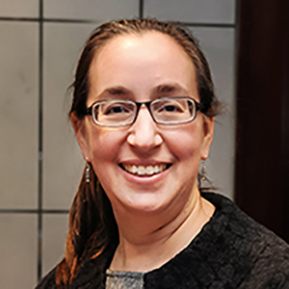
Family Medicine editor-in-chief
I will often talk to groups of junior faculty, fellows, residents, and students about writing. When I say enthusiastically, that writing is fun, I am faced with a sea of skeptical faces. Is writing fun? Well, for most people the answer is no. Why not? Because it is hard and for many of us no one has taught us how to do it. One of my favorite quotes about writing is by Ernest Hemingway. He said, “We are all apprentices in a craft where no one ever becomes a master.” Well, that’s frustrating you may say. If I can’t become a master, why bother? My answer is that seeing your work in print is worth the effort. The process of writing and editing and developing a strong final product is very satisfying. You have something to say and writing is an excellent way to share your ideas with a broader public. So, how do we get started?
- Just start writing. No one is born a great writer and the only way to get better is to practice. Think about what you want to write and start writing. You can practice when writing for work (craft well worded e-mails for example) or in your every-day life.
- Try writing short academic pieces like case reports or book reviews or letters to the editor. These forms of writing are less intimidating because they are short and very structured. Family Medicine has a new article type called Family Medicine Focus. This infographic is less than 500 words and covers a narrow, specific topic on education or professional development. (Family Medicine (stfm.org))
- Think about how you want to structure your work. People have different techniques for planning out a writing project. Many people use outlines. Some people will use bulleted lists of headings or topics to cover. Some people start writing at the end and then go back and craft the beginning of their writing. Others will start with the section that is easiest for them—just to get something down on paper.
- Give up perfectionism. This may sound simple, but it is hard to be a good writer if you get lost in trying to find the perfect words. Start off by just writing. If you want to dictate and then transcribe, that can help you put your ideas down on paper. Then, you can edit, craft your argument, and look for clear ways of communicating. Pulling out the thesaurus does not come until you are a couple of revisions into the process.
- Ask for help. Yikes, this is a hard thing to do. But, asking a friend, colleague or family member to read your work before sending it into a journal can get you honest feedback that will improve your writing. It may be painful, but better to address weaknesses in your writing first rather than getting rejected from a journal.
- Find your voice. Writing takes a lot of time and can be frustrating if you are not writing about a topic that you care about. Look around you and explore writing about your teaching, your patient care, your work experiences, or your research. You have a story to tell!
- Finding a time to write. For many of us, clinical duties, teaching responsibilities, and administrative tasks take precedence and writing and scholarship quickly fall down the “to do” list. The most prolific writers have one thing in common and that is that they designate time to write. It may not be daily, or even weekly, but if you talk to someone who writes a lot, they will tell you that they block off their calendar to write. Evaluate how, where, and when you work best and take advantage of that. I often recommend a 2009 article in the Emergency Medicine literature entitled, “Tuesdays to Write”. The author talks about designating Tuesdays for academic time and blocking off the entire day to write. Obviously, that is not possible for many of us, but the concept is alluring. Look ahead at your calendar. Are there mornings or afternoons that you can block off to write?
- Keep practicing. Maya Angelou said, “Do the best you can until you know better. Then when you know better, do better.” Start writing for yourself and as you get better at it, share it with your colleagues and the broader family medicine community.
Reference:
- Lowenstein SR. Tuesdays to write … A guide to time management in academic emergency medicine. Acad Emerg Med. 2009 Feb;16(2):165-7. doi: 10.1111/j.1553-2712.2008.00337.x. Epub 2008 Dec 30.
 STFM Blog